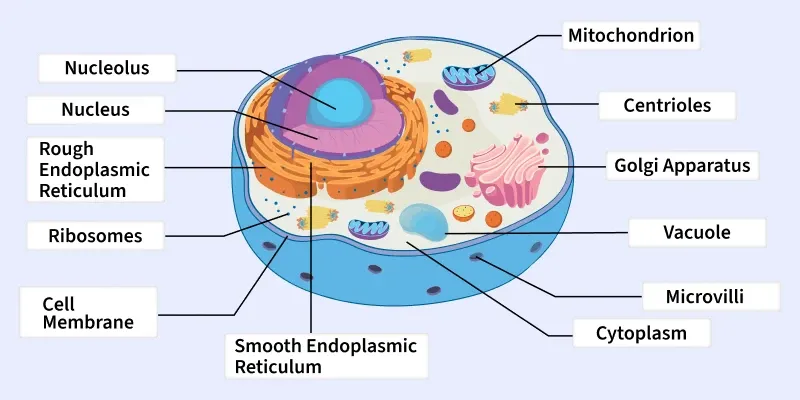
Eukaryotic cells are cells characterised by a well-defined nucleus and a complex internal structure. They are found in all organisms belonging to the domain Eukaryota, including protists, plants, animals, and fungi. These cells contain genetic material organised into chromosomes and have membrane-bound organelles such as mitochondria, endoplasmic reticulum, and the Golgi apparatus, which help carry out specific functions necessary for the survival and growth of the organism.
The plasma membrane, also known as the cell membrane, forms the outer boundary of the cell and separates the internal contents from the external environment.
It is composed of a lipid bilayer with embedded proteins, which provides flexibility and structural support to the cell.
The plasma membrane regulates the movement of substances into and out of the cell, helping maintain a stable internal environment.
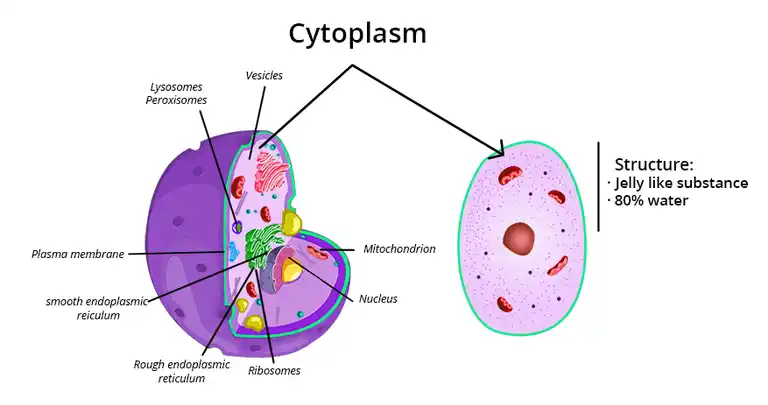
The cytoplasm is a semi-fluid substance that fills the interior of the cell between the cell membrane and the nucleus.
It consists of water, ions, enzymes, and various molecules and serves as a suspension medium for organelles such as mitochondria, ribosomes, and the endoplasmic reticulum.
The cytoplasm is the site of many metabolic reactions, including glycolysis and protein synthesis protein synthesis occurs on ribosomes present in the cytoplasm or rough ER.
The endoplasmic reticulum (ER) is a large membrane-bound organelle made up of a network of membranous tubules and sacs present in eukaryotic cells.
It is involved in the synthesis, packaging, and transport of various cellular products.
Based on the presence or absence of ribosomes, the ER is of two types: Rough Endoplasmic Reticulum (RER), which is involved in protein synthesis, and Smooth Endoplasmic Reticulum (SER), which functions in lipid synthesis and detoxification.
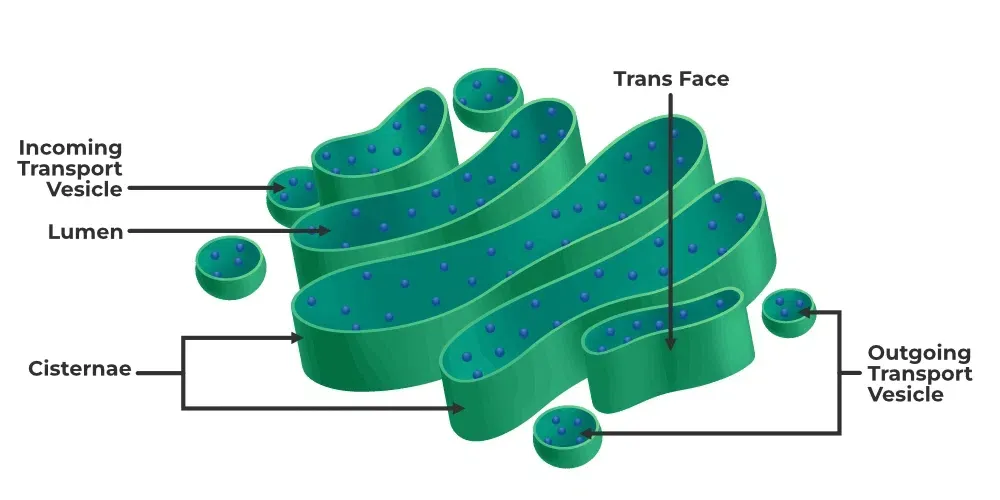
The Golgi apparatus is a membrane-bound organelle found in eukaryotic cells and is made up of flattened membrane sacs called cisternae arranged in stacks.
It functions in the modification, packaging, and sorting of proteins into vesicles for transport and secretion.
The Golgi apparatus plays a crucial role in the secretory pathway by directing proteins and other molecules to their appropriate destinations inside or outside the cell.
Lysosomes are small, spherical, membrane-bound organelles found in eukaryotic cells.
They contain digestive enzymes and function as the cell’s “garbage disposal,” breaking down and digesting cellular waste, worn-out organelles, and foreign materials.
Lysosomes are formed from the Golgi apparatus and play a vital role in maintaining cellular health by recycling and removing unwanted substances.
A vacuole is a membrane-bound organelle composed of a fluid-filled space.
It is responsible for storing various substances and maintaining cell structure.
In plant cells, it helps in maintaining turgor pressure, contributing to the plant's structural support and rigidity.
It also contributes to essential cellular functions like regulating cell volume, may have roles in storage, waste breakdown, and maintaining turgor pressure (especially in plant cells).
Eukaryotic cells are specialised cells that perform a wide range of functions, which are important for the overall functioning of multicellular organisms. The various functions of eukaryotic cells are as follows:
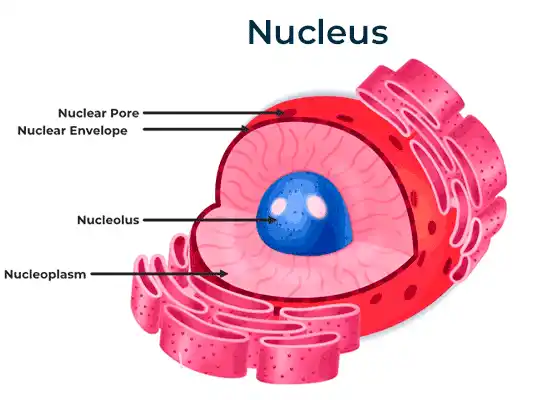
The nucleus contains, controls, and protects the cell's genetic material (DNA).
Ribosomes synthesise proteins based on the genetic code stored in DNA.
Mitochondria generate energy (ATP) through cellular respiration, while chloroplasts (in plant cells) produce energy through photosynthesis.
The endoplasmic reticulum (ER) plays a role in the synthesis of lipids and proteins.
The Golgi apparatus processes, modifies, and packages proteins and lipids for transport.
Lysosomes contain enzymes that break down cellular waste and recycle materials.
The cytoskeleton provides structural support, helps maintain cell shape, and facilitates intracellular transport.
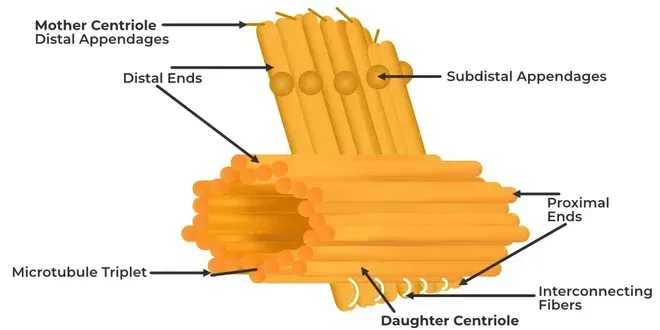
Centrioles (in animal cells) organise the spindle fibres during cell division (mitosis).
Vacuoles (in plant cells) store water, nutrients, and other substances, while other organelles can serve as storage compartments for various molecules.
Examples of Eukaryotic Cells
Eukaryotic cells are found in animals, plants, fungi, protozoa, algae, and other complex organisms. Some common examples are
Animal Cells: Found in all animals, including humans, these cells have a typical eukaryotic structure with a nucleus, mitochondria, endoplasmic reticulum, Golgi apparatus, and other organelles.
Plant Cells: Found in all plants, plant cells are similar to animal cells but also contain chloroplasts for photosynthesis and a large central vacuole for storage.
Fungal Cells: Found in fungi, including yeasts and moulds, these cells have a cell wall made of chitin and may form structures called hyphae.
Algal Cells: Present in various types of algae, which can be unicellular or multicellular and may appear green, brown, or red.
Protist Cells: Found in protists, a diverse group of eukaryotes that do not fit into other categories. Examples include amoebas, paramecia, and certain algae.
Protozoan Cells: Found in single-celled protozoa, these cells include organisms such as Plasmodium (causative agent of malaria) and Trypanosoma (causative agent of African sleeping sickness).
Eukaryotic Cells vs Prokaryotic Cells
The difference between eukaryotic and prokaryotic cells is given below: