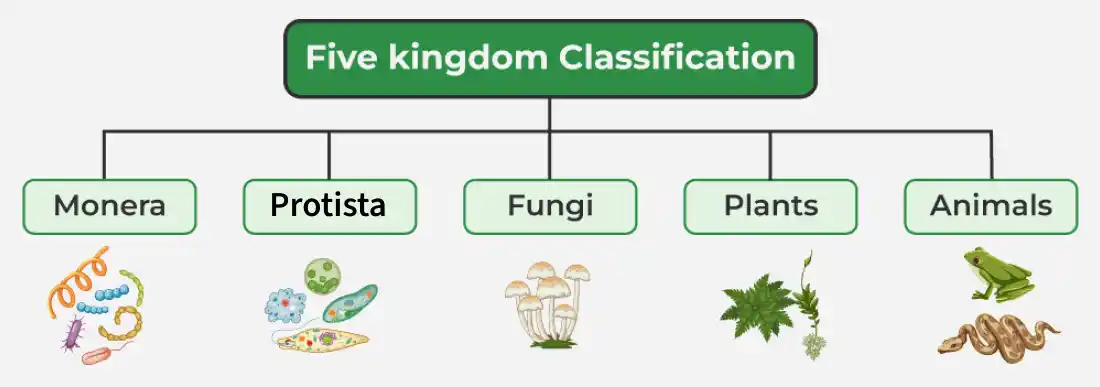
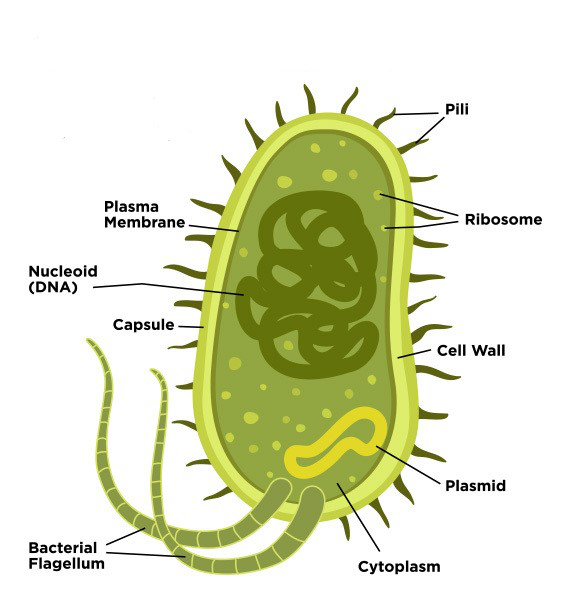
The living world shows immense diversity in the form of plants, animals, and microorganisms. Early classification systems, such as those proposed by Aristotle, grouped organisms based on habitat. However, these systems were not sufficient to explain biological diversity. In 1969, R. H. Whittaker proposed the five-kingdom classification system, which provided a more scientific and comprehensive method of classifying organisms.
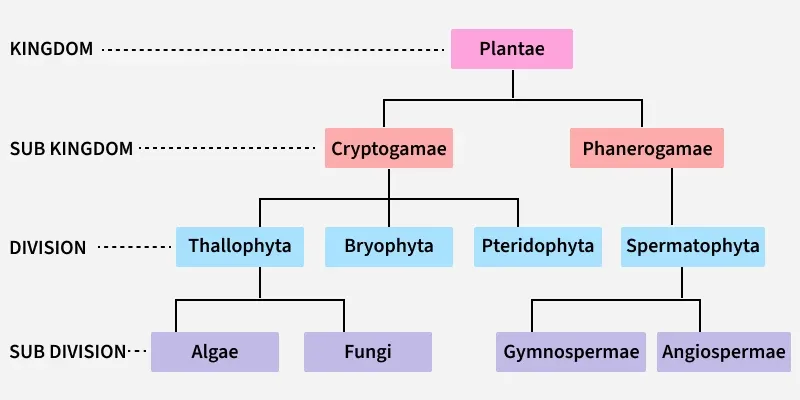
The classification of Kingdom Plantae comprises five groups:
Algae
Bryophyta
Pteridophyta
Gymnosperms
Angiosperms
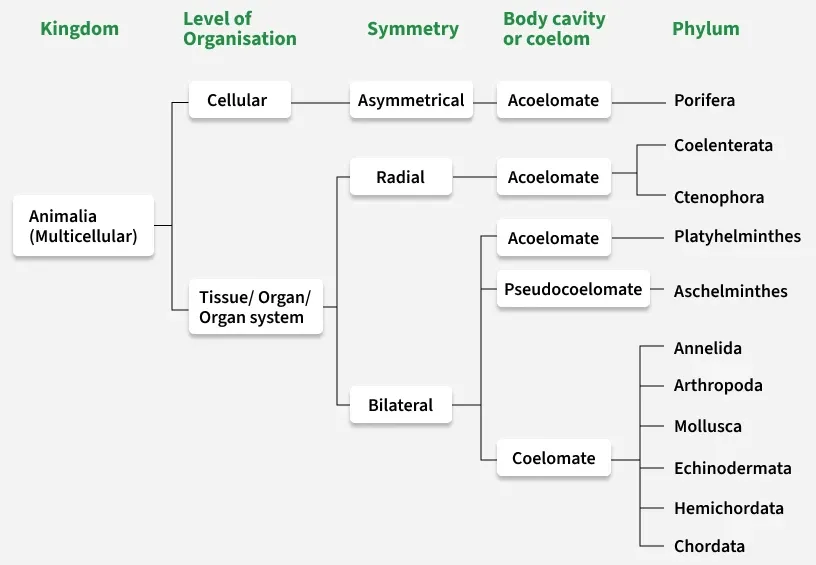
Kingdom Animalia
This kingdom consists of multicellular and eukaryotic organisms.
Kingdom Animalia doesn't have a cell wall.
It shows Heterotrophic nutrition.
It show organ-system level of organisation.
Most are capable of movement.
Example: Sponge, corals, flatworms, roundworms, earthworms, insects, snails, starfish, fishes, frogs, toads, birds, snakes, tigers, elephants, and humans are all members of the Animalia kingdom.