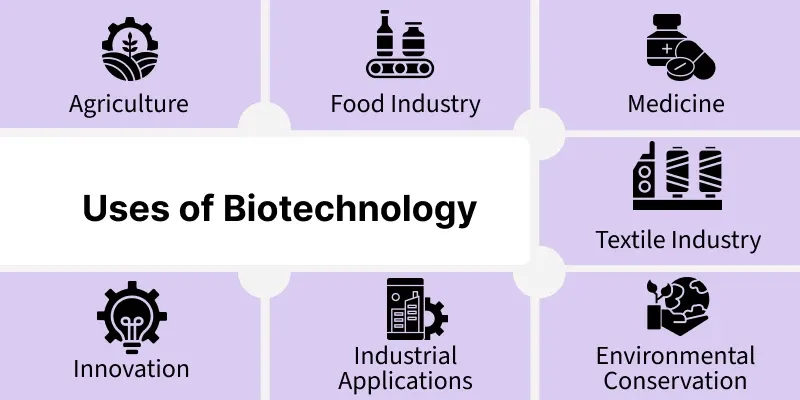
Biotechnology can be outlined as the vast area of biology that uses technology and the understanding of living organisms and their building blocks to develop, enhance, and produce applicable products for human well-being. Biotechnology is extensively utilised across various sectors today, revolutionising industries and improving the quality of life.
Some of the ways biotechnology is important in today's world are given below:
Agriculture
Genetically modified crops engineered for improved yields, resistance to pests, and tolerance to harsh environmental conditions enhance global food security.
When Biotechnology was combined with agriculture, it resulted in the great Green Revolution.
Crops that are resistant to diseases are called GM crops or Genetically Modified Crops.
Tissue culture has been used to produce large copies of plants from only a piece of tissue.
Chemical fertilisers were largely substituted with biofertilisers such as Rhizobium.
Textile Industry
Biotechnology produces bio-based fibres, such as those made from genetically modified organisms that produce silk or other fibres with desirable properties like strength and elasticity.
Enzymes produced through biotechnology are used in textile processing to improve the efficiency and environmental sustainability of processes like fabric bleaching, softening, and stone-washing denim.
Synthetic biology advancements lead to bio-based materials and sustainable production methods, contributing to a circular economy.
Innovation and Future Prospects
Biotechnology continues to drive innovation across healthcare, agriculture, industry, and environmental sustainability.
Its applications are poised to expand further in the future, addressing complex challenges and improving the quality of life
Food
Biotechnology plays a role in agriculture, where genetically modified (GM) crops are developed to enhance traits such as resistance to pests, diseases, and harsh environmental conditions.
GM crops can also be engineered to have improved nutritional profiles, such as higher levels of vitamins or essential nutrients, addressing malnutrition and food insecurity issues.
Biotechnology is used in food processing to produce enzymes and additives that improve food quality, flavour, and shelf life.
Examples include enzymes used in cheese production and additives that enhance the texture of processed foods.
Medicine
Biotechnology has revolutionised medicine through the development of biopharmaceuticals, including vaccines, insulin, and monoclonal antibodies used in cancer treatment.
Genetic engineering allows for the production of recombinant proteins, such as human insulin, by inserting genes into host organisms like bacteria or yeast.
Biotechnology enables personalised medicine through genetic testing, where individuals' genetic information is analysed to tailor treatments and medications to their specific genetic makeup, improving efficacy and reducing adverse effects.
Industrial Applications
Biofuel is produced from renewable sources such as corn and algae.
These help in reducing greenhouse emissions.
Bioremediation is the use of microorganisms to clean up pollution. The food industry also uses biotechnology to make wine, bread using the fermentation technique.