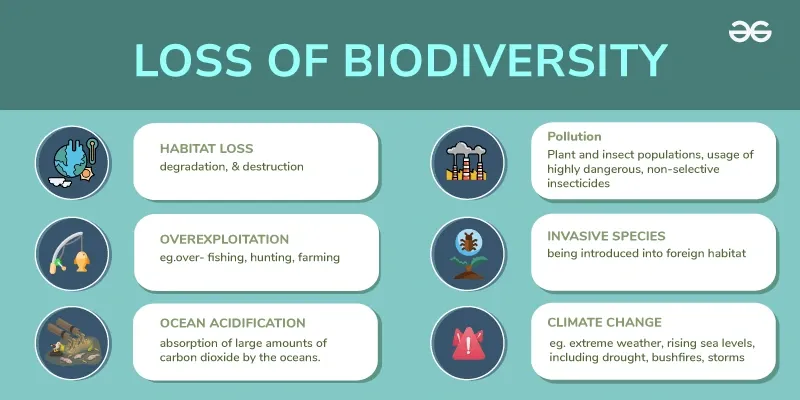
Biodiversity loss is a critical environmental challenge, driven by human activities that disrupt ecosystems. The loss of species and habitats puts important things like clean air, water, food, and medicine at risk, which harms both nature and humans.
The loss of biodiversity can take many different forms, such as species extinction, destruction of habitat, pollution, overexploitation, and climate change. Here, we will explore the loss of biodiversity, including its causes, effects, types, solutions, and examples, along with the overall impact on ecosystems and human life.
The 2020 Living Planet Report by the World Wildlife Fund (WWF) shows that global wildlife populations have declined by 68% since 1970. This alarming trend highlights the failure to adequately protect biodiversity, as human activities continue to destroy habitats and overexploit natural resources. The loss of wildlife not only threatens ecosystems but also undermines the services they provide, such as food, clean water, and disease regulation.
Biodiversity loss refers to the decrease in the variety of life on Earth, including the loss of genes, species, and ecosystems. It represents a decline in the richness and abundance of life forms and their roles within ecosystems. This loss can happen at different levels, ranging from genetic loss within species to the extinction of species or the collapse of entire ecosystems.
The overuse of resources, the introduction of exotic species, pollution, urbanisation, and deforestation are human activities that also contribute significantly to the loss and degradation of ecosystems. Climate change alters ecosystems and patterns of species variation, exacerbating these issues. Ecological health is at risk, and environmental instability can result from a region's declining biodiversity.
Causes of biodiversity loss
The loss of biodiversity is caused by a variety of natural occurrences and human actions that are diverse and frequently linked. Among the main reasons are:
Human activities such as deforestation, urbanization, agriculture, and infrastructure development lead to the loss and fragmentation of natural habitats. This reduces the space and resources available for wildlife and disrupts essential biological processes.
Pollution and Contamination of Ecosystems
Industrial effluents, agricultural runoff, plastic trash, and air pollution may harm biodiversity by destroying ecosystems, contaminating water bodies, soil, and the air.
Climate Change
The distribution of species and ecosystems are impacted by changes in sea levels, precipitation patterns, and temperature caused by greenhouse gas emissions.
Overexploitation of Natural Resources
The overexploitation of wild species result in decreases in population that are unsustainable, which in turn can cause a fall in the diversity and abundance of species.
Introduction of Invasive Species
When non-native species are brought into unfamiliar habitats, they may feed on local species or outcompete them for resources, which can cause native flora and fauna to decrease or become extinct.
The loss of biodiversity has far-reaching effects that affect ecosystems, human welfare, and the state of the economy. Among the most threatening effects are:
Disruption of Ecosystem Functioning and Services
The loss of biodiversity can cause ecological processes to break down and reduce an ecosystem's capacity to perform functions including pollination, nutrient cycling,water purification, and climate control.
Ecosystem instability, decrease in resistance to shocks, and increased susceptibility to environmental shifts might result from this.
Decline in Genetic Diversity
Genetic variation within species decreases as a result of biodiversity loss, that result in susceptibility for diseases, adapt to change in environmental conditions, and recover from population decreases.
Threats to Food Security and Human Health
Food security is threatened by biodiversity loss because it decreases the amount of wild food sources available, interferes with pollination services that are necessary for crop production.
By decreasing access to medical resources made from plants and animals and raising the possibility of zoonotic diseases and the loss of biodiversity also jeopardizes human health.
Economic Implications of Biodiversity Loss
A reduction in biodiversity may have a major effect on the economy on sectors including forestry, medicines, tourism, agriculture, and fisheries.
Ecosystem degradation and declining species richness can result in lower productivity, higher production costs, decreased employment for dependent populations, and lower income from nature-based tourism.
Loss of Cultural and Aesthetic Values
Loss of biodiversity leads to the loss of aesthetic and cultural values connected to wildlife, natural landscapes, and traditional knowledge systems.
Types of Loss of Biodiversity
There are several ways that biodiversity may be lost, and each has a different effect on species and ecosystems. The primary forms of biodiversity loss are as follows:
Natural Loss of Biodiversity
The term "natural biodiversity loss" describes the decline in the diversity and number of species, ecosystems, and living things that happens naturally via biological processes.
Natural causes leads to biodiversity reductions and natural biodiversity loss includes habitat destruction, pollution, and climate change.
Human-Based Loss of Biodiversity
The substantial decline in the diversity and richness of living things, species, and ecosystems that is mostly brought about by human activity is referred to as "human-driven biodiversity loss."
In contrast to biodiversity's natural variations, a number of anthropogenic causes cause the loss of biodiversity caused by humans.
Solutions to Prevent Loss of Biodiversity
Some of the ways to prevent biodiversity loss are listed below:
Conservation Strategies and Protected Areas:
To conserve biodiversity and preserve ecosystems, protected areas must be established and managed well.
National parks, animal reserves, marine protected zones, and indigenous lands are examples of protected areas.
The preservation of important ecosystems, significant biodiversity hotspots, and endangered species should be given top priority in conservation plans.
Sustainable Land Management Practices
The implementation of sustainable land management techniques, such as ecosystem based land use planning, sustainable agriculture, and agroforestry, can help in reducing the loss and degradation of habitat.
In addition to promoting food security, livelihoods, and ecosystem resilience, these approaches help biodiversity conservation.
Restoration of Degraded Ecosystems
Restoring ecosystems by afforestation, replanting, habitat rehabilitation, and wetland restoration can aid in the recovery of ecosystem functioning and biodiversity.
Community Involvement and Indigenous Knowledge
To achieve sustainable biodiversity results, conservation projects must involve local communities, indigenous peoples, and bearers of traditional knowledge.
Indigenous peoples have possess important skills and expertise for protecting biodiversity and managing natural resources.
Policy Interventions and International Cooperation
Legislatures and governments are essential in establishing policies, rules, and rewards that support sustainable development and biodiversity preservation.
Land-use planning, protected area management rules, biodiversity protection legislation, and sustainable resource management policies are a few examples of policy interventions.
Global, regional, and national frameworks for cooperative action to combat biodiversity loss are provided by international cooperation and agreements like the Convention on Biological Diversity (CBD) and the Sustainable Development Goals (SDGs) of the United Nations.
What are Some Examples of Loss of Biodiversity?
Examples of loss of biodiversity include:
Species extinction brought on by habitat degradation and overhunting, such as the Tasmanian tiger and the passenger pigeon.
Numerous plant and animal species are disappearing as a result of deforestation in the Amazon jungle.
Fish population decreases and disturbance of ocean ecosystems are caused by overfishing.
Climate change-related coral bleaching episodes cause the destruction of coral reefs and the marine species they support.
Introduction of invasive species that cause native species to deteriorate or become extinct, such as the brown tree snake on Guam
Conclusion - Biodiversity Loss
In conclusion, Biodiversity loss refers to the decrease or disappearance of the variety of life on Earth, from genes to ecosystems. It involves a reduction in species numbers, genetic diversity within species, or ecosystem complexity, and can happen on different scales, from global extinctions to local population declines.