NCERT Solutions For Class 9 Science Chapter 6 Tissues
Last Updated : 23 Jul, 2025
NCERT Solutions for class 9 Chapter-06 Tissues: The chapter on Tissues is important for students approaching the home exams. This article introduces NCERT solutions designed to help students explain the concepts of further learning and how to write to get good grades on exams. The solutions are presented in very simple language for ease of understanding.
NCERT CBSE Chapter 06 Tissues of Class 9 explain a group of cells that possess similar structures and perform a specific function. In some simple multicellular organisms e.g. sponges, there is a devoid of tissues or if present, poorly differentiated. Multicellular organisms that are highly advanced have specialized tissues. Tissues give shape to the body and help it in the conservation of heat and store energy. Revise the basic concepts of Tissues for quick revision and class notes.
NCERT Solutions For Class 09 Chapter 06 of Page 61
Q1: What is a Tissue?
Answer:
Tissue is a group of cells that have a similar structure and perform a specific function.
Q2: What is the utility of tissues in multicellular organisms?
Answer:
Tissues provide structural and mechanical strength and aid in the division of labor in multicellular organisms. They also help conserve heat and store energy.
NCERT Solutions For Class 09 Chapter 06 of Page 65
Q1: Name the types of simple tissues.
Answer:
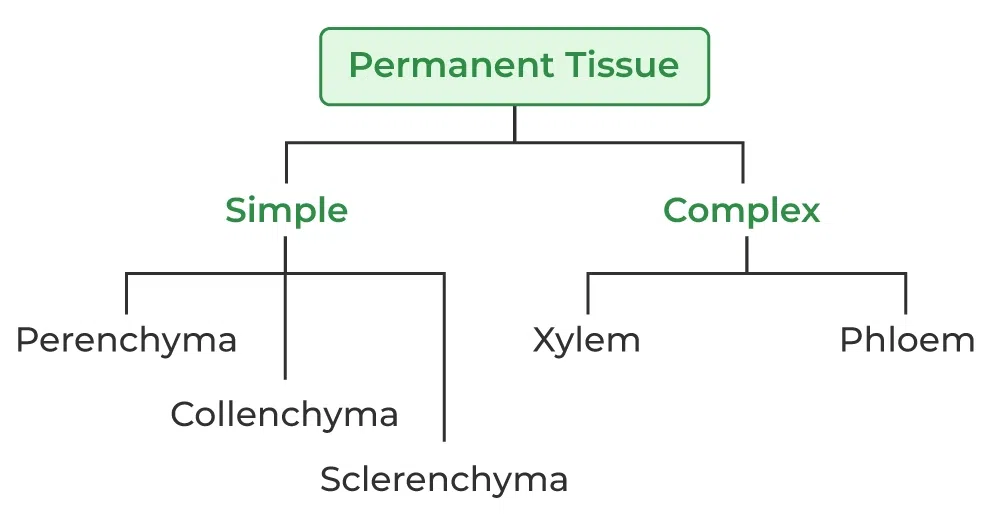
Simple tissues are the tissues that are made up of only a single type of cell that looks similar to each other. There are three types of simple tissues i.e. parenchyma, collenchyma, and sclerenchyma.
Q2: Where is apical meristem found?
Answer:
The apical meristem is present at the growing tips of roots and shoots. It is responsible for root and shoots development.
Q3: Which tissue makes up the husk of coconut?
Answer:
The coconut shell consists of sclerenchyma tissue. The sclerenchyma cells are stretched and dead. Their cell wall is made of lignin. They are found in the husks of seeds and nuts and in the veins of leaves. They guarantee mechanical support to the plant.
Q4: What are the constituents of phloem?
Answer:
The constituents of phloem are:
Sieve tubes
Companion cells
Phloem fibers
Phloem parenchyma.
NCERT Solutions For Class 09 Chapter 06 of Page 69
Q1: Name the tissue responsible for the movement of our body.
Answer:
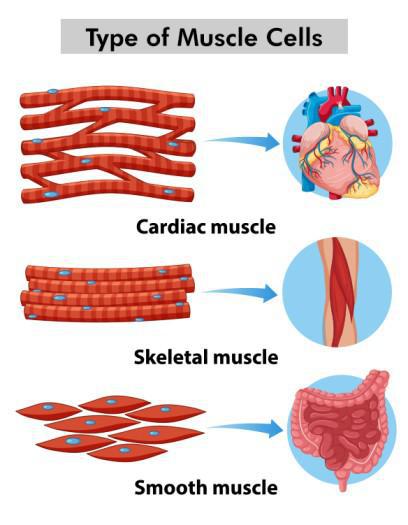
Muscular tissue is responsible for the movement of our body.
Q2: What does a neuron look like?
Answer:
A neuron consists of a cell body (also known as soma), dendrites, and one axon. The cell body is a compact structure. The axon and dendrites are extended from the soma. Dendrites are tree-like projections emerging from the cell body.