The reproductive phase of life in humansbegins during adolescence and is marked by the development of secondary sexual characteristics. This phase begins at puberty for both males and females. In females, the reproductive phase begins with the onset of menstruation, which is called menarche. In males, the reproductive phase lasts for life.
The reproductive phase of males includes puberty to adulthood, characterised by the maturation of reproductive organs, sperm production, and sexual function.
1. Puberty
Puberty marks the beginning of the reproductive phase in males, which occurs between the ages of 9 and 14.
During puberty, the hypothalamus in the brain signals the pituitary gland to release follicle-stimulating hormone (FSH) and luteinizing hormone (LH).
These hormones stimulate the testes to produce testosterone, the primary male sex hormone responsible for the development of secondary sexual characteristics.
2. Spermatogenesis
Spermatogenesis is the process by which sperm cells (spermatozoa) are produced in the testes.
It occurs within the seminiferous tubules of the testes and is regulated by FSH and testosterone.
Spermatogonia, the precursor cells, undergo mitosis to produce primary spermatocytes.
Primary spermatocytes then undergo meiosis to produce haploid secondary spermatocytes, which further differentiate into spermatids.
Spermatids undergo maturation and morphological changes to form mature spermatozoa, which are released into the seminiferous tubules.
3. Hormonal Regulation
Testosterone, produced by Leydig cells in the testes, plays an important role in regulating spermatogenesis and maintaining male reproductive function.
LH stimulates the Leydig cells to produce testosterone, which supports the development and maturation of sperm cells.
Testosterone also promotes the development of secondary sexual characteristics, such as facial and body hair growth, deepening of the voice, and increased muscle mass.
4. Ejaculation
Ejaculation is the process by which semen containing sperm cells is expelled from the male reproductive system.
It is typically triggered by sexual arousal and stimulation, leading to the contraction of muscles in the reproductive organs.
Semen, a mixture of sperm cells and seminal fluid produced by the seminal vesicles, prostate gland, and bulbourethral glands, is expelled through the urethra during ejaculation.
5. Reproductive Maturity
Males reach reproductive maturity when they are capable of producing and releasing mature sperm cells capable of fertilising a female egg.
Reproductive maturity is reached during adolescence but varies among individuals.
Throughout adulthood, males maintain their reproductive capacity, although sperm quality and quantity may decline with age.
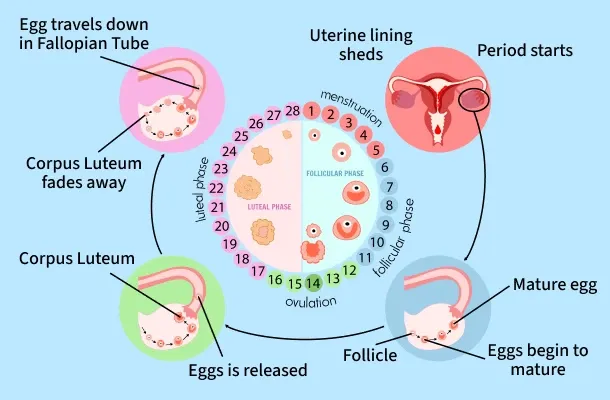
Menstrual Cycle
The menstrual cycle is a series of natural changes in the female reproductive system that prepare for pregnancy and fertilisation. It starts with the first day of the last period and ends with the first day of the next menstrual period. The average menstrual cycle lasts 28 days, but can vary from 21 to 45 days. It consists of four main phases: menstrual, follicular, ovulation, and luteal.