|
VOOZH | about |
|
VOOZH | about |
Vitamins and minerals are important micronutrients needed in small amounts to maintain the normal health of an organism. Vitamins and Minerals do not directly supply energy but play vital roles in metabolic processes and energy extraction from macronutrients. They act as coenzymes and cofactors in metabolic processes. Minerals can not be synthesized by the human body and hence must be taken from dietary sources for metabolic functions. In this article, we will cover vitamins and minerals, their types, and sources.
Vitamins are organic molecules that play crucial roles in the metabolic processes that facilitate the extraction of energy from macronutrients such as carbohydrates, protein, and fat. Each vitamin serves distinct purposes and contributes to various bodily functions. In total, there are 13 vitamins, with 8 belonging to the B-group of vitamins. These diverse vitamins collectively support and influence different aspects of our overall health and well-being.
Also Read: Difference between Micronutrients and Macronutrients
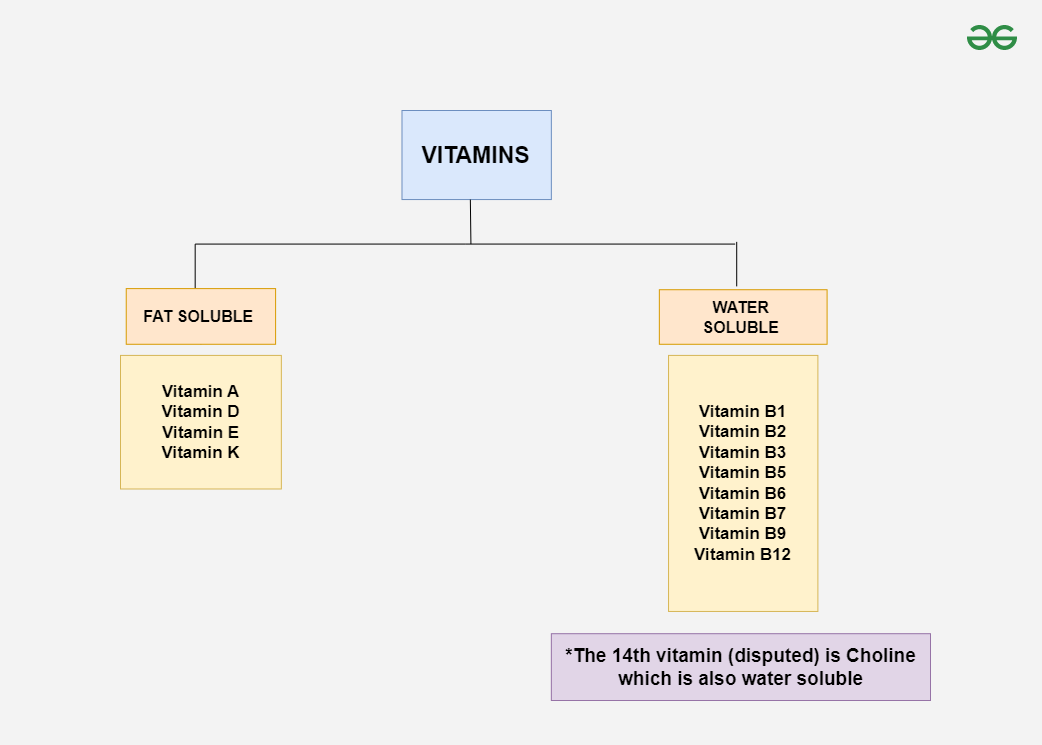
Vitamins are broadly classified into 2 types:
The fat soluble vitamins include:
Vitamin A is present in the liver, eggs, whole milk, and butter. Insufficient vitamin A can cause dry skin, eye issues, hindered development, and night blindness.
B-group vitamins are present in dietary products such as whole grains, meat, eggs, and leafy green vegetables. Deficiencies in these vitamins can lead to various health issues.
Vitamin C (L-ascorbic acid) is a colorless, odorless crystalline powder that easily dissolves in water. Its sources include citrus fruits, peppers, tomatoes, potatoes, broccoli, and fresh fruits. Insufficient vitamin C leads to difficulties in collagen formation, fortifying the skin, blood vessels, and bones.
Vitamin D is essential for bone health. Only 5-10% of Vitamin D is sourced from diet, found in fatty fish, eggs, and fortified dairy. Deficiency risks osteoporosis, fractures, and rickets, preventable in children. Treatment for vitamin D deficiency includes sunlight exposure, a balanced diet, exercise, and supplements.
Vitamin E is a vital biological antioxidant. It found in meats, egg yolks, leafy greens, nuts, seeds, and healthy oils. Vitamin E deficiency causes fat malabsorption like cystic fibrosis. Infants born before transferring vitamin E from mothers can experience erythrocyte hemolysis.
Vitamin K plays an important role in the formation of blood clots. Vitamin K deficiency hampers blood clotting, posing a life-threatening risk. Vitamin K deficiency is exceedingly rare in humans. A small percentage of infants may experience hemorrhagic disease of the newborn, a potentially fatal disorder.
Vitamins come in several forms, which are covered below:
Vitamins | Solubility | Sources | Role | Deficiency |
|---|---|---|---|---|
Vitamin A | Fat Soluble | Liver, eggs, whole milk, and butter. | Maintain vision, skin, myelin, and growth. | Dry skin, eye issues, hindered development, and night blindness. |
Vitamin B1 | Water soluble | Yeast, milk, green vegetables, pork. | Energy production, nerve activity | |
Vitamin B2 | Water soluble | Soybean, egg white | Fetus development | Cheilosis |
Vitamin B3 | Water soluble | Green leafy vegetables, cereals | Maintain NAD, NADP, and lipid catabolism. | Pellagra |
Vitamin B5 | Water soluble | Mushroom, sunflower oil | Carbohydrate, lipid and protein metabolism. | Inadequate growth |
Vitamin B6 | Water soluble | Meat, milk, cereals | Carbohydrate, lipid and protein metabolism. | Convulsions |
Vitamin B7 | Water soluble | Grains, milk, egg yolk | Biosynthesis of aspartic acid and unsaturated fatty acids. Maintain health of skin, hair, bone marrow. | Depression, muscle pain, hair loss. |
Vitamin B9 | Water soluble | Egg, beet root, meat | Nucleic acid synthesis, differentiation of embryonic nervous system. | Megaloblastic anaemia |
Vitamin B12 | Water soluble | Fish, egg, meat | Maintain epithelial cells. Synthesis of nucleic acid, protein, and lipid. | Pernicious anemia |
Vitamin C | Water soluble | Citrus fruits | Iron absorption, Antioxidant. | Scurvy |
Vitamin D | Fat soluble | Fish liver oil, sunlight | Calcium and Phosphorus absorption, maintain calcium and phosphorus level in serum. | Rickets |
Vitamin E | Fat soluble | Oils of cotton seed, sunflower, wheat grain | Antioxidant, muscular metabolism. | Muscular dystrophy, cystic fibrosis. |
Vitamin K | Fat soluble | Soybean oil, tomato, green leafy vegetables | Blood clotting, synthesis of prothrombin. | Hemorrhagic diseases |
Minerals are important for body functions and are categorized as major or trace minerals. These minerals play crucial roles in maintaining overall health. The minerals in human bnody are divided into two categories:
These are required in relatively large quantities and include:
These are required in small quantities and include:
There are several minerals, few of which are stated with their roles:
Minerala | Source | Role |
|---|---|---|
Calcium (Ca) | Dairy, plant-based foods, almonds, and green vegetables. | Essential for bones, teeth, muscle regulation, blood clotting, and nervous system transmission. |
Iodine | Dairy, seafood, eggs, and iodized salt. | Thyroid hormone production, influences metabolic rate, growth, and brain development. |
Zinc (Zn) | Red meat, shellfish, poultry, dairy, whole grains, and cereals with added zinc. | Growth, immune function, and vitamin A activation. |
Magnesium (Mg) | Nuts, legumes, dark green vegetables, seafood, whole grains, and chocolate. | Maintains bone health, aids glucose utilization, immune function, and regulates blood pressure and lung function. |
Potassium (K) | Bananas, apricots, mushrooms, spinach, nuts, and seeds. | Nerve, muscle, and heart function, as well as bloFluid balance (excessive intake can lead to health issues like hypertension).od pressure regulation. |
Sodium (Na) | Salt, with natural amounts in whole grains, meat, and dairy. | Fluid balance (excessive intake can lead to health issues like hypertension). |
Vitamins and minerals both are needed in our body for its proper functioning. Let's discuss about their difference in detail here:
Aspect | Vitamins | Minerals |
|---|---|---|
Definition | Organic compounds essential for various bodily functions. | Inorganic substances required for various bodily functions. |
Classification | Divided into fat-soluble (A, D, E,K) and water-soluble (B complex, C). | Classified as major minerals, required in larger quantities, and trace minerals, needed in smaller amounts. |
Function | Structural components, enzyme activity | Coenzymes, regulators of metabolism |
| Storage | Fat-soluble can be stored but water-soluble excreted | Not stored extensively |
Toxicity | Excess can be toxic, especially fat-soluble vitamins | Excess can be toxic, may cause adverse effects. |
Also Read:Difference Between Minerals and Vitamins
Vitamins and minerals are essential nutrients that play diverse and critical roles in maintaining human health. Vitamins, categorized into fat-soluble and water-soluble types, contribute to various bodily functions, from energy production to immune support. Deficiencies in vitamins can lead to a range of health issues, emphasizing the importance of a balanced diet rich in fruits, vegetables, and whole grains. Similarly, minerals, divided into major and trace categories, are crucial for bone health, muscle function, and metabolic processes. A varied diet incorporating sources of both vitamins and minerals is essential for overall well-being and disease prevention. By understanding the sources and functions of these nutrients, individuals can make informed choices to support their health.
Also Read: