|
VOOZH | about |
|
VOOZH | about |
Strategic management is the process of planning and managing an organization’s long term goals to achieve growth and stay competitive. It involves analysing the business environment, identifying strengths and weaknesses, setting objectives, developing strategies, and implementing them effectively. Organizations also monitor and evaluate performance to make necessary changes when needed. Overall, strategic management helps businesses make better decisions and achieve long term success.
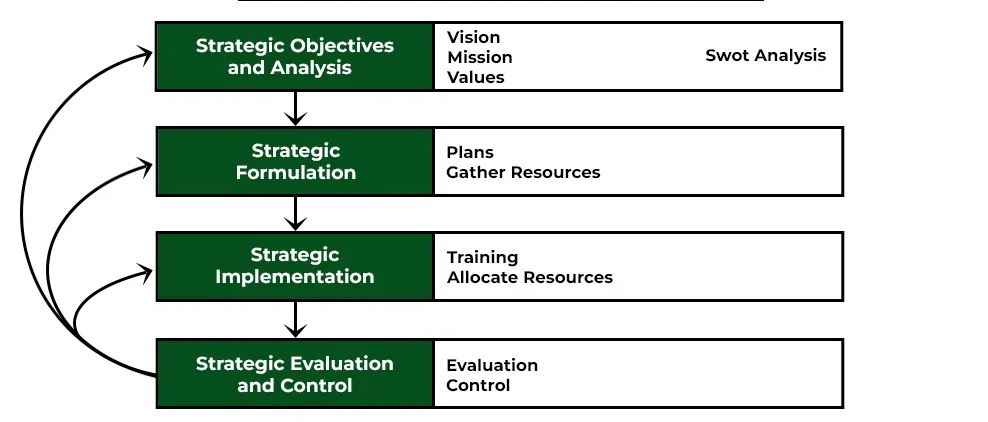
Strategic Objectives and Analysis: The first step in the strategy management process is to clearly define the organization’s long term direction. This includes identifying its vision, mission, and core values. At this stage, managers also perform SWOT analysis to understand internal strengths and weaknesses along with external opportunities and threats. The purpose is to gain clarity about what the organization wants to achieve and what factors can influence its progress.
Strategic Formulation: Once the objectives are defined and the analysis is completed, managers begin formulating strategies. This involves developing detailed plans and deciding how resources need to be gathered to achieve the stated objectives. Managers at different levels participate in evaluating various strategic options and selecting the most effective approach that aligns with the organization’s goals.
Strategic Implementation: After strategies are formulated, the next step is to put them into action. Managers allocate resources and ensure that employees receive proper training to execute the plan effectively. Implementation is about translating strategies into day to day activities. This stage requires coordination, communication, and commitment across all departments so the intended strategies can actually work on the ground.
Strategic Evaluation and Control: This final step involves reviewing and measuring the outcomes of the implemented strategies. Managers continuously evaluate whether the strategy is producing the expected results. If performance gaps or deviations are identified, corrective actions are taken. This step ensures that the organization stays aligned with its objectives and can modify strategies whenever needed to remain effective and competitive.
Long-term Orientation: Strategic management focuses on the long-term direction of the organisation. It helps managers decide how the organisation should grow and compete in the future, keeping all actions aligned with long-term goals.
Dynamic and Flexible: The strategic management process is dynamic because strategies are reviewed and adjusted whenever environmental conditions change. This flexibility ensures the organisation remains relevant and competitive.
Environment-focused: Strategic management gives importance to analysing both the internal and external environment. By understanding strengths, weaknesses, opportunities, and threats, managers can make informed and realistic strategic decisions.
Creates Competitive Advantage: One of the main features of strategic management is its aim to build a competitive edge. It helps the organisation use its unique strengths and position itself better than its competitors in the market.
Integrative Approach: Strategic management ensures that all departments and levels of the organisation work toward common objectives. It brings unity, coordination, and alignment between different activities and functions.
Action-oriented: Strategic management is not limited to planning; it involves converting strategies into real actions. Proper implementation and follow-through are essential parts of the process, ensuring that strategies lead to measurable results.
Provides Direction: Strategic management gives the organisation a clear sense of direction. It helps set priorities and ensures that all efforts are focused on achieving long-term objectives.
Improves Performance: By setting clear goals and monitoring progress, strategic management enhances overall organisational performance. Managers can identify gaps and take corrective action in time.
Helps in Decision-Making: It provides a framework for making informed decisions. Managers can evaluate options based on strategic goals, resources, and environmental conditions, reducing uncertainty.
Ensures Efficient Resource Use: Strategic management guides the allocation of resources effectively. By focusing on key priorities, it ensures resources are used where they will create the most value.
Promotes Coordination: It aligns the activities of different departments and levels of the organisation. This ensures everyone works together towards common objectives, reducing conflicts and duplication.
Facilitates Adaptability: Strategic management allows organisations to respond to changes in the external environment. Regular review and adjustment of strategies make the organisation flexible and competitive.
Builds Competitive Advantage: It helps the organisation identify strengths and opportunities, enabling it to outperform competitors and maintain long-term success in the market.
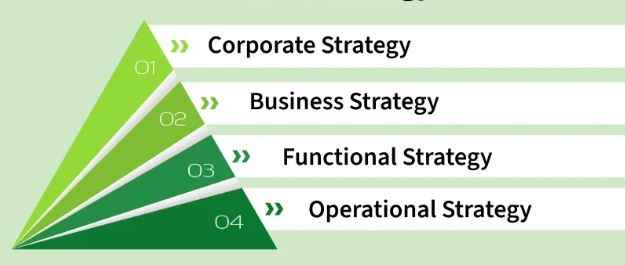
Corporate level strategy is the highest level of planning in an organization. It focuses on the company’s overall direction, growth, and long term goals. Top management decides which industries or markets the company should enter, how resources should be distributed, and how different business units will work together to achieve the organization’s mission and vision.
Business level strategy focuses on how a specific business unit competes in the market. It involves decisions about products, customers, pricing, and competitive advantage. The aim is to help the business unit perform well by using strategies like cost leadership, differentiation, or focusing on a particular market segment.
Functional level strategy focuses on the plans and activities of different departments such as marketing, finance, HR, and production. Each department works to support the business strategy through efficient use of resources and proper coordination. It mainly deals with short term and practical decisions within the department.
Operational strategy focuses on day to day activities and routine work within the organization. It includes tasks such as scheduling, quality control, inventory management, and workflow processes. The main purpose is to ensure smooth operations and effective execution of plans at the ground level.