|
VOOZH | about |
|
VOOZH | about |
OSPF is abbreviated as Open Shortest Path First. OSPF is an intradomain routing protocol and it is the implementation of link state routing protocol. It falls into the group of interior gateway protocols (IGPs), operating within a single autonomous system (AS). OSPF was designed as an interior gateway protocol. It is used in an autonomous system such as a local area network (LAN).
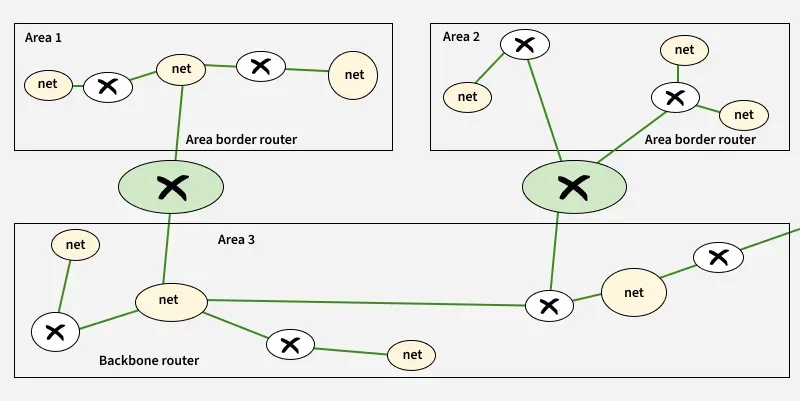
To handle routing efficiently and on time, this protocol divides an autonomous system into areas. Area is a collection of routers, hosts, networks all contained within an autonomous system. An autonomous system can be divided into many different areas, but at the same time, all networks inside an area must be connected.
From the figure above, we can see that the network is divided and can be structured, or subdivided, into routing areas to simplify administration and optimize traffic and resource utilization. Routers within an area flood the area with routing information. At the borders of these areas are special routers called Area Border Routers (ABRs). These routers summarize the routing information within their respective areas and send it to other areas.
Among the different areas, there is a special area called the backbone area, to which all other areas are connected. It serves as the primary area in the network. Each area has a unique identification. Two different areas cannot be directly connected; they must be connected through the backbone area this is a mandatory requirement. Routers that connect two areas, such as Area 1 and Area 3, do so through an Area Border Router.
The OSPF protocol supports authentication and its updates are sent through multicast address 224.0.0.5/6. If one of the links fails the protocol finds the other shortest path to reach the destination hence it possesses faster convergence. While communication hello packets are sent over each 10 sec, and when the reply is not received within 40 sec it is considered time out.
Also when there is a slight change in the router configuration (routers added/removed ) the routing table is updated very fast. It is based on the link state routing protocol.
As the name suggested shortest path first OSPF calculates the shortest route to a destination through the network based on an algorithm. It uses the Dijkstra algorithm for calculating the shortest path.
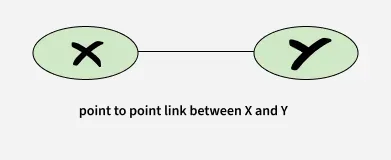
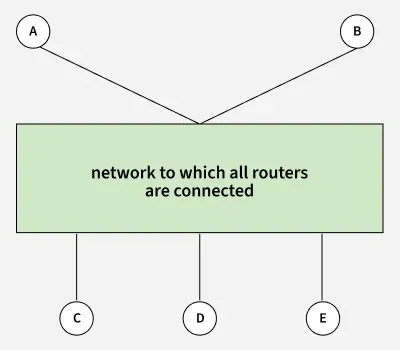
In OSPF, a connection is also referred to as a link, which can be a connection between two routers or between a router and a network. OSPF defines four types of links:
OSPF uses five different types of packets:
When a packet needs to be forwarded, the key question is: to which network should it be sent, and why?