|
VOOZH | about |
|
VOOZH | about |
The Kano Model is a framework used to analyze and prioritize customer needs based on their impact on satisfaction. It helps product teams make informed decisions by comparing the customer value of a feature against its implementation cost.
This model enables product teams to:
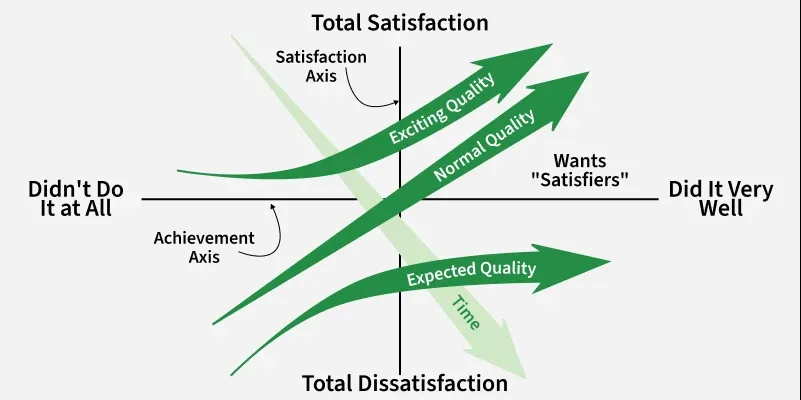
The Kano Model is typically represented as a two-dimensional graph:
This visualization helps teams understand how different features influence satisfaction as their performance improves.
Description: Essential features that customers expect by default.
Impact on Satisfaction:
Example: In a smartphone:
Calling and messaging functionality
These features don’t impress users but their absence immediately frustrates them.
Description: Features with a direct relationship to customer satisfaction.
Impact on Satisfaction: Better performance → Higher satisfaction
Example:
The better these features perform, the happier customers become.
Description: Unexpected features that delight customers.
Impact on Satisfaction:
Example:
These features create wow moments and differentiate products.
Description: Features that have little or no impact on customer satisfaction.
Impact on Satisfaction: Presence or absence → No significant effect
Example: Minor customization options (e.g., color variants for some users)
Description: Features that can negatively impact user experience.
Impact on Satisfaction:
Example:
Consider a smartphone product:
This illustrates how different features influence satisfaction differently, even within the same product.
The Kano Model offers numerous blessings to corporations: