Steps for Creating a Successful Product Marketing Strategy
Last Updated : 10 Apr, 2026
A Product Marketing Strategy is a critical plan in product management that defines how a product is positioned, promoted, and adopted in the market. It acts as a roadmap for marketing, sales, and product teams, ensuring the product reaches and resonates with the right audience.
Guides marketing, sales, and product teams on how to communicate the product’s value.
Ensures alignment between user needs, market opportunities, and business goals.
Provides clarity on messaging, positioning, and go-to-market strategies.
Helps drive adoption, engagement, and overall product success.
A strong product marketing strategy ensures your product reaches the right audience, delivers value, and achieves adoption. Key steps include:
1. Development of Customers
Identify your target audience.
Understand customer needs, preferences, and pain points. Craft messages that resonate and guide product positioning.
2. Texting and Posting
Define what to communicate once you know your audience.
Tell a compelling story positioning your product as the solution to their key problems.
Highlight unique features that differentiate your product from competitors.
Ensure your messaging answers five critical questions:
Who is this product for?
What is the purpose of this product?
What problem does it solve?
Why should users care?
Why is it relevant now?
What makes it stand out from alternatives?
3. Positioning and Messaging
Maintain consistent messaging across all teams to avoid customer confusion.
Align internal stakeholders and support sales and customer success efforts.
Collaborate with marketing to deliver a clear, compelling GTM message.
4. Forming a Plan for Launch
Lead cross-functional teams to coordinate marketing, sales, and support activities.
Define clear objectives, target launch date, and key milestones.
Ensure a structured plan to meet goals and measure launch performance effectively.
5. Generating Content for Launch
Develop all essential launch materials: blogs, landing pages, pitch decks, demos, one-pagers, and product visuals.
Collaborate with teams to ensure consistency and alignment with messaging.
Track content performance to measure launch effectiveness and engagement.
6. Getting the Team Ready
Ensure all teams sales, marketing, product, and support are fully briefed and prepared for launch.
Align internal and external communications to deliver a consistent message.
Confirm operational readiness, including website updates and support systems.
7. Relaunch of a Product
Monitor early performance and sales to gauge traction.
Be ready to make quick adjustments based on real-time feedback.
8. Post Launch
Conduct a retrospective to identify successes and areas for improvement.
Track customer feedback and adoption KPIs for at least three months.
Use insights and metrics, including cross- and up-sell data, to evaluate launch effectiveness.
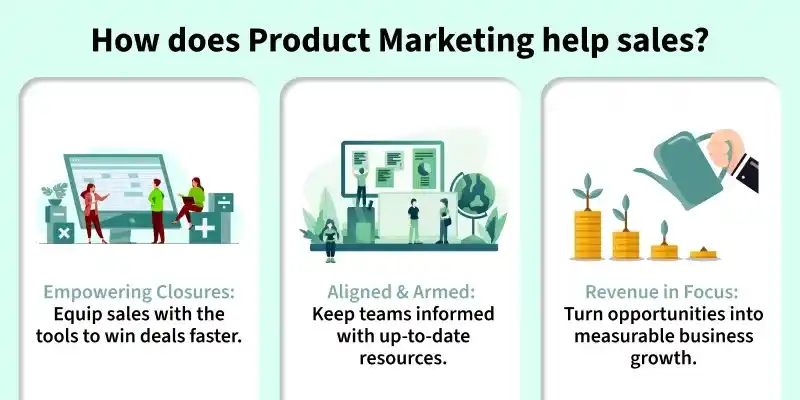
How does Product Marketing help Sales
Sales Enablement: Product marketers equip sales teams with the tools, collateral, and messaging needed to attract prospects and close deals effectively.
Internal Documentation & Resources: 80% of PMMs update internal docs and create sales materials to ensure teams are aligned and informed.
Driving Sales Focus: 45% of PMMs report that their primary role centers on enabling sales, helping the business convert opportunities into revenue.