|
VOOZH | about |
|
VOOZH | about |
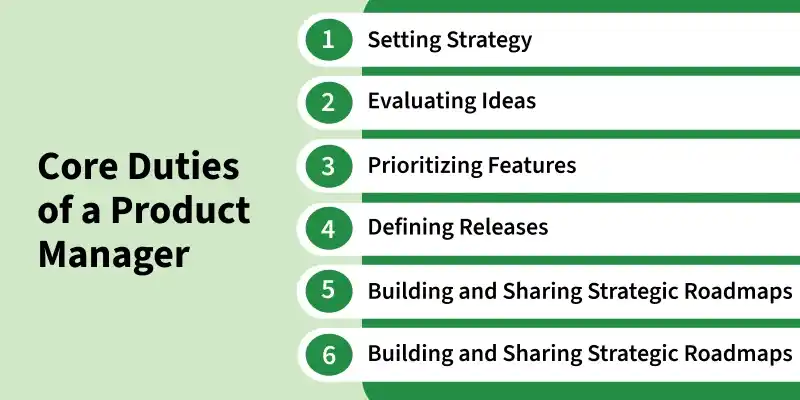
A Product Manager is a strategic leader responsible for the end-to-end success of a product from idea to launch to growth. PMs bridge teams, set direction, and turn insights into outcomes.
But the real value lies in how these responsibilities are executed.
Product strategy defines where the product is going and why.
Key Activities:
PMs assess ideas based on value, feasibility, and strategic fit.
Key Activities:
RICE Framework:
Prioritization is about saying no to good ideas to focus on the right ones.
Key Activities:
Releases translate strategy into shippable value.
Key Activities:
A roadmap communicates why, what, and when not just deadlines.
Key Activities:
This involves tracking the progress of development and product performance, and reporting results to stakeholders to ensure accountability and data-driven decisions.
Key Activities:
A Product Manager identifies the growing demand for long-term stays and leads the product from idea to launch and optimization.
How Responsibilities Come Together:
Outcome: A successful feature launch that improves user engagement and drives business growth through data-driven decisions.
Here are the following differences between Product Manager and Project Manager:
| Aspect | Product Manager | Project Manager |
|---|---|---|
| Vision & Strategy | Manages product vision and strategy | Manages project teams, tasks, and resources |
| Focus Area | Focuses on product strategy and lifecycle management | Focuses on project execution and delivery |
| Work Duration | Works continuously across the entire product lifecycle | Works within a temporary timeframe with a clear end goal |
| Planning Responsibility | Defines the product vision and strategy | Plans and organizes project activities |
| Success Measurement | Measures success through product outcomes | Measures success using project milestones, timelines, and resource allocation |
Here's a comparison between the roles of a Product Manager and a Product Owner:
| Aspect | Product Manager | Product Owner |
|---|---|---|
| Vision & Strategy | Sets the overall product vision and strategy | Manages the product backlog and feature priorities |
| Lifecycle Ownership | Responsible for the entire product lifecycle | Focuses on managing the product backlog and iterations |
| Roadmap & Planning | Shapes the product roadmap and strategic direction | Prioritizes features and user stories for development |
| Primary Focus | Focuses on market needs and overall product success | Concentrates on meeting iteration goals and requirements |
| Communication | Communicates product vision to stakeholders | Communicates detailed feature requirements to development teams |
Here's a comparison between the roles of a Product Manager and a Product Developer in a tabular format:
| Aspect | Product Manager | Product Developer |
|---|---|---|
| Vision & Strategy | Sets the overall product vision and strategy | Implements technical aspects based on specifications |
| Primary Responsibility | Responsible for strategic direction and market success | Focuses on technical implementation of product features |
| Lifecycle Involvement | Manages the entire product lifecycle | Executes technical tasks based on requirements |
| Planning & Execution | Shapes product strategy and roadmap | Works on coding, architecture, and technical problem-solving |
| Core Focus | Focuses on strategic planning, market analysis, and leadership | Focuses on building and delivering the technical solution |