|
VOOZH | about |
|
VOOZH | about |
The Scala substitution model is crucial for understanding how expressions, functions, and types are evaluated in the Scala programming language. It provides a framework for grasping the flow of execution and the relationships between different components in Scala, particularly in functional and object-oriented programming paradigms. This article explores the various aspects of the substitution model, including function substitution, class and object substitution, pattern matching, type substitution, and case classes.
Table of Content
The substitution model is a theoretical framework used to evaluate expressions in programming languages. It involves replacing function calls, expressions, or variable references with their corresponding definitions or values to simplify the evaluation process. This model is particularly beneficial in functional programming, where functions are first-class citizens.
Function substitution is the process of replacing a function call with its definition in order to evaluate an expression. In Scala, when a function is invoked, its parameters are substituted with the provided arguments, allowing the function body to be executed.
Example:
Output:
This process highlights how function substitution clarifies execution by breaking down the call into its components.
In Scala, classes and objects are fundamental building blocks. Class substitution refers to replacing references to classes or objects with their actual definitions during execution.
Example:
Output:
This demonstrates how class instances are represented and manipulated in Scala.
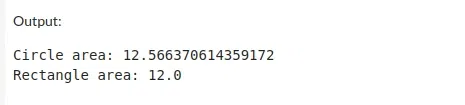
Pattern matching is a powerful feature in Scala that allows for checking a value against a pattern. It can be considered a form of substitution where specific actions are taken based on the match of values to defined patterns.
Example:
Output:
In this case, the shape is substituted with the corresponding circle/rectangle description based on the match.
Type substitution involves replacing type parameters or abstract types with their concrete counterparts. This feature is particularly significant in generic programming, where functions or classes can operate on various data types.
Example:
Output:
Here, the type parameter T is substituted with specific types, demonstrating the flexibility of generics in Scala.
Case classes in Scala are a special type of class that provides a concise way to create immutable data structures. They automatically implement methods such as equals, hashCode, and toString, making them particularly useful for pattern matching and substitution.
Example:
Output:
In this example, the variables a and b are substituted with 2 and 3, respectively, demonstrating how case classes facilitate data manipulation.
The substitution model has several important implications for programming and software development:
The Scala substitution model is an essential concept that underpins the evaluation of expressions, functions, and types. By comprehensively understanding function substitution, class and object substitution, pattern matching, type substitution, and case classes, developers can enhance their coding practices and improve their proficiency in Scala. This understanding not only aids in debugging but also promotes better design and implementation of functional and object-oriented programming principles.