|
VOOZH | about |
|
VOOZH | about |
Fixed-point numbers represent fractional values (like 3.14 or 0.001) with a fixed number of digits after the decimal point. Unlike floating-point numbers, which can vary in precision and introduce rounding errors, fixed-point numbers maintain a consistent level of precision. This article focuses on discussing the fixed point numbers in Solidity.
Table of Content
Fixed-point numbers represent fractional values without relying on floating-point arithmetic, which can be inefficient and error-prone in smart contracts. Solidity doesn't natively support fixed-point numbers like it does integers, but developers can simulate their behavior using integer arithmetic.
Fixed-point arithmetic operations are essential for handling fractional values in Solidity smart contracts. These operations use integer arithmetic to simulate the behavior of fixed-point numbers. Here’s a closer look at the basic fixed-point operators:
Aspect | Fixed Point Numbers | Floating Point Numbers |
|---|---|---|
Definition | Fixed-point numbers represent fractional values using integer arithmetic. They are scaled by a fixed factor (e.g., 10^2 for two decimal places). | Floating-point numbers use a different representation that can support a wide range of values by using a variable exponent. |
Rounding Errors | This approach ensures that all arithmetic operations remain precise and deterministic, avoiding rounding errors. | This can lead to rounding errors and precision issues, which are particularly problematic in financial applications. |
Precision | Fixed-point numbers maintain exact precision for fractional values. | Floating-point numbers can introduce rounding errors. |
Performance | Fixed-point arithmetic is faster and more efficient in terms of gas usage. | Floating-point arithematic is slow compared to fixed-point arithematic. |
Determinism | Fixed-point arithmetic ensures predictable and repeatable results. | Floating-point operations can produce different results on different platforms. |
Converting between integers and fixed-point numbers involves scaling operations. Here's how it can be done:
To convert an integer to a fixed-point number, multiply it by the scaling factor. To add a fractional part, simply add it to the scaled integer.
To convert a fixed-point number back to its integer and fractional parts, divide the number by the scaling factor for the integer part and take the modulus for the fractional part.
Below is the Solidity program to implement conversion:
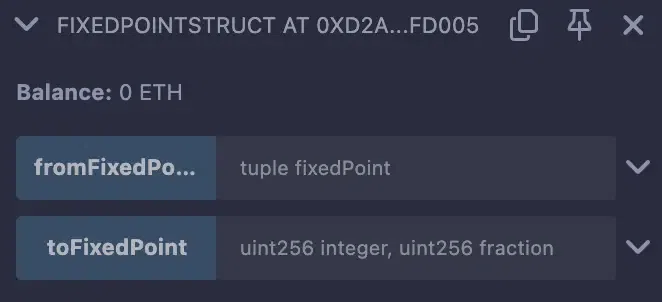
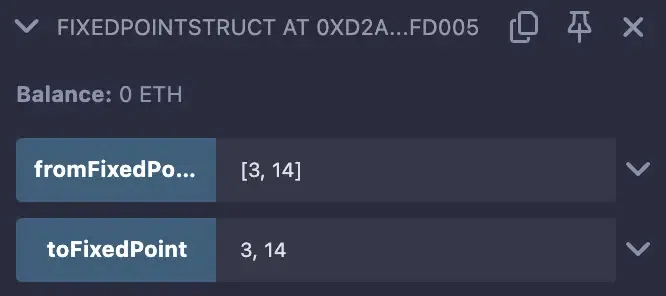
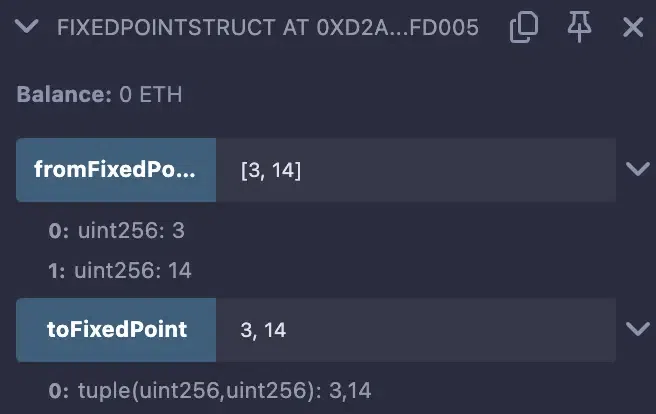
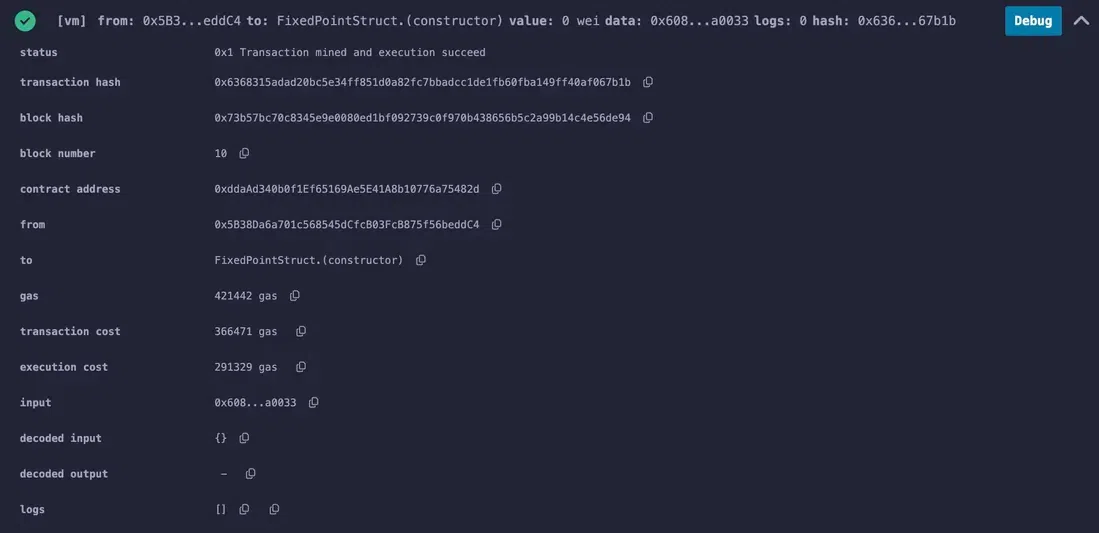
Here below you can see the one by one step for execution this code with deployed, input and output screenshots.
Handling overflows and underflows is crucial in Solidity. Before version 0.8.0, developers relied on libraries like SafeMath for protection. From version 0.8.0 onwards, Solidity includes built-in checks for these issues.
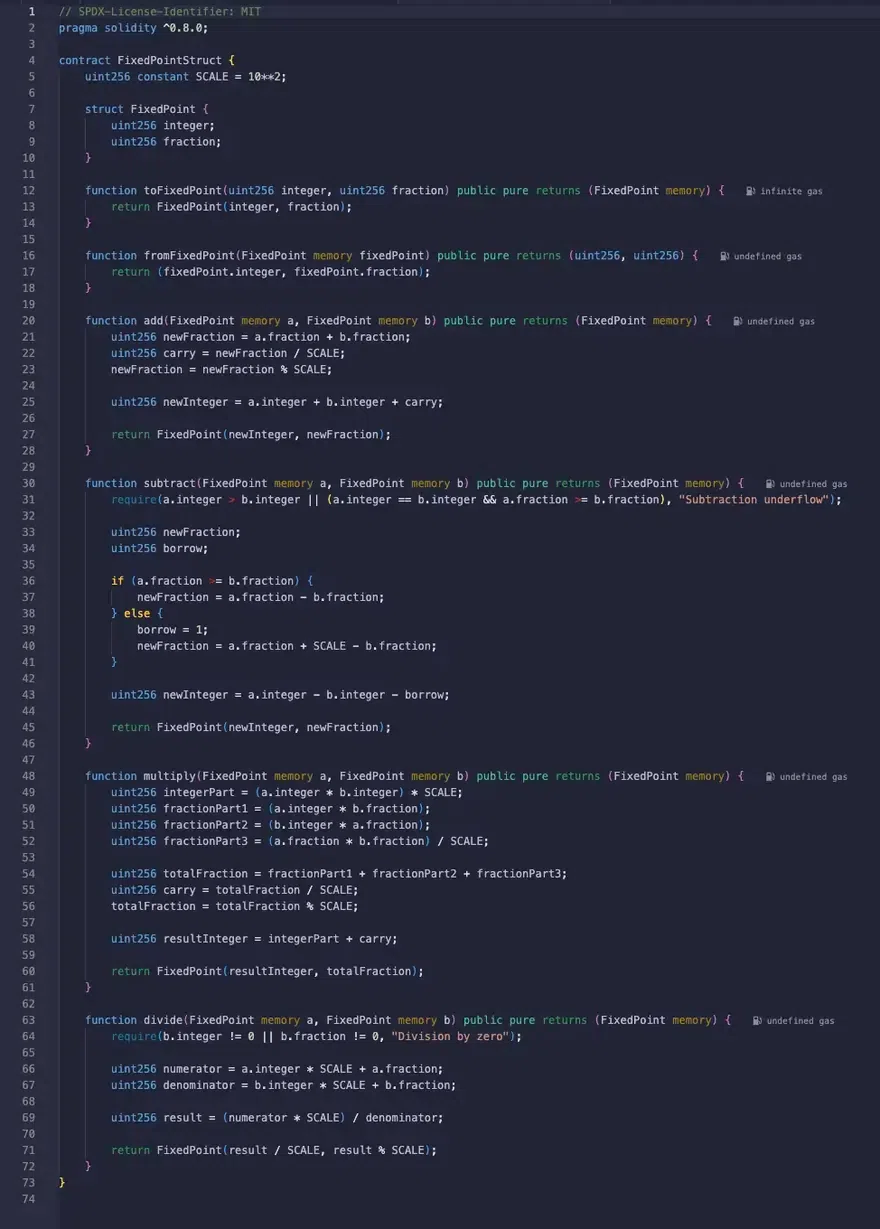
Using a struct can improve readability and manageability when dealing with fixed-point numbers. Here’s an example:
Deploying Contract:
Input Fields:
Output:
Using fixed-point arithmetic for addition and subtraction ensures precise results. Here’s how it can be implemented:
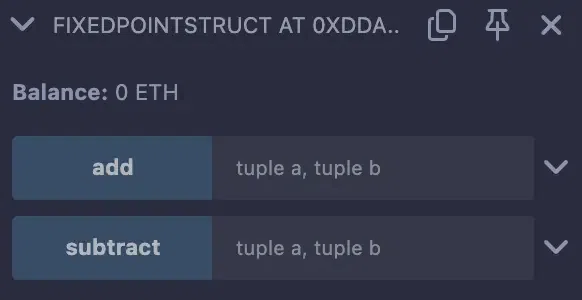
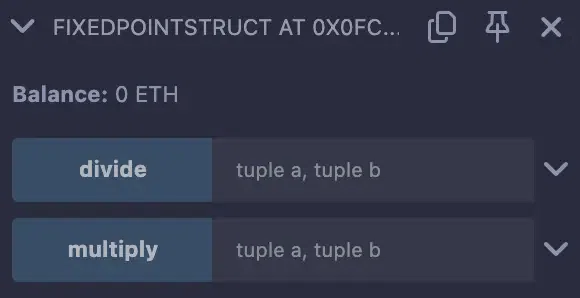
Deployed Contract:
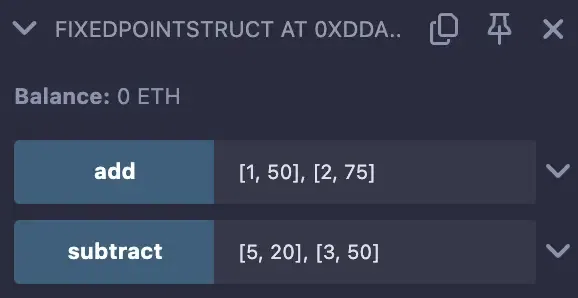
Input Fields:
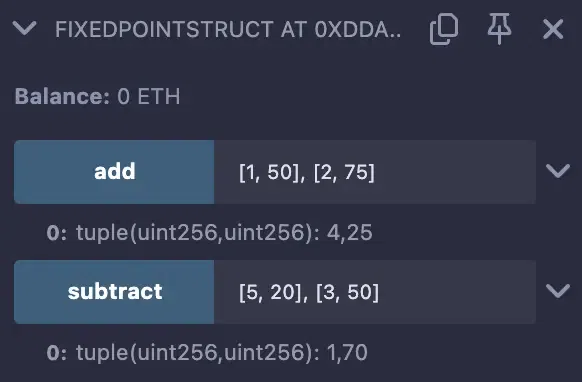
Output:
Multiplication and division in fixed-point arithmetic require scaling adjustments to maintain precision:
Deployed Contract:
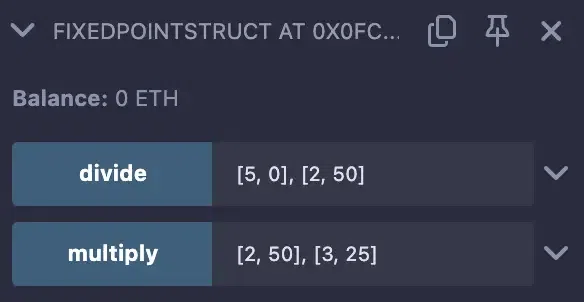
Input Field:
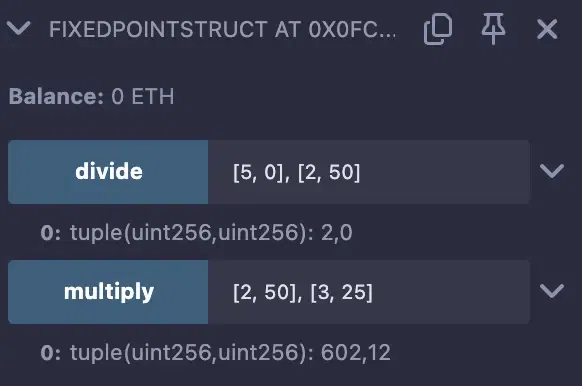
Output:
Open your web browser and go to Remix IDE.
Copy the following Solidity code and paste it into the newly created FixedPointArithmeticStruct.sol file:
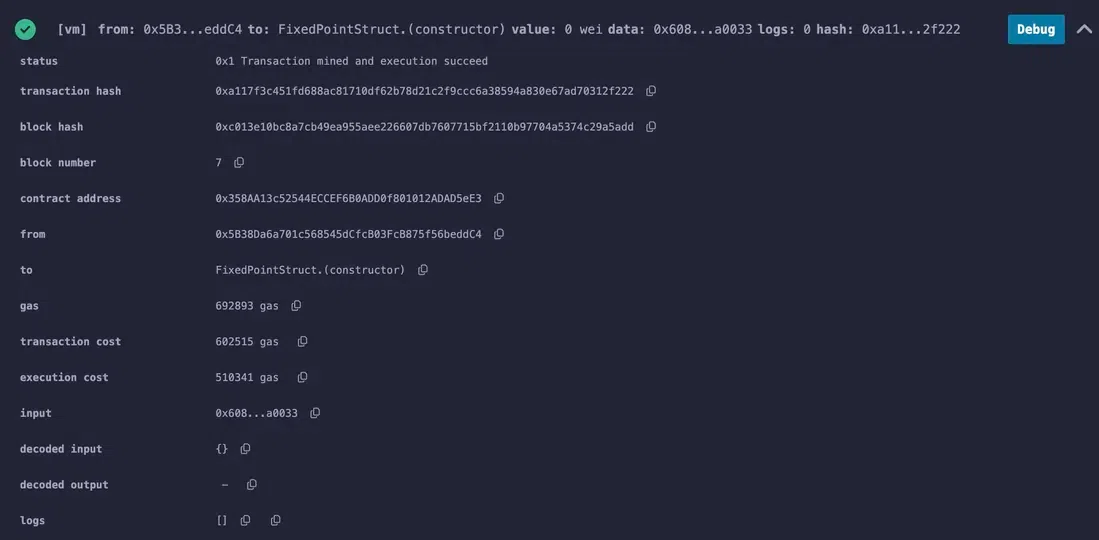
Deploy The FixedPointArithmeticStruct.sol:
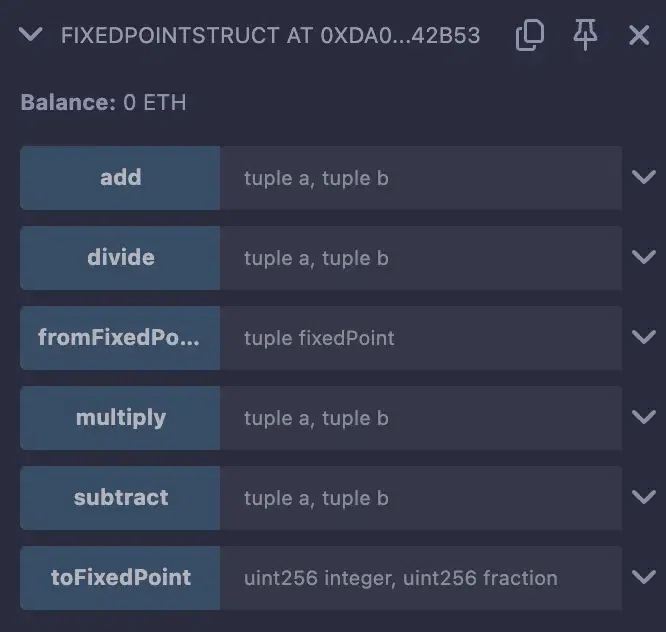
Input Fields:
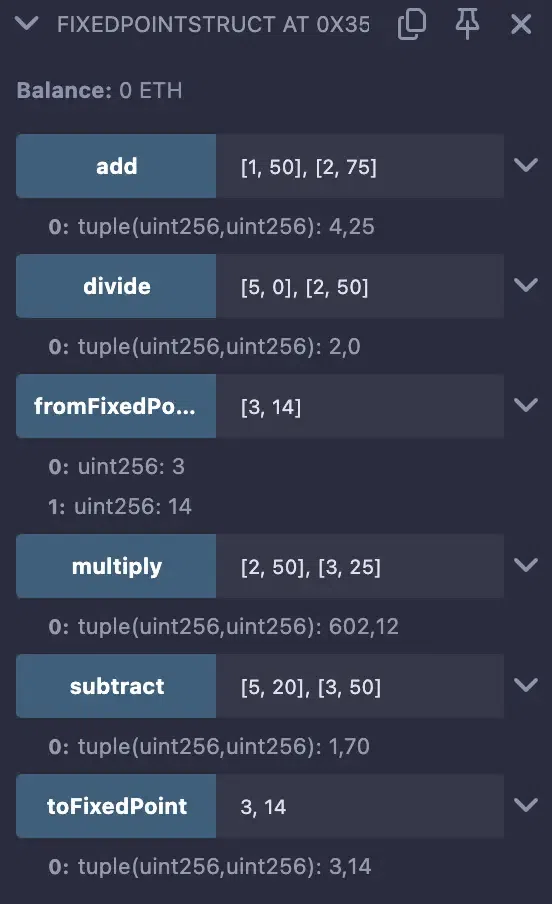
Output of All Example Inputs:
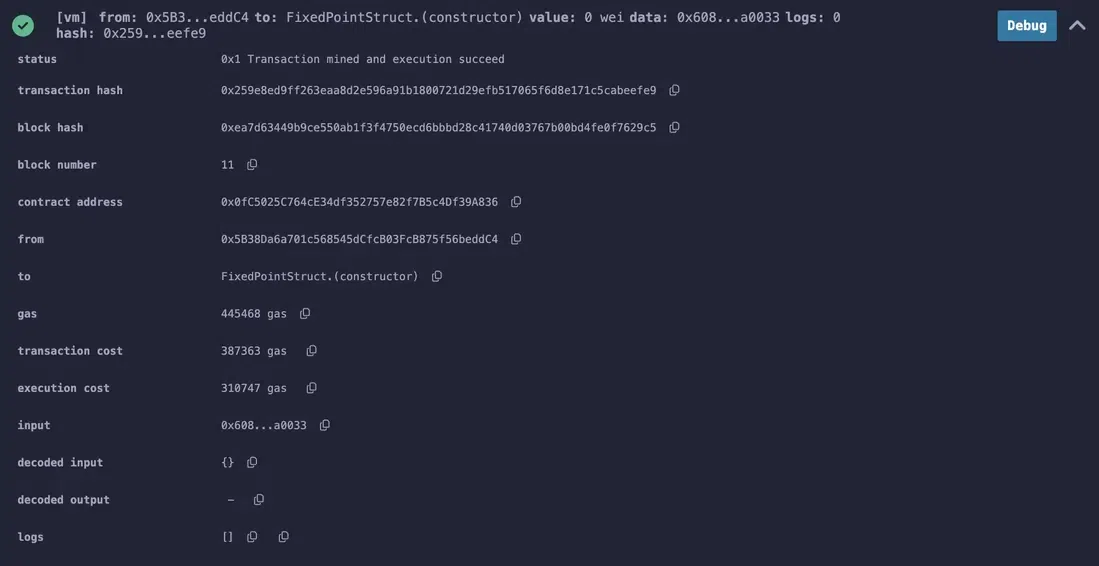
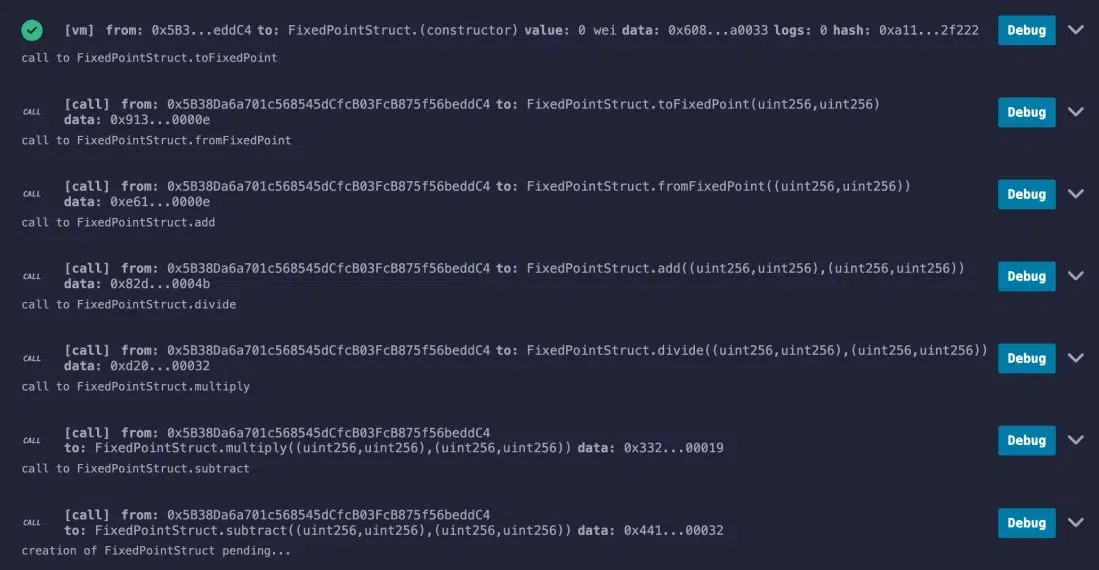
All Transaction Log - Deployed Contract and Deployed Functions:
Handling overflows and underflows is crucial in Solidity. Before version 0.8.0, developers relied on libraries like SafeMath for protection. From version 0.8.0 onwards, Solidity includes built-in checks for these issues.
Several libraries provide robust support for fixed-point arithmetic in Solidity. For example, ABDKMath64x64 offers functions for various mathematical operations on fixed-point numbers, using 64 bits for both the integer and fractional parts.
Fixed-point arithmetic is particularly useful in:
Gas optimization is a critical aspect of smart contract development. Fixed-point arithmetic can reduce gas costs compared to floating-point arithmetic. However, developers need to balance precision and gas efficiency carefully.
Fixed-point numbers are essential for handling fractional values accurately and efficiently in Solidity smart contracts. By mastering fixed-point arithmetic, developers can create more robust and reliable smart contracts, particularly for financial applications. As the Ethereum ecosystem evolves, tools and libraries for fixed-point arithmetic will continue to improve, offering even better support for developers.