|
VOOZH | about |
|
VOOZH | about |
Mapping in Solidity acts like a hash table or dictionary in any other language. These are used to store the data in the form of key-value pairs, a key can be any of the built-in data types but reference types are not allowed while the value can be of any type. Mappings are mostly used to associate the unique Ethereum address with the associated value type.
Syntax:
mapping(key => value) <access specifier> <name>;
Mapping is defined as any other variable type, which accepts a key type and a value type.
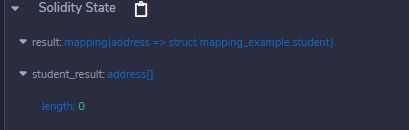
Example: In the below example, the contract mapping_example a structure is defined and mapping is created.
Output :
As the mapping is created let's try to add some values to the mapping for better understanding.
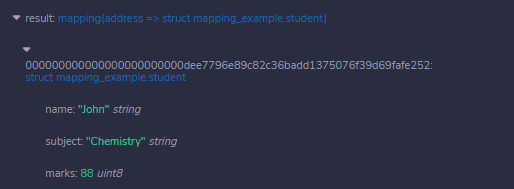
Example: In the below example, the contract mapping_example defines a structure, mapping is created and values are added to the mapping.
Output :
We have added values to the mapping, to retrieve the values we have to create a function that returns the values added to the mapping.
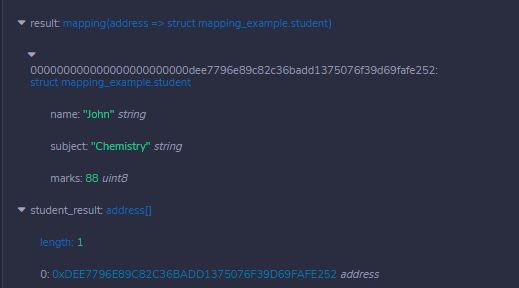
Example: In the below example, the contract mapping_example defines a structure, mapping is created, values are added to the mapping, and values are retrieved from the mapping.
Output :
Mappings can be counted so that we can know how many values are stored in mapping.
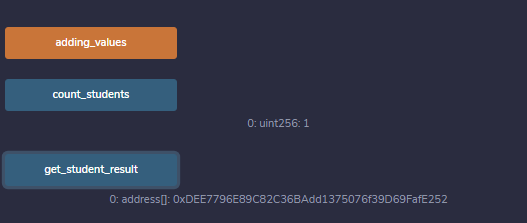
Example: In the below example, the contract mapping_example defines a structure, mapping is created, values are added to the mapping, and values are retrieved from the mapping.
Output :
Nested Mappings
If you need to keep track of multiple relationships, use nested mapping. Nested mapping is similar to regular mapping, but it has a different syntax.
Syntax:
mapping(key => mapping(key => value)) <access specifier> <name>;
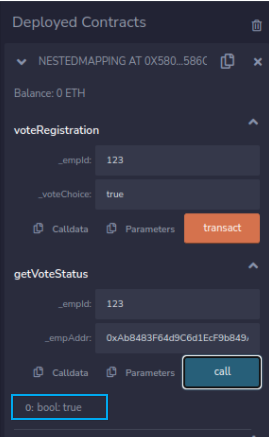
Example : In the below example , nested mapping created for electing the manager for an organization. Employees used their Employee ID and Voting choice to cast their vote. For knowing the voting status of the Employees ,You can use their Employee ID and Employee Address.
Output :