|
VOOZH | about |
|
VOOZH | about |
Solidity is a popular programming language specifically designed for developing smart contracts on the Ethereum blockchain. As a statically-typed language, Solidity offers various features to handle data types and conversions. Conversions play a crucial role in transforming data from one type to another, allowing developers to manipulate and interact with variables efficiently. In this article, we will explore the concept of conversions in Solidity and how they can be utilized effectively.
Solidity provides several built-in functions and operators for type conversions, enabling developers to convert between different data types such as integers, strings, addresses, and more. These conversions are essential for performing arithmetic operations, input/output operations, and interacting with external contracts and libraries.
Let's dive into some common types of conversions and how they can be used in Solidity:
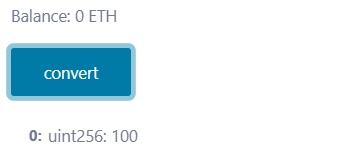
Integer conversions in Solidity involve converting values between different integer types, such as uint8 to uint256, to accommodate varying ranges and precision requirements. This allows for efficient storage and manipulation of integers while ensuring data integrity.
Example:
Output:
👁 ImageExplanation:
In the above example, the code defines a Solidity contract named helloGeeks with a public function convert that returns a uint256 value.
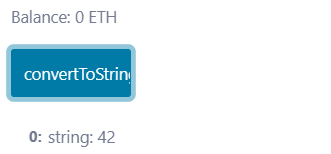
String conversions in Solidity involve converting non-string data types, such as integers or addresses, to their string representations. This enables the manipulation and display of data in a human-readable format, facilitating communication and data presentation in smart contracts.
Example:
Output:
👁 ImageExplanation:
In the above example, the contract helloGeeks has two functions.
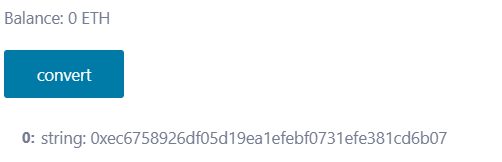
In Solidity, addresses can be converted between different types, such as converting an address to a uint or a string. Converting an address to a uint can be useful when performing arithmetic operations while converting it to a string can be beneficial for output formatting or concatenation.
Example:
Output:
👁 ImageExplanation:
In the above example, the helloGeeks contract has two functions.
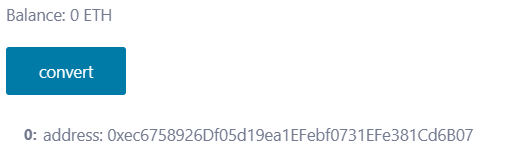
Type conversions for external interactions in Solidity, such as using the payable keyword, allow for seamless interaction with external contracts, enabling transfers of Ether and access to specific functionalities exclusive to payable addresses. It ensures compatibility and enables smooth integration with other contracts or external entities in the Ethereum ecosystem.
Example:
Output:
👁 ImageExplanation:
In the above example, the helloGeeks contract has a convert function that returns an address payable.