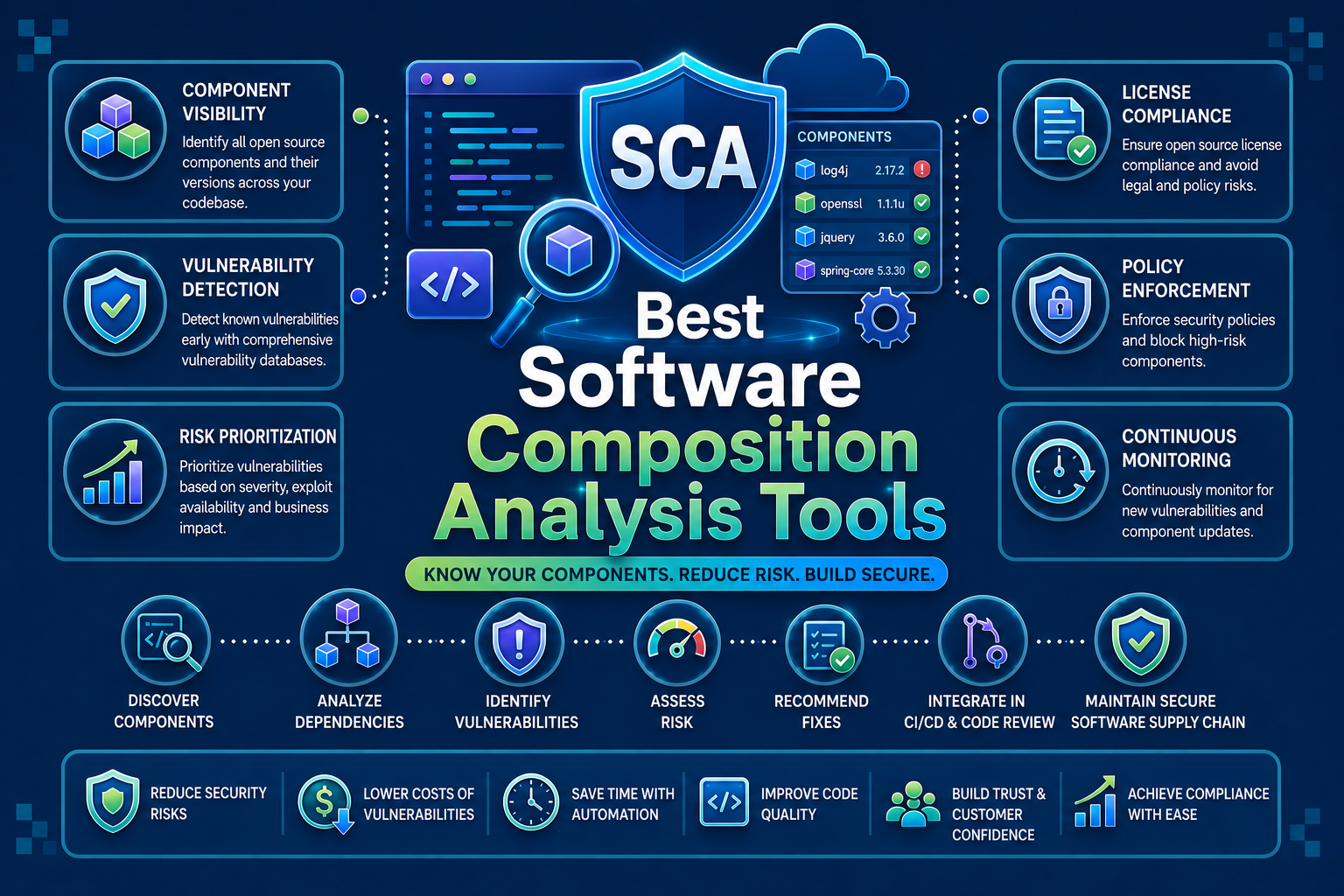

Modern software development relies heavily on open-source components and third-party libraries. They accelerate innovation and help teams ship faster, but they also introduce hidden risks through outdated dependencies, unpatched vulnerabilities, and licensing issues buried deep within the dependency tree.
Manual reviews can’t keep up with today’s software complexity. Studies estimate that 96% of applications use open-source dependencies, while 85% of codebases contain at least one outdated or vulnerable component. These risks already exist in most environments, whether organizations are aware of them or not.
Software Composition Analysis (SCA) tools help teams identify and manage these threats by automatically scanning codebases, dependency files, and containers for vulnerabilities and compliance issues. Integrated into modern DevOps pipelines, they enable organizations to scale security and compliance alongside development.
This guide explores the 10 best software composition analysis tools available today.
Key Tools
- Panto AI: AI-powered software composition analysis for teams that want dependency security inside pull request review.
- SonarQube: Developer-friendly SCA and code quality platform for teams already using SonarQube in CI/CD.
- Snyk: Popular software composition analysis tool for developer-first teams needing fast vulnerability remediation.
- Aikido Security: All-in-one DevSecOps platform suited for startups seeking simplified SCA and application security coverage.
- Mend.io: Enterprise software composition analysis solution built for open-source governance and license compliance.
- Black Duck: Trusted SCA platform for regulated organizations managing open-source risk, licensing, and supply chain security.
- Checkmarx One: Unified application security platform for enterprises that want SCA alongside broader code security testing.
- Xygeni: Software supply chain security tool focused on reachability analysis and high-priority vulnerability management.
- Veracode Software Composition Analysis: Enterprise-grade SCA solution for teams that need compliance reporting and centralized dependency risk management.
- OSV-Scanner: Free open-source vulnerability scanner for teams wanting lightweight software composition analysis powered by OSV data.
Why Software Composition Analysis Tools Are Non-Negotiable
Open-source code powers the majority of every modern application, but that convenience comes with strings attached.
Most teams have a clear picture of the code their engineers write; far fewer have a clear picture of what’s running inside their dependencies, or the dependencies of those dependencies.
Automated SCA tools change that. Next-generation AI code review tools don’t just scan surface-level packages. They trace indirect dependencies deep in your stack, catching vulnerabilities and license conflicts that manual reviews would never reach.
They run on every update, flagging risks the moment a new version introduces them rather than months later during an audit.
The payoff goes beyond security. Good SCA tools give teams prioritized, actionable output through clear dashboards and remediation guidance, so engineers spend less time triaging alerts and more time building.
When security is continuous and low-friction, it stops being a blocker and starts being a competitive advantage.
10 Best Software Composition Analysis Tools for 2026
Below are the 10 best Software Composition Analysis (SCA) tools in 2026. These platforms help engineering teams identify vulnerable dependencies, manage open-source risk, maintain license compliance, and secure software supply chains without slowing development.
1. Panto AI
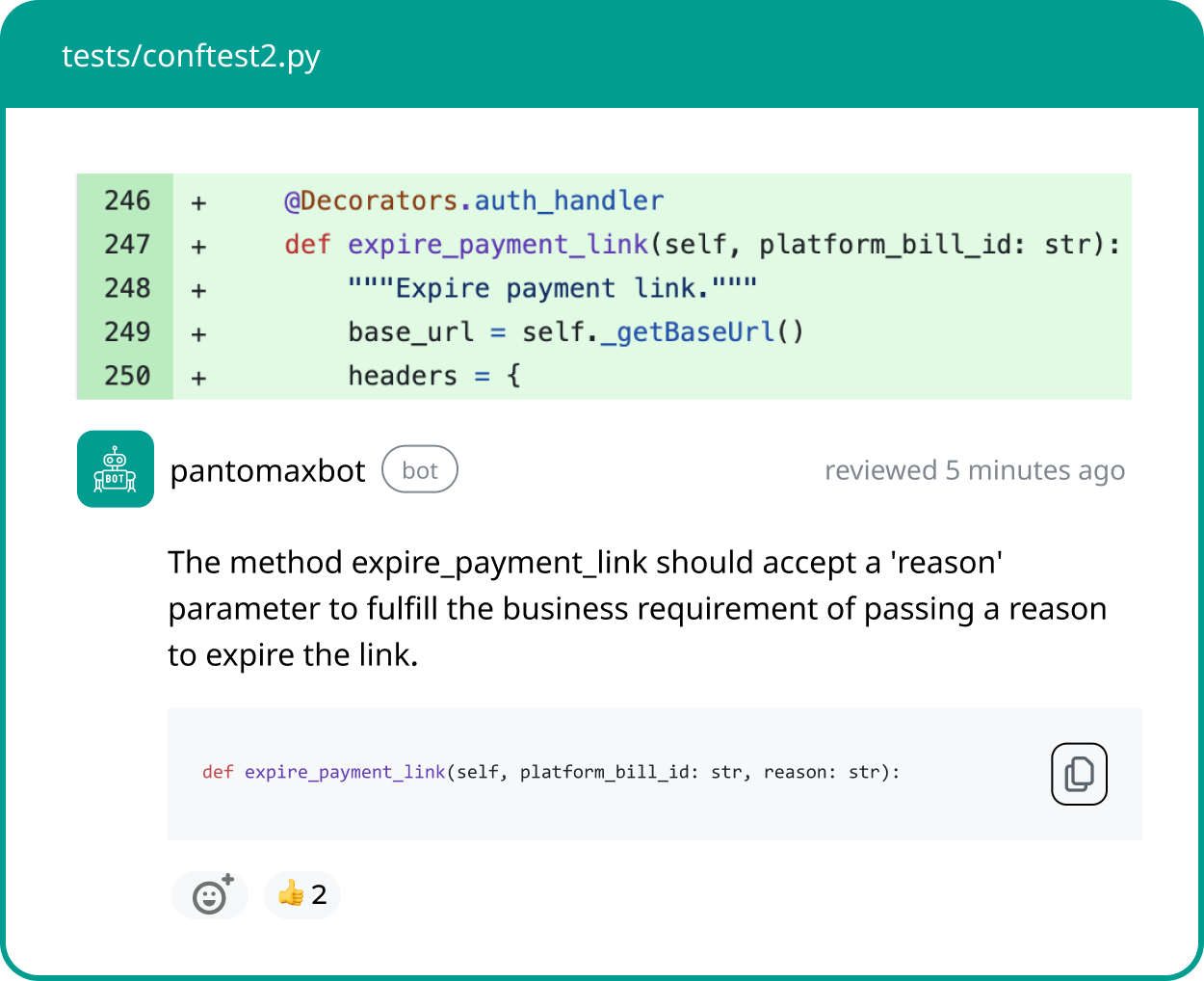
Panto AI approaches software composition analysis differently from traditional SCA platforms. Instead of treating dependency security as a separate security workflow, it embeds open-source risk detection directly into the code review process.
Developers receive insights on vulnerable dependencies, risky package upgrades, and software supply chain issues within pull requests, enabling them to address problems before they become production incidents.
Most software composition analysis tools excel at inventorying vulnerabilities, but they often leave engineering teams sifting through lengthy lists of CVEs with little understanding of which issues actually matter.
Panto AI combines dependency analysis with AI-powered code review to evaluate findings in the context of the code changes being introduced. By prioritizing risks based on impact and relevance, it helps teams focus on exploitable threats and meaningful fixes instead of alert fatigue.
Its native GitHub and Bitbucket integrations provide real-time feedback where developers already work, alongside actionable remediation guidance that accelerates resolution.
For fast-growing engineering organizations, Panto AI brings software composition analysis, AI code review, and developer productivity together in a single workflow, enabling teams to strengthen software supply chain security without slowing down delivery.
Key Features:
- AI-powered software composition analysis and code review: Analyze code changes and open-source dependencies together to uncover security risks with greater context.
- Pull request-native dependency risk detection: Surface vulnerable dependencies, risky package upgrades, and software supply chain issues directly within pull requests before code is merged.
- Context-aware vulnerability prioritization: Prioritize findings based on code impact and real-world relevance, helping teams focus on the risks that matter most.
- Actionable remediation guidance: Provide developers with clear recommendations and next steps to accelerate vulnerability resolution and reduce manual triage.
- Native GitHub and Bitbucket integrations: Deliver real-time feedback within existing development workflows without requiring developers to switch between tools or dashboards.
Best for: Engineering teams that want software composition analysis embedded into pull requests, enabling developers to remediate open-source risks before code is merged.
2. SonarQube
SonarQube brings developer-first SCA into the same workflow teams already use for code quality and SAST. It analyzes dependency manifests and lockfiles, continuously maps them to curated vulnerability and license data, and surfaces risks directly in PRs and CI/CD so developers can act without leaving their flow.
Key Features:
- Advanced SAST: Gain intelligence into how your code interacts with the broader software supply chain.
- Deep-tier taint detection: Uncover hidden vulnerabilities across complex data flows without adding overhead to your existing development workflow.
- Cross-boundary analysis: Trace interactions between your first-party code and open-source libraries to identify cascading security risks.
- SBOM and license governance: Automatically builds SBOMs, tracks license usage, and enforces license policies at the project and portfolio level to prevent problematic components from reaching production.
- Supply chain visibility: Highlights both direct and transitive dependencies, malicious or backdoored packages, and misconfigurations in dependency usage that can expose the broader software supply chain.
- Scales across ecosystems: Supports major languages and package managers (Maven/Gradle, npm/yarn, pip, NuGet, Go, PHP, Rust, Ruby, and more) with continuous expansion of coverage.
Best for: Organizations already using SonarQube for code quality and looking to extend security and dependency analysis within the same platform.
3. Snyk
Snyk remains one of the most popular developer-first SCA platforms. It continuously scans open-source dependencies, containers, infrastructure-as-code configurations, and application code for known vulnerabilities.
Snyk stands out for its remediation workflows, automatically generating pull requests to upgrade vulnerable packages and providing clear guidance on fixes.
Its risk prioritization combines CVSS scores, exploit prediction data, and reachability analysis to help teams focus on actively exploitable vulnerabilities.
Key Features:
- Dependency, container, and IaC scanning
- Automated fix pull requests
- Reachability-based vulnerability prioritization
- IDE and CI/CD integrations
- License compliance monitoring
Best for: Developer-first teams that prioritize automated remediation, fast onboarding, and strong IDE integrations.
4. Aikido Security
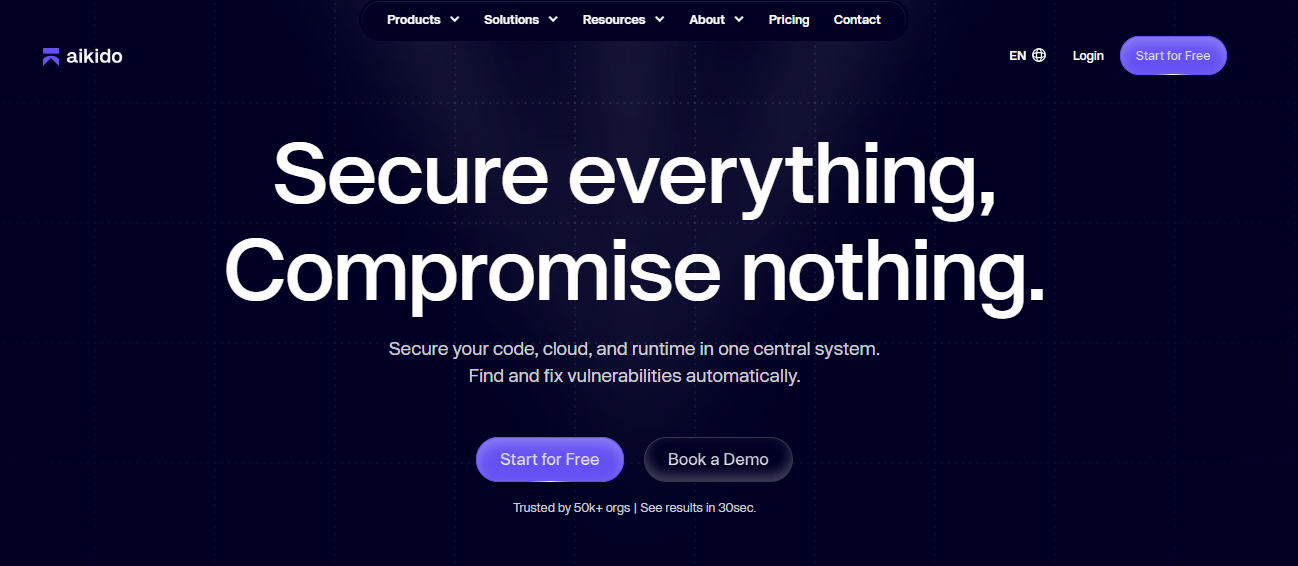
Aikido Security takes a consolidated DevSecOps approach by combining SCA, SAST, cloud security, secrets detection, container scanning, and vulnerability management in a single platform.
Its software composition analysis capabilities help teams identify vulnerable libraries while reducing alert fatigue through intelligent prioritization.
Aikido is particularly attractive for startups and mid-sized organizations that want broad security coverage without managing multiple security tools.
Key Features:
- Unified SCA, SAST, and cloud security platform
- Vulnerability prioritization and deduplication
- SBOM generation and management
- Container and dependency scanning
- Developer-friendly workflows
Best for: Startups and mid-sized companies seeking an all-in-one DevSecOps platform without managing multiple security tools.
5. Mend.io
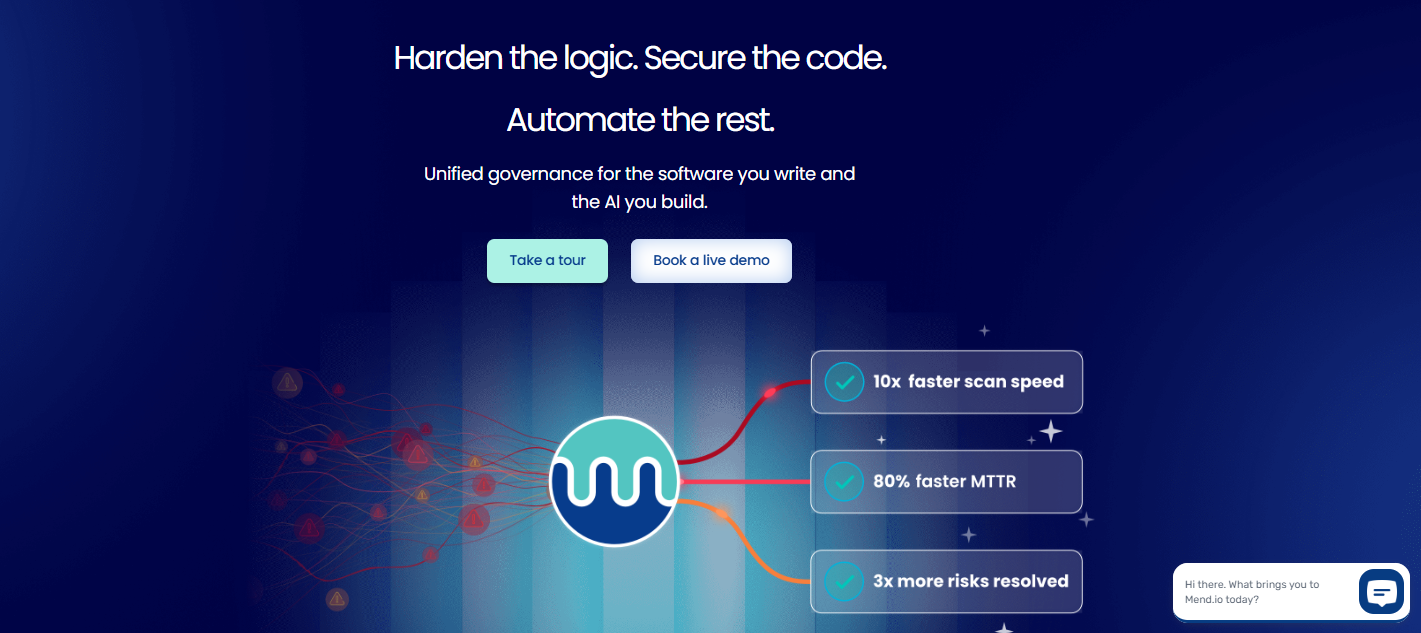
Mend.io (formerly WhiteSource) delivers comprehensive open-source security and license compliance management. It continuously monitors software dependencies across repositories and alerts teams when new vulnerabilities emerge.
Mend.io is particularly strong in enterprise environments, offering governance controls, policy enforcement, and automated dependency updates through Renovate integration.
Its combination of security and compliance capabilities makes it a popular choice for organizations with large-scale development operations.
Key Features:
- Comprehensive dependency scanning
- Automated dependency updates
- License compliance management
- Policy-based governance controls
- CI/CD and ticketing integrations
Best for: Large enterprises that require strong open-source governance, policy enforcement, and license compliance capabilities.
6. Black Duck
Black Duck by Synopsys is a long-standing leader in software composition analysis and open-source governance. It provides deep visibility into dependencies, licensing obligations, and software supply chain risks across applications and containers.
Its comprehensive scanning capabilities, SBOM generation, and compliance reporting make it particularly valuable for highly regulated industries and large enterprises.
Key Features:
- Vulnerability and license analysis
- Binary and source code scanning
- SBOM creation and monitoring
- Compliance reporting
- Enterprise policy enforcement
Best for: Highly regulated industries and enterprise organizations with complex compliance and software supply chain requirements.
7. Checkmarx One
Checkmarx One extends beyond traditional application security testing by offering integrated software composition analysis capabilities within its broader AppSec platform.
Organizations benefit from centralized visibility across code security, open-source dependencies, containers, and cloud-native applications, making it suitable for enterprises seeking a unified security program.
Key Features:
- Integrated SCA within a broader AppSec platform
- Vulnerability prioritization
- Dependency risk analysis
- CI/CD pipeline integration
- Centralized security dashboards
Best for: Enterprises looking for a unified application security platform that combines SCA with broader AppSec testing capabilities.
8. Xygeni
Xygeni focuses on software supply chain security and actionable vulnerability management. Rather than overwhelming developers with every detected issue, it uses exploitability and reachability analysis to prioritize vulnerabilities that are most likely to affect real-world applications.
By emphasizing context and prioritization over volume, Xygeni enables developers to spend less time triaging alerts and more time fixing meaningful security risks. The result is faster remediation, improved software quality, and a more efficient DevSecOps process.
Key Features:
- Reachability analysis
- Supply chain security monitoring
- License compliance management
- Risk visualization dashboards
- CI/CD integration
Best for: Security-conscious development teams that want exploitability-driven prioritization and deeper software supply chain visibility.
9. Veracode Software Composition Analysis
Veracode offers enterprise-grade dependency security through automated vulnerability detection, policy management, and continuous monitoring. It integrates closely with Veracode’s broader application security ecosystem, providing unified visibility into software risk.
Large organizations often choose Veracode for its governance capabilities, reporting depth, and compliance support.
Key Features:
- Continuous dependency monitoring
- Enterprise governance controls
- Vulnerability prioritization
- Compliance reporting
- Developer workflow integrations
Best for: Large organizations that need enterprise-grade governance, audit readiness, and centralized compliance reporting.
10. OSV-Scanner
OSV-Scanner is Google’s open-source vulnerability scanner built around the Open Source Vulnerabilities (OSV) database. It offers a lightweight and transparent approach to dependency scanning, making it ideal for teams seeking an open-source alternative to commercial platforms.
Because it’s open source, organizations can customize workflows, audit results, and integrate scanning directly into existing CI/CD pipelines.
Key Features:
- Free and open source
- Powered by the OSV database
- Fast dependency scanning
- CI/CD-friendly architecture
- Transparent vulnerability reporting
Best for: Budget-conscious teams, open-source projects, and organizations seeking a lightweight, transparent SCA solution.
Quick Comparison Table: Best Software Composition Analysis Tools
| Tool | Best For | Deployment | AI Prioritization | License Compliance | SBOM Support | Pricing |
|---|---|---|---|---|---|---|
| Panto AI | AI-assisted code review + SCA | SaaS | Yes | Yes | Yes | Custom |
| SonarQube | Code quality teams | SaaS / Self-hosted | Limited | Yes | Yes | Free + Paid |
| Snyk | Developer-first security | SaaS | Yes | Yes | Yes | Free + Paid |
| Aikido Security | Consolidated DevSecOps | SaaS | Yes | Yes | Yes | Paid |
| Mend.io | Enterprise governance | SaaS | Moderate | Strong | Yes | Custom |
| Black Duck | Regulated enterprises | SaaS / On-prem | Moderate | Strong | Yes | Custom |
| Checkmarx One | Unified AppSec | SaaS | Moderate | Yes | Yes | Custom |
| Xygeni | Reachability analysis | SaaS | Strong | Yes | Yes | Custom |
| Veracode SCA | Compliance-heavy teams | SaaS | Moderate | Strong | Yes | Custom |
| OSV-Scanner | Budget-conscious teams | Open Source | No | Limited | No | Free |
How to Choose the Right Software Composition Analysis Tool
Not all SCA tools are built the same. The right choice depends on your development workflow, security requirements, compliance obligations, and team size. Use the criteria below to evaluate which solution best fits your organization.
Integration With Your Development Workflow
An SCA tool should fit naturally into the way your team already works. Look for platforms that integrate with your source control systems, CI/CD pipelines, and developer environments.
Consider support for:
- GitHub, GitLab, and Bitbucket
- Jenkins, GitHub Actions, and other CI/CD tools
- IDEs such as VS Code, IntelliJ, and JetBrains products
- Collaboration platforms like Jira and Slack
The easier the integration, the faster developers can identify and fix issues without disrupting productivity.
Language and Ecosystem Coverage
Modern applications often rely on multiple coding languages, frameworks, and package managers. Your SCA solution should provide broad coverage across your technology stack.
Look for support for:
- JavaScript and TypeScript
- Python
- Java
- Go
- C# and .NET
- Ruby and PHP
- Containers and Kubernetes environments
- Infrastructure-as-Code (IaC)
Comprehensive coverage ensures vulnerabilities don’t go unnoticed in less visible parts of your application.
AI-Powered Analysis and Automation
Security tools generate value only when developers can act on their findings. AI-powered SCA platforms help reduce noise by prioritizing the vulnerabilities that matter most and providing clear remediation guidance.
Look for capabilities such as:
- Intelligent vulnerability prioritization
- Automated pull request feedback
- Reachability analysis
- Suggested fixes and dependency upgrades
- Automated remediation workflows
These features help teams resolve issues faster while reducing alert fatigue.
License Compliance and Governance
Open-source software introduces not only security risks but also licensing obligations. A strong SCA platform should help you understand which licenses are present in your codebase and whether they align with company policies.
Key capabilities include:
- Open-source license detection
- Compliance policy enforcement
- Automated governance workflows
- Software Bill of Materials (SBOM) generation
Organizations operating in regulated industries should pay particular attention to this area.
Risk Prioritization and Visibility
The best tools don’t simply report vulnerabilities; they help teams understand which issues present the greatest business risk.
Evaluate whether the platform provides:
- Severity-based prioritization
- Exploitability and reachability analysis
- Risk scoring and trend reporting
- Executive and developer dashboards
- Compliance and audit reporting
Clear visibility enables security and engineering teams to focus resources where they will have the greatest impact.
Pricing and Long-Term Value
Cost is an important factor, but it should be evaluated alongside the value a platform delivers.
Enterprise solutions often justify their investment through:
- Reduced remediation effort
- Faster developer workflows
- Improved compliance readiness
- Fewer production security incidents
For smaller teams or startups, open-source options such as OSV-Scanner may provide sufficient coverage while keeping costs low.
Final Thoughts
Open-source software powers modern application development, helping teams build and ship products faster while reducing development costs. However, every third-party dependency can introduce security vulnerabilities, licensing concerns, and software supply chain risks.
Software Composition Analysis (SCA) tools help organizations gain visibility into their open-source dependencies and identify vulnerabilities before they become security incidents.
They also support license compliance, automate dependency monitoring, and strengthen overall software supply chain security. Integrating SCA into the development lifecycle allows teams to address risks earlier and more efficiently.
Leading platforms such as Panto AI, Snyk, Mend.io, Aikido Security, Sonatype Lifecycle, Black Duck, Checkmarx One, Xygeni, Veracode, and OSV-Scanner offer different strengths across automation, governance, and vulnerability management.
The best choice depends on your team’s workflow, security requirements, and scale. By adopting the right SCA solution, organizations can improve security, maintain compliance, and deliver software with greater confidence.