
Modern Data Historian

See every signal from every asset
Industrial systems generate a constant stream of events, measurements, and status changes. A modern data historian captures and analyzes that high-resolution, high-velocity time series data in real-time, detecting anomalies early, predicting failures, and making proactive decisions that keep operations running smoothly.
Time series reveals the past, sharpens the present, and anticipates the future, driving predictive maintenance that maximizes uptime, efficiency, and reliability.
InfluxDB 3 is purpose-built for time series and Industry 4.0

Deploy in the cloud (multi- or single-tenant), on-prem, or at the edge.

Connect seamlessly to industrial protocols (MQTT, Kafka) and open formats, avoiding proprietary vendor lock-in.

Detect anomalies and run predictive models at the edge with low latency, even in intermittent connectivity environments.

Retain high-fidelity data for as long as you need with object storage optimized for throughput and cost.

Analyze millions of unique series per second, delivering the performance required for Industry 4.0 workloads.

Deliver a single source of truth across assets and sites for monitoring, reporting, and root-cause analysis.





Traditional data historians can't keep up
Traditional historians weren’t built for the massive volumes, high cardinality, and real-time demands of Industry 4.0. Burdened by proprietary “black box” designs and siloed, on-prem systems, they’re slow, costly, and hard to integrate, making instant insight and predictive maintenance nearly impossible.
InfluxDB removes these constraints, delivering open, real-time, cost-efficient time series data management at any scale.

Standardizing predictive maintenance at a global scale
Siemens Energy uses InfluxDB to monitor 23,000 battery modules across 70+ sites, analyzing billions of high-frequency sensor readings in real time to ensure quality, prevent downtime, and keep production running—anywhere in the world.
Read announcement
Real-time maritime and industrial optimization
Everllence (formerly MAN Energy Solutions) uses InfluxDB Cloud to power its MAN CEON platform, analyzing billions of time series data points from connected engines and equipment. CEON detects issues early, guides performance optimization, and drives significant annual fuel savings, advancing Everllence’s mission to decarbonize the maritime sector.
Read announcement
Scaling renewable energy management in real-time
ju:niz Energy uses InfluxDB Cloud Dedicated to unify data from 30 plants, ingesting 100× more sensor data per second while cutting storage costs by 10×. The platform enables predictive maintenance, deeper operational insights, and smarter renewable energy adoption across its decentralized energy systems.
Read case study
Supporting distributed energy resources
Scottish Power Energy Networks (SPEN) replaced its legacy data historian with InfluxDB to handle the surge in data volume and high-cardinality metadata driven by distributed energy resources (DER) adoption. InfluxDB unifies analog telemetry and digital event data in a single platform, delivering real-time insights and fulfilling strict regulatory reporting requirements.
Watch webinarSiemens Energy uses InfluxDB to monitor 23,000 battery modules across 70+ sites, analyzing billions of high-frequency sensor readings in real time to ensure quality, prevent downtime, and keep production running—anywhere in the world.
Read announcement 👁 Slide 1Everllence (formerly MAN Energy Solutions) uses InfluxDB Cloud to power its MAN CEON platform, analyzing billions of time series data points from connected engines and equipment. CEON detects issues early, guides performance optimization, and drives significant annual fuel savings, advancing Everllence’s mission to decarbonize the maritime sector.
Read announcement 👁 Slide 2ju:niz Energy uses InfluxDB Cloud Dedicated to unify data from 30 plants, ingesting 100× more sensor data per second while cutting storage costs by 10×. The platform enables predictive maintenance, deeper operational insights, and smarter renewable energy adoption across its decentralized energy systems.
Read case study 👁 Slide 3Scottish Power Energy Networks (SPEN) replaced its legacy data historian with InfluxDB to handle the surge in data volume and high-cardinality metadata driven by distributed energy resources (DER) adoption. InfluxDB unifies analog telemetry and digital event data in a single platform, delivering real-time insights and fulfilling strict regulatory reporting requirements.
Watch webinar 👁 Slide 4Open connectivity from edge to cloud
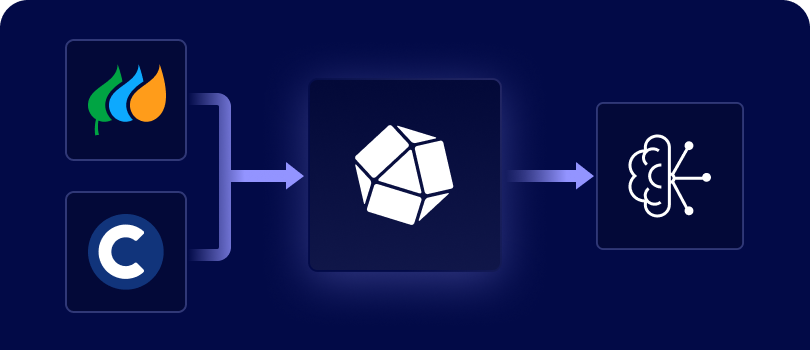
InfluxDB is open by design, connecting seamlessly to your existing systems with modern protocols like MQTT and Kafka, open formats, and 300+ Telegraf integrations. Integrate with any tool—AI/ML, visualization, or custom apps—without lock-in.
👁 Open-connectivity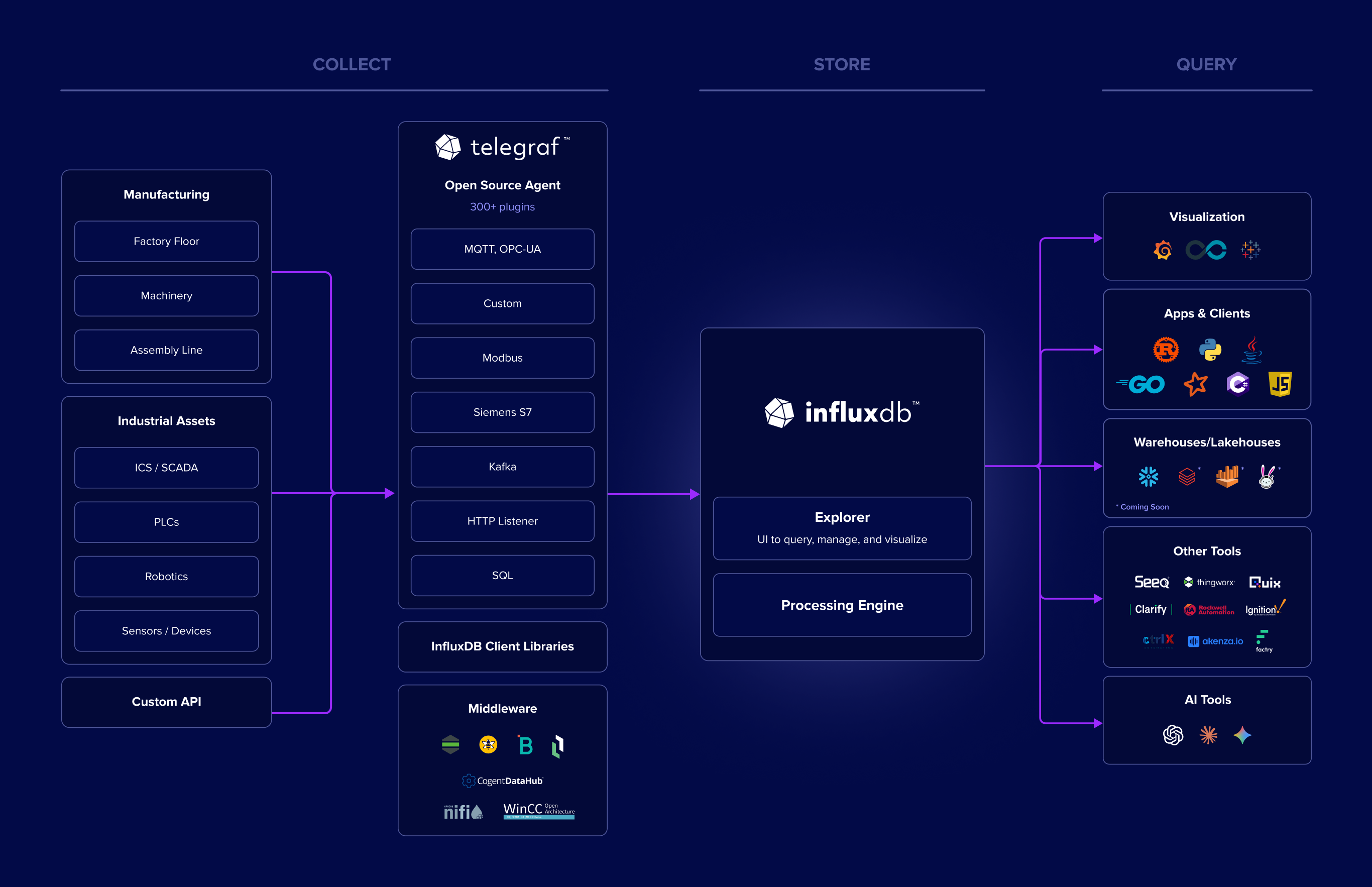
👁 Open-connectivity
Deploy anywhere
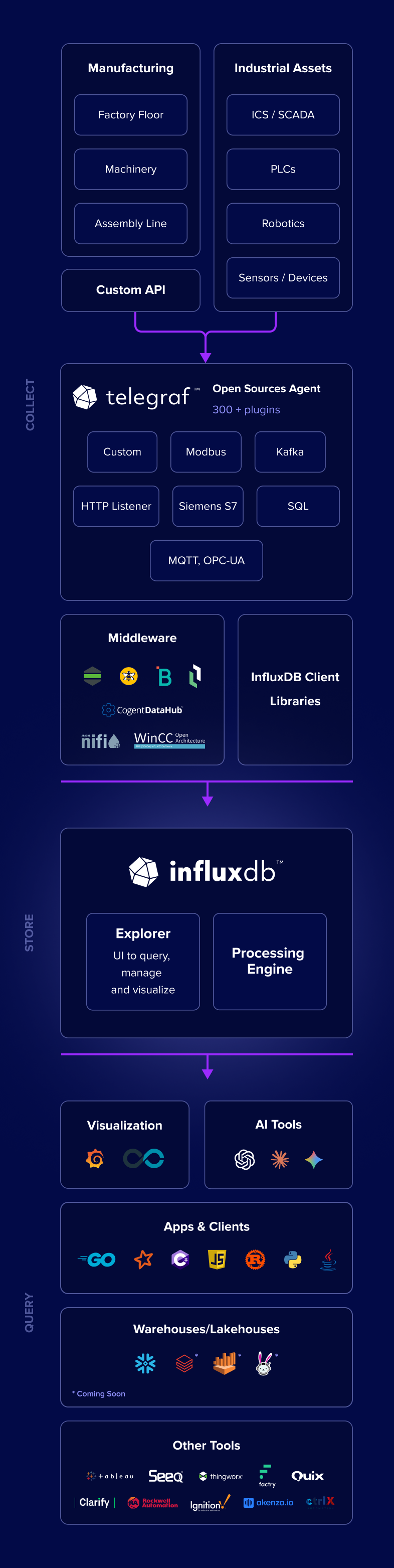
Whether you're building on-prem, private cloud, edge, or multi-tenant cloud, InfluxDB meets developers where they are.
Additional resources

FAQ
What is a modern data historian, and how does it differ from a traditional one?
Why are legacy data historians a problem for Industry 4.0 workloads?
Does adopting InfluxDB mean replacing the existing historian entirely?
Where can InfluxDB 3 be deployed for historian workloads?
How does InfluxDB 3 connect to existing industrial systems and protocols?
What scale does InfluxDB 3 support for historian workloads?
Does InfluxDB 3 support predictive maintenance and AI/ML, or is it primarily a storage layer?
How does InfluxDB 3's cost model compare to a traditional historian?
Trial for Free
Start free with self-managed, our most popular setup.
Easily install for Linux, Mac, RHEL, Docker:
curl -O https://www.influxdata.com/d/install_influxdb3.sh && sh install_influxdb3.sh enterprise
For Windows installation, see the Getting Started Guide.
By default, trials are 30 days. Need more time? We can help extend it. Contact Us.

