|
VOOZH | about |
|
VOOZH | about |
12 min
read
Discover key AI trends, adoption challenges, & impacts from Glide AI Report 2025. Learn how AI is reshaping operations and what’s next for businesses
By
Jesus Vargas
Updated on
May 29, 2026
.
Reviewed by
Real-World Experience with No-Code Tools: With over 320 apps built, we know firsthand what works—and what doesn't—when using no-code platforms like Glide, Bubble, FlutterFlow and Webflow.
Expert Team with 40+ Years of Combined Experience: Our team has deep technical knowledge, with experts who use no-code tools to solve real-world problems for clients every day, ensuring our advice is actionable and reliable.
Detailed Guides Based on Actual Projects: We don’t just talk about no-code; we use it daily to solve real business problems for our clients, from MVPs to complex automations.
Take a deeper look at our editorial guidelines
In 2025, 73% of businesses are already using AI or actively rolling it out, proving that the future of operations is happening now.
AI adoption is growing faster than any technology we’ve seen before. What many businesses thought would be a slow shift is already transforming how teams work, make decisions, and serve customers. From chatbots and automation to data analysis and AI agents, companies are finding real, measurable benefits from using AI in their daily operations.
To understand this shift better, Glide released its AI in Operations Report 2025, based on a survey of over 1,000 business leaders. The report uncovers how companies are using AI, what challenges they face, and what the future looks like across industries.
In this guide, we’ll explore how AI is transforming business operations, who’s leading the change, where the biggest impact is happening, and how your business can take advantage. Whether you’re just getting started or looking to scale, this guide will help you make smarter decisions with AI.
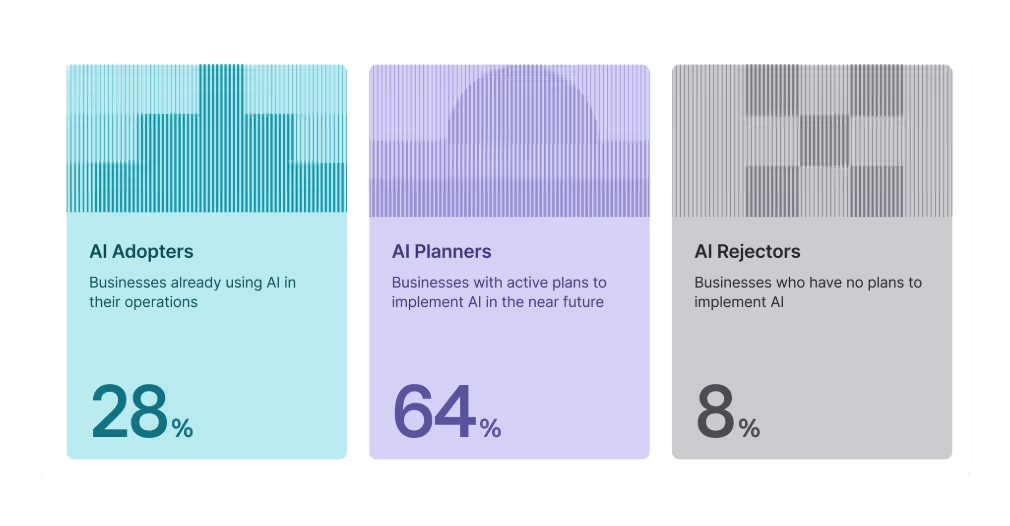
AI Adopters are the 28% of businesses already using AI in their daily operations. Most of them are large companies or part of the tech industry. They use AI for things like data processing, customer support, and business automation.
Over half (52%) say that AI has had a transformational impact on their work. Many are also using custom AI agents to automate tasks and improve speed. These businesses are not just testing AI—they are making it a core part of how they work.
They also tend to invest more, with many spending over $100,000 a year on AI tools. Adopters are leading the curve and showing what’s possible when AI is used well.
AI Planners make up the largest group—45% of businesses. These companies are interested in AI and have plans to start using it soon. Some are already testing tools, while others are unsure where to begin. Their main goals are to increase efficiency, improve decision-making, and support their teams.
But they face real challenges, like lack of knowledge, security concerns, and internal resistance from leadership or staff. Many planners prefer using AI tools built into software they already use, rather than building new systems.
They’re being cautious but curious, and most plan to move forward soon. With the right help, Planners could quickly become the next wave of successful AI adopters.
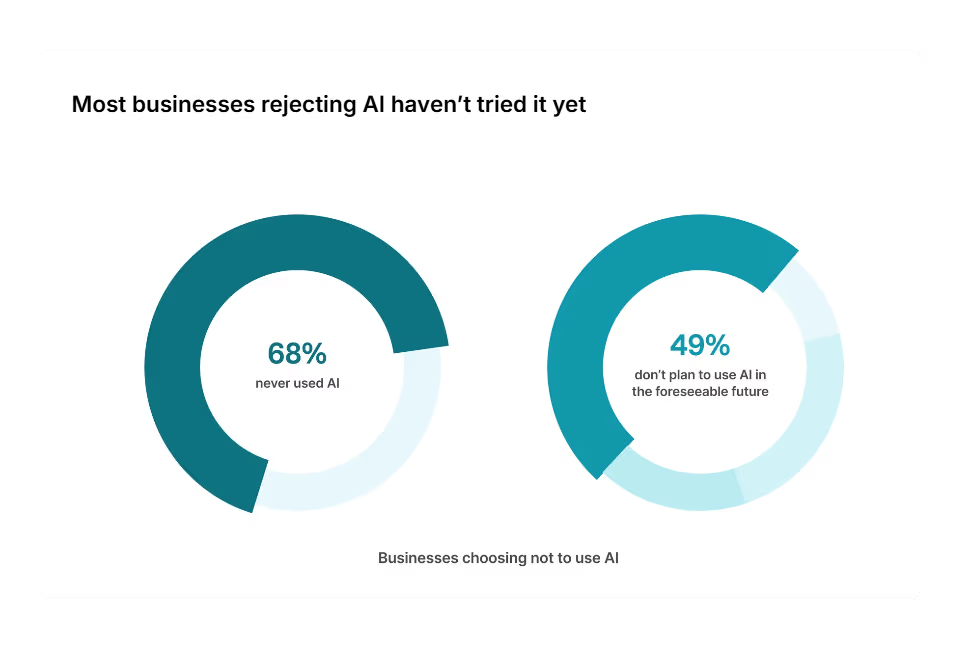
AI Rejectors are the 8% of businesses that are not using AI and have no plans to adopt it. They are often smaller companies or from industries like construction or retail, where the benefits of AI seem less clear. Some simply prefer their current systems and feel AI is too new or untested.
Others worry about job loss, security, or losing control over how decisions are made. Even though 59% of AI Rejectors believe AI gives other businesses a competitive edge, they still choose not to use it.
Instead, many are investing in staff training, hiring, or improving current processes. Their focus is on stability, not innovation—for now.
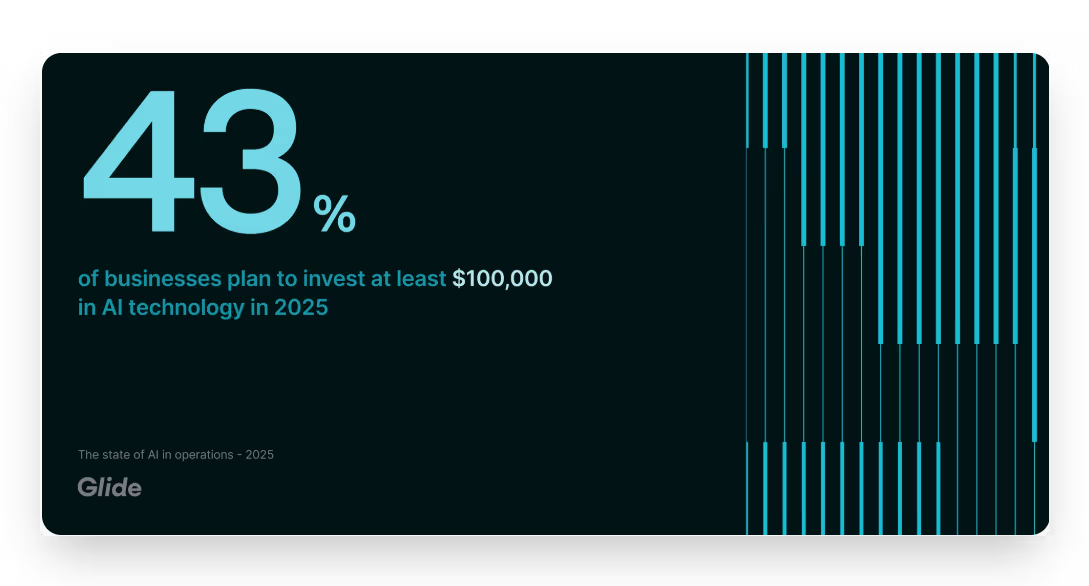
AI is no longer just an experimental tool—it’s a major part of business strategy. In 2025, 34% of businesses investing in AI plan to spend over $100,000, showing that companies are serious about using AI to improve their operations. Another 39% will invest between $10,000 and $99,999, proving that even smaller businesses are setting aside real budgets for AI.
Industries like manufacturing, retail, tech, and logistics are leading in AI investment. These sectors deal with high volumes of data and complex workflows, making AI a valuable tool for automation, forecasting, and customer service.
Large enterprises are investing heavily in AI to gain better data insights and decision-making power. They use AI to understand trends, reduce waste, and improve strategy. At the same time, many companies are enhancing their growth strategies through B2B lead generation, combining data-driven insights with targeted outreach to expand their customer base.
On the other hand, small businesses focus more on efficiency—saving time and simplifying tasks like data entry or customer support. Across the board, AI spending is growing fast and is expected to rise even more over the next year. Companies are particularly interested in specialized AI generators that automate content creation, such as the Hyper3D AI 3D model generator, which helps product teams and designers produce 3D assets at scale without expanding their creative departments.
Many teams are also experimenting with image to video tools to transform static visuals into engaging video content for marketing and product presentations.
One of the main reasons businesses invest in AI is to improve efficiency. AI can handle repetitive tasks, reduce manual errors, and speed up everyday workflows. For example, AI tools can automate data entry, sort emails, or update records in real time.
But AI isn’t just about boring tasks; it’s now stepping into creative spaces too. Take AI music-generating tools, for example: they let musicians and brands whip up unique soundtracks in no time.
This not only saves time but also allows teams to focus on more important work. As companies integrate generative AI tools into their daily operations, they can further streamline processes and boost overall productivity. In the Glide AI report, efficiency was the top reason small businesses gave for adopting AI. As operations become more complex, automation through AI becomes a key driver for productivity.
Larger businesses often use AI to support smarter decision-making. With access to large amounts of data, AI can quickly find patterns, give insights, and even make predictions. This helps managers make faster, more informed choices.
For example, AI can help with demand forecasting, customer behavior analysis, or risk assessment. According to the report, enterprise businesses ranked better insights as their top reason for using AI, especially in operations with multiple data streams.
AI also helps boost revenue by improving marketing, personalizing user experiences, and identifying new opportunities. Businesses use AI for upselling, targeting the right customers, and cutting down on wasted ad spend.
Retail businesses in the report were especially focused on using AI to increase sales and reduce costs. Even small changes powered by AI—like better product suggestions or faster response times—can drive big gains.
Let’s address a real-world example:
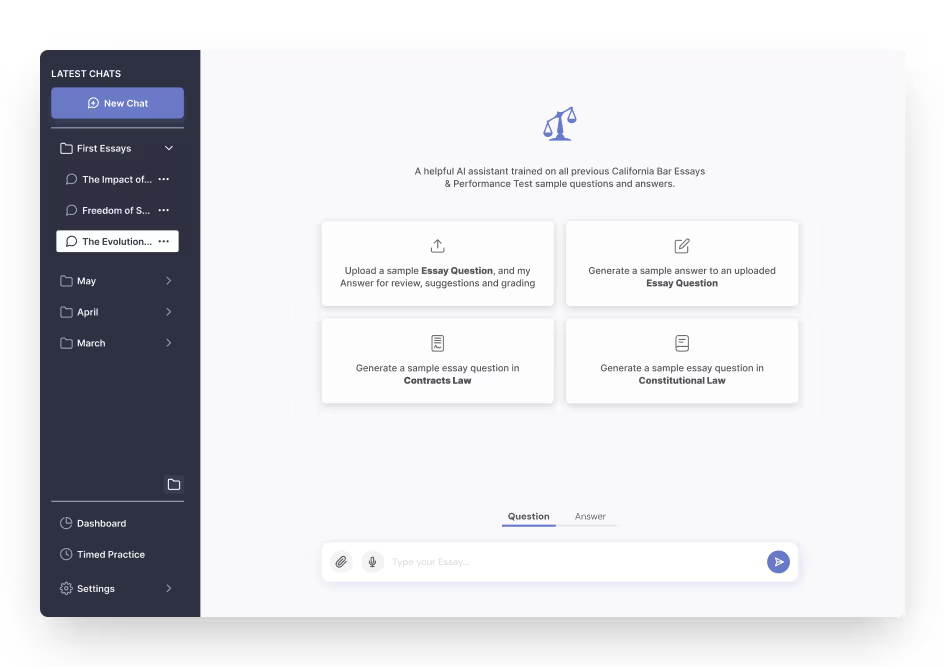
When attorney Robb Miller faced the challenge of helping law students prepare for the California Bar Exam, he partnered with us to create BarEssay.
This AI-powered application provides instant, personalized feedback on practice essays, assessing legal accuracy, argument strength, and writing clarity.
The results have been remarkable: students using BarEssay reduced their study time by 30% while increasing focus on weak areas by 70%. This targeted approach has not only improved efficiency but significantly boosted student confidence through visible progress.
AI agents are becoming the next major step in how businesses use AI. These are smart tools that can act on their own -- handling tasks, making decisions, and even improving over time. For sales teams, understanding more about AI SDR should be the first step in leveraging these agents to automate high-volume outreach while maintaining a personalized touch.
According to Glide’s 2025 report, 47% of businesses already using AI have deployed AI agents, and many others are planning to follow soon.
AI agents are most commonly used for automating repetitive tasks, measuring customer interactions like support chats, and handling data processing at scale. These tasks are where AI shows the most transformational impact, especially in large or fast-moving companies.
However, building AI agents isn’t always easy. 55% of businesses say they rely on consultants or outside experts because they lack in-house AI knowledge.
That’s where no-code AI platforms come in. These tools make it possible to build and launch AI agents quickly, without writing code—saving time, reducing costs, and helping teams move faster from idea to execution.
One of the biggest reasons businesses hesitate to adopt AI is data privacy and security.
In fact, 50% of companies say it’s their top concern. Leaders worry that AI systems could expose sensitive customer data or company information. Many tools don’t clearly show how data is used or stored, which adds to the fear.
For companies in industries like finance or healthcare, trust and compliance are even more critical. Until businesses feel confident that AI tools meet high security standards, adoption will remain slow. NIS2 implementation ensures AI systems meet stringent security standards, helping businesses protect sensitive data.
Many businesses want to use AI but don’t know how to start. A lack of understanding and expertise holds them back, especially in small businesses—30% of them say they’re unsure where to begin. Leaders often don’t know what AI tools to use, how to set them up, or where AI fits into their operations.
This leads to slow adoption or trial-and-error approaches. The report suggests that companies offering AI training and education for executives and staff tend to move faster and get better results.
Even when companies choose an AI tool, it doesn’t always work well with the systems they already use. Many businesses rely on older software or have custom workflows that are hard to update. AI that can’t integrate with legacy systems creates extra work and limits its value.
Businesses need custom AI solutions, no-code tools, or specialized platforms like AIops Platforms that can easily plug into existing tools without disrupting daily operations. Without seamless integration, even the best AI won’t deliver its full potential.
Inside many companies, there’s a quiet fear that AI could take away jobs. This leads to resistance from employees and even leadership. Older managers are often more skeptical of AI, while younger employees are more open and already using tools like ChatGPT.
Worries about layoffs, skill loss, or change slow down AI rollouts. But the report shows that companies that invest in upskilling their teams for AI see more success. When people feel supported and trained, they’re more likely to welcome AI as a tool—not a threat.
For most businesses, the best way to start with AI is to keep it simple. Begin with easy-to-use tools, like built-in AI features in software your team already uses—such as AI email replies, smart data filters, or AI-generated content.
These small wins build confidence and show quick results. Once AI becomes part of daily workflows, businesses can gradually move to more advanced solutions, like AI agents or custom automations. Starting small also lowers risk and helps teams learn as they go.
One of the biggest keys to AI success is training your team. Employees need to understand that AI is here to help—not replace them. With the right skills, staff can use AI to save time, make better decisions, and do more creative work.
Businesses that invest in AI upskilling often see faster adoption and better results. Training also reduces fear and builds trust, especially among team members who may feel unsure or resistant to new tools.
To get the most out of AI, it needs to fit into your current systems. That’s why it’s important to choose AI tools that integrate smoothly with the platforms and workflows you already use.
For businesses with unique processes or older systems, custom AI solutions or no-code tools may be the best path. This ensures that AI works without slowing down operations or requiring a full tech overhaul. Compatibility leads to quicker adoption and better long-term success.
AI is quickly becoming a core part of how businesses work. In industries like tech, retail, and logistics, adoption is growing fast, and more companies are seeing real results from using AI tools.
The 2025 Glide report shows that many businesses plan to increase their AI investment—especially in automation and custom AI agents that handle tasks, improve speed, and cut costs.
As AI tools become more accessible through no-code platforms, even small teams can build smart solutions without developers. This levels the playing field and opens new opportunities for growth.
But businesses that ignore AI risk falling behind. As more companies use AI to move faster and serve customers better, those without it may struggle to keep up. The future of operations will be shaped by AI, and companies that adapt early will have a clear advantage in efficiency, decision-making, and innovation.
At LowCode Agency, we specialize in building AI-driven apps, stunning websites, and custom automation solutions tailored to your unique needs. Whether you're aiming to launch an MVP, automate workflows, or build a full-scale application, our team ensures a smooth and efficient development process.
We are the:
Additionally, we specialize in:
With a proven track record of building different types of applications, our team of expert project managers, no-code developers, and designers is committed to delivering top results. We know how important speed and quality are, so we help businesses turn their ideas into reality, twice as fast and at half the cost of traditional development.
📌 Check out our case studies and book a free call to see how we can turn your vision into reality.
The AI revolution isn’t coming—it’s already here. Waiting to adopt AI could leave businesses behind as competitors move faster, automate more, and make smarter decisions. The 2025 Glide report shows that companies already using AI are seeing real results, from improved workflows to higher revenue and better customer experiences.
Starting small with no-code AI tools can make adoption easy and low-risk. Whether it’s automating a single task or building custom AI agents, the key is to begin. Businesses that take action now will be better prepared for what’s next.
AI is not a temporary trend. It’s a long-term shift in how operations, customer service, and decision-making are done. Acting early gives your team time to learn, adapt, and lead—rather than play catch-up later. In today’s market, waiting is the bigger risk.
Last updated on
May 29, 2026
.
Jesus Vargas
-
Founder
Jesus is a visionary entrepreneur and tech expert. After nearly a decade working in web development, he founded LowCode Agency to help businesses optimize their operations through custom software solutions.
Custom Automation Solutions
Save Hours Every Week
We automate your daily operations, save you 100+ hours a month, and position your business to scale effortlessly.
Our AI — trained on 300+ shipped products — tells you what to build, what to skip, and what it'll actually cost. No fluff.
Assess My Idea"Working with LowCode Agency was the best decision I made in 2025"
Franklin Frith
CEO at HRM
According to the Glide State of AI in Operations 2025 report, 28% of businesses are already actively using AI in their operations. Another 45% have concrete plans to implement AI, while 19% want to use AI but aren't sure how to begin. Only 8% of businesses surveyed have no interest in adopting AI technology. Larger enterprises are adopting AI at more than twice the rate of small businesses.
The top challenges include data privacy and security concerns (cited by 50% of businesses), lack of knowledge about implementation, and integration difficulties with existing systems. Many companies also report internal resistance, particularly from older leadership and middle management concerned about job displacement. Small businesses struggle the most with knowing where to start, with 30% reporting they want to implement AI but don't know how.
Business intelligence leads as the most common AI application, followed closely by data processing and process automation. Research and brainstorming, customer service automation, and content creation are also widely implemented. Businesses report that AI has the most transformational impact on data processing and process automation, with over 52% of companies citing these areas as significantly improved by AI implementation.
The technology sector is at the forefront with 47% of companies already using AI, followed by retail, professional services, manufacturing, and transportation/logistics (with 25-27% adoption rates). Within organizations, IT departments are significantly ahead in AI use (67%) compared to other departments (averaging 26%). The tech industry is also leading in AI agent deployment, with 72% having already implemented these more sophisticated AI solutions.
For 2025, 34% of businesses planning to use AI are allocating over $100,000, while 39% are investing between $10,000 and $99,999. Companies already using AI are spending significantly more, with 57% budgeting $100,000 or more this year. Manufacturing, transportation & logistics, retail, and tech are investing the heaviest, with over 50% of businesses in these sectors planning to spend more than $100,000 on AI initiatives in 2025.
AI
Predict Equipment Failures Using AI Effectively
Learn how AI predicts equipment failures early to reduce downtime and maintenance costs with practical steps and tools.
Business Automation
Set Up Automatic Recruiter Notifications for Hiring Stages
Learn how to automate recruiter alerts at each hiring stage to streamline your recruitment process efficiently and avoid missed updates.
AI
How to Deploy AI Across Your Company Without Paying Per Seat
Learn how to deploy AI across your company without paying per seat. Build a centralized system that reduces cost and improves real adoption.
AI
AI Employee for Medical Clinics: Automate Admin
Automate appointment booking, patient reminders, and intake forms 24/7. Your AI Employee reduces no-shows and frees your clinical staff to focus on care.
AI
AI contract management: Making business agreements simple and fast with no-code
Discover how AI contract management automates document review, tracks deadlines, and reduces errors, helping businesses process agreements faster and more accurately.
Business Automation
Next Steps After Your Zapier Workflows Go Live
Learn what to do after launching Zapier workflows to ensure smooth automation and avoid common issues.