|
VOOZH | about |
|
VOOZH | about |
12 min
read
Centralize healthcare operations with no-code business process automation to boost efficiency, reduce errors, and improve patient care
By
Jesus Vargas
Updated on
May 29, 2026
.
Reviewed by
Real-World Experience with No-Code Tools: With over 320 apps built, we know firsthand what works—and what doesn't—when using no-code platforms like Glide, Bubble, FlutterFlow and Webflow.
Expert Team with 40+ Years of Combined Experience: Our team has deep technical knowledge, with experts who use no-code tools to solve real-world problems for clients every day, ensuring our advice is actionable and reliable.
Detailed Guides Based on Actual Projects: We don’t just talk about no-code; we use it daily to solve real business problems for our clients, from MVPs to complex automations.
Take a deeper look at our editorial guidelines
Business Process Automation (BPA) in healthcare uses technology to streamline repetitive and manual tasks across your organization. While traditional digital tools simply digitize paperwork, true automation connects multiple processes to work together seamlessly without human intervention.
Think of automation as your digital workforce handling routine operations while your staff focuses on patient care. For example, instead of manually collecting patient information, calculating insurance coverage, and scheduling appointments, an automated system can perform all these tasks simultaneously.
With healthcare facilities losing over 10 hours per employee each week on manual tasks, automation isn't just convenient; it's essential. Staffing shortages and increasing administrative burdens make this technology particularly valuable now.
By implementing BPA, you can reduce errors, improve efficiency, and allow your healthcare professionals to dedicate more time to what matters most: caring for patients.
At LowCode Agency, we specialize in transforming healthcare operations through tailored automation solutions. After building over 330+ custom applications and automation systems, we've helped healthcare providers cut manual work by up to 70%, freeing valuable time for patient care.
Our team understands the unique challenges of healthcare workflows and compliance requirements. We build intuitive, secure systems that streamline your processes while maintaining compliance and data security.
Whether you need to automate patient intake, streamline billing, or create efficient documentation systems, we deliver solutions that grow with your practice.
Ready to revolutionize your healthcare operations? Book a free discovery call with us today, and let's discuss how we can help your facility reduce administrative burden while improving patient care.
Healthcare organizations often struggle with fragmented software systems and manual workflows. These siloed tools create separate pockets of information that don’t communicate well with each other. This fragmentation leads to many problems, such as errors in patient data, delays in treatment, and challenges in meeting strict compliance standards.
Centralized automation systems solve these issues by bringing different departments together under one platform. For example, they can connect human resources, billing, and patient management portals into a seamless workflow. This unified approach helps healthcare teams access accurate information faster and reduces the risk of mistakes.
Key benefits of centralized automation in healthcare include:
By replacing isolated tools with a centralized system, healthcare providers can offer safer, more efficient, and patient-centered services.
Healthcare facilities need automation solutions that can be implemented quickly without disrupting patient care. No-code platforms offer the perfect balance of power and accessibility, allowing you to build sophisticated systems without extensive coding knowledge or lengthy development cycles.
These platforms excel at connecting existing healthcare databases, integrating with APIs from EHR systems, and creating custom workflows that match your specific operational needs. You can deploy automation solutions in weeks rather than months, adapting quickly to changing regulations and patient care requirements.
Bubble stands out as the ideal platform for complex healthcare applications requiring robust data management and intricate workflows. Its visual programming approach allows you to create sophisticated patient management systems, billing automation, and compliance tracking tools without traditional coding.
For healthcare BPA, Bubble excels at building comprehensive internal applications that handle sensitive patient data securely. You can create custom workflows that connect multiple departments, automate approval processes, and maintain detailed audit trails for compliance purposes. Its flexibility makes it perfect for facilities needing tailored solutions that grow with their operations.
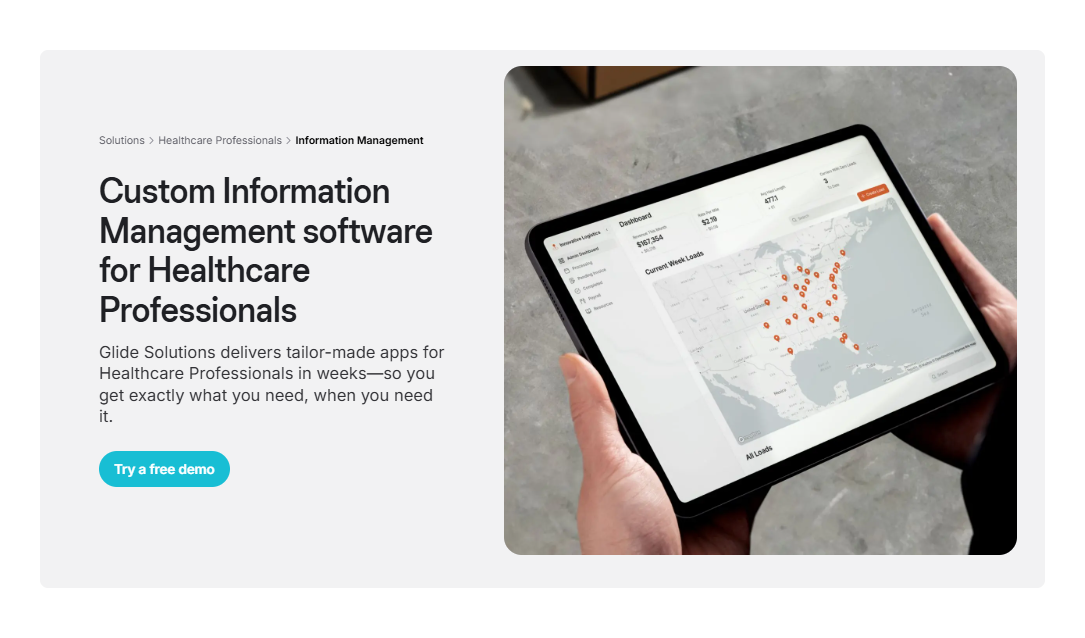
Glide transforms your existing healthcare data into powerful, user-friendly applications that your staff can access from any device. This platform is particularly effective for creating mobile-friendly tools that healthcare workers can use at the point of care.
For healthcare automation, Glide excels at converting spreadsheet-based processes into streamlined digital workflows. You can quickly build inventory management systems, staff scheduling tools, and patient tracking applications that sync in real-time. Its intuitive interface ensures rapid adoption across your healthcare team, minimizing training requirements.
FlutterFlow enables you to create native mobile applications that healthcare professionals can use seamlessly across iOS and Android devices. This platform is ideal when your automation needs include mobile-first solutions for field staff or patient-facing applications.
In healthcare BPA, FlutterFlow shines for building custom applications that work offline and sync when connectivity returns, crucial for healthcare environments with inconsistent internet access. You can create patient intake apps, medication tracking tools, and real-time communication systems that provide consistent performance across all mobile platforms.
A small multispecialty clinic builds a centralized app using Glide to streamline their entire patient management process. The system automates patient intake by allowing new patients to complete forms digitally before their visit, with information automatically populating their medical records.
The appointment booking feature connects with provider schedules in real-time, reducing double-bookings and optimizing clinic capacity. Automated follow-up reminders via text and email reduce no-shows by 35%, while the integrated CRM tracks patient communication history.
Doctors can access comprehensive patient histories and treatment notes from any device, eliminating the need to switch between multiple systems during consultations. The admin team uses built-in analytics to identify scheduling patterns and optimize staff allocation, resulting in 25% improved operational efficiency.
A private practice creates a patient portal using Bubble that transforms how they manage patient relationships and gather feedback. Patients log into their secure portal to view current prescriptions, request refills, and access detailed post-visit instructions with embedded educational resources.
The integrated feedback system automatically prompts patients to rate their experience after each visit, with responses feeding directly into quality improvement dashboards. Low satisfaction scores trigger automated alerts to practice managers for immediate follow-up.
Administrators use the same platform to monitor patient satisfaction trends, schedule automated outreach campaigns for preventive care reminders, and track patient engagement metrics. The system reduces administrative calls by 40% while improving patient satisfaction scores through proactive communication.
A diagnostics lab builds a comprehensive mobile inventory management app using FlutterFlow to track supplies across five locations. Lab technicians use the mobile app to scan barcodes and update stock levels in real-time, with changes immediately reflected across all locations.
The system automatically generates alerts when critical supplies reach predetermined thresholds, preventing stockouts that could delay patient testing. Smart purchase order generation connects with preferred vendors, automating the procurement process based on usage patterns and lead times.
Lab managers access centralized dashboards showing inventory trends, cost analysis, and usage forecasting across all facilities. The app's offline capability ensures staff can continue updating inventory even in areas with poor connectivity, with data syncing automatically when connection resumes.
Healthcare automation systems must handle sensitive patient information while maintaining strict compliance with HIPAA regulations. Traditional development approaches often require extensive security audits and complex encryption protocols that can delay implementation for months.
You need systems that protect patient data through built-in security features like role-based access controls, encrypted data storage, and detailed audit trails. Any breach or compliance failure can result in significant fines and damage to your facility's reputation.
No-code platforms designed for healthcare applications come with pre-built HIPAA compliance features, reducing the complexity of meeting regulatory requirements. These platforms handle security protocols automatically while maintaining the flexibility you need for custom workflows.
Most healthcare facilities have unique operational processes that don't fit standard software templates. Off-the-shelf solutions often force you to change your proven workflows to match the software's limitations, reducing efficiency and staff satisfaction.
Custom-coded solutions can match your exact needs but require extensive development time and technical expertise. Changes to workflows often mean costly code modifications and lengthy testing cycles that disrupt your operations.
No-code platforms bridge this gap by offering the flexibility of custom development with the speed of template-based solutions. You can create workflows that match your current processes while maintaining the ability to adapt quickly as your needs evolve.
Traditional healthcare IT projects often require specialized developers, extensive testing periods, and complex integration processes. Your facility may wait 6-12 months for a custom solution, during which operational inefficiencies continue to impact patient care and staff productivity.
Limited IT resources mean competing priorities for development time, often delaying automation projects that could provide immediate benefits. When modifications are needed, you're dependent on developer availability and technical expertise.
No-code platforms eliminate these bottlenecks by enabling your healthcare staff to build and modify automation systems directly. Faster iterations mean you can test workflows, gather feedback, and make improvements in weeks rather than months, ensuring your automation truly serves your operational needs while requiring minimal technical training for your team.
Centralized Business Process Automation transforms healthcare operations by eliminating the inefficiencies of fragmented systems and manual processes. You gain the power to reduce errors, improve staff productivity, and deliver better patient experiences while maintaining strict compliance requirements.
No-code platforms like Bubble, Glide, and FlutterFlow make sophisticated healthcare automation accessible without extensive technical expertise or lengthy development cycles. You can build systems that match your unique workflows while maintaining the flexibility to adapt as your needs evolve.
Ready to revolutionize your healthcare operations with centralized automation? Book a free discovery call with LowCode Agency today. Our healthcare automation experts will help you identify the best opportunities for improvement and create a custom solution that transforms how your facility operates.
Last updated on
May 29, 2026
.
Jesus Vargas
-
Founder
Jesus is a visionary entrepreneur and tech expert. After nearly a decade working in web development, he founded LowCode Agency to help businesses optimize their operations through custom software solutions.
Custom Automation Solutions
Save Hours Every Week
We automate your daily operations, save you 100+ hours a month, and position your business to scale effortlessly.
Our AI — trained on 300+ shipped products — tells you what to build, what to skip, and what it'll actually cost. No fluff.
Assess My Idea"Working with LowCode Agency was the best decision I made in 2025"
Franklin Frith
CEO at HRM
Business process automation in healthcare uses technology to streamline repetitive tasks like patient intake, appointment scheduling, and billing. Unlike basic digital tools, true automation connects multiple systems to work together without manual intervention, allowing healthcare staff to focus on patient care while reducing errors and administrative burden.
Centralized systems eliminate data silos by connecting previously isolated departments and processes. When patient information flows automatically between your EHR, billing, and scheduling systems, you reduce errors, improve response times, and strengthen compliance. Staff spend less time on manual data entry and more time providing quality patient care.
No-code platforms can automate patient intake forms, appointment scheduling and reminders, insurance verification, medical inventory tracking, employee onboarding, and internal task assignments. These tools excel at connecting databases, integrating APIs, and creating custom workflows that match your facility's specific operational needs without requiring extensive coding knowledge.
Yes, enterprise no-code platforms designed for healthcare include built-in HIPAA compliance features, encrypted data storage, role-based access controls, and detailed audit trails. Platforms like Bubble offer enterprise-grade security that meets healthcare regulatory requirements while providing the flexibility to create custom workflows and maintain strict data protection standards.
BPA reduces manual errors and paperwork, improves staff productivity and morale, provides real-time visibility into operations, ensures easier compliance and audit-readiness, and delivers better patient experiences through faster service. Healthcare facilities typically see 40-70% reduction in administrative tasks, allowing staff to focus on patient care.
These platforms offer visual development environments that connect healthcare databases, integrate with EHR APIs, and create custom workflows without coding. Bubble excels at complex patient management systems, while Glide transforms existing data into mobile-friendly applications. Both platforms provide HIPAA compliance features and rapid deployment capabilities for healthcare automation.
Business Automation
Get Instant Alerts for Payment Failures Easily
Learn how to receive instant notifications when a payment fails in your system to prevent revenue loss and improve customer experience.
Business Automation
Top Business Tasks Zapier Can Automate for You
Discover key business tasks Zapier automates to save time and boost productivity. Learn how to streamline workflows effectively.
Business Automation
Create an Automated Discount Approval Workflow Easily
Learn how to build an automated discount approval workflow to streamline approvals and reduce errors in your sales process.
Business Automation
What Is Zapier and How It Works for Your Business
Discover how Zapier automates tasks by connecting apps to boost your business efficiency without coding.
Business Automation
Comparison
Zapier vs Power Automate | 8 Factors to Decide the Best One
Compare Zapier vs Power Automate on pricing, features, security, and workflows. Learn which automation tool is best for your business needs
Business Automation
Automate Sales Follow-Ups with AI Without Sounding Generic
Learn how to use AI for personalized sales follow-ups that avoid generic messages and boost engagement effectively.