|
VOOZH | about |
|
VOOZH | about |
12 min
read
Learn how to build mobile apps faster with top RMAD tools, no-code platforms, and smart practices to cut time and cost in 2025
By
Jesus Vargas
Updated on
May 29, 2026
.
Reviewed by
Real-World Experience with No-Code Tools: With over 320 apps built, we know firsthand what works—and what doesn't—when using no-code platforms like Glide, Bubble, FlutterFlow and Webflow.
Expert Team with 40+ Years of Combined Experience: Our team has deep technical knowledge, with experts who use no-code tools to solve real-world problems for clients every day, ensuring our advice is actionable and reliable.
Detailed Guides Based on Actual Projects: We don’t just talk about no-code; we use it daily to solve real business problems for our clients, from MVPs to complex automations.
Take a deeper look at our editorial guidelines
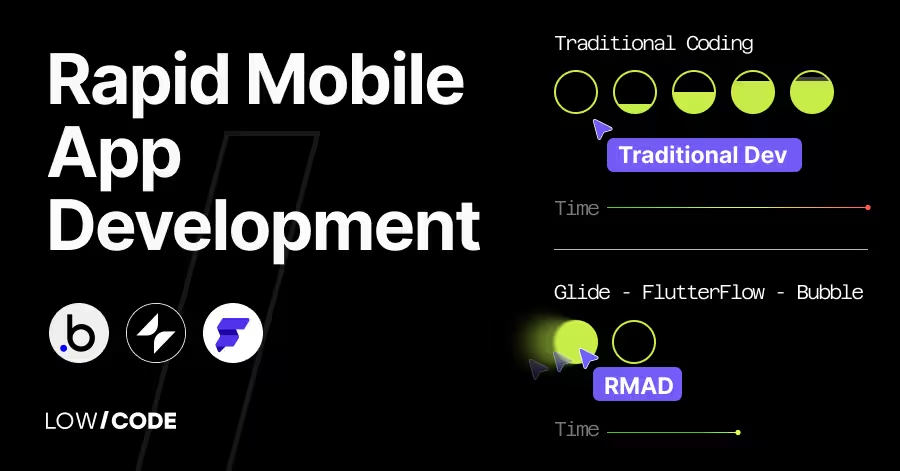
Rapid Mobile App Development (RMAD) is an approach that accelerates the entire app creation process from concept to launch. Instead of spending months writing code from scratch, you leverage visual development tools, pre-built components, and streamlined workflows to build functional mobile applications in weeks rather than years.
The key difference lies in methodology and speed. Traditional development follows a linear path: extensive planning, custom coding, lengthy testing cycles, and complex deployment processes. Each phase can take months, with teams often rebuilding features that already exist elsewhere.
Rapid mobile app development flips this approach by using low-code and no-code platforms, reusable templates, and automated processes. You focus on solving your users' problems rather than wrestling with technical complexities. This means faster iterations, quicker market validation, and the ability to adapt based on real user feedback.
The result? Apps that reach users faster while maintaining professional quality and functionality.
At LowCode Agency, we've mastered the art of rapid mobile app development using no-code platforms like FlutterFlow, Bubble, and Glide. With over 330 successful projects created, we are strategic cocreators for startups, businesses, and entrepreneurs to transform their ideas into market-ready mobile applications in record time.
We don't just build apps; we craft solutions that scale with your business. Our team understands the unique challenges of mobile development and leverages the most powerful platforms to deliver native iOS and Android apps that perform flawlessly across all devices.
Whether you need an MVP to validate your concept or a full-featured application ready for thousands of users, we handle everything from initial planning to deployment and beyond.
Ready to turn your mobile app idea into reality? Book a free discovery call with us today for a free consultation and discover how we can bring your vision to life in weeks, not months.
Rapid Mobile App Development (RMAD) offers a faster and more flexible way to build mobile apps compared to traditional development. Traditional app development usually takes months, requires large teams, and involves complex coding. Rapid mobile app development, on the other hand, uses low-code or no-code platforms that let you create apps quickly with less technical effort.
Here are the key differences between rapid mobile app development and traditional development:
Rapid mobile app development makes sense when you need to launch an app fast, especially for MVPs, internal tools, or business process automation. It’s also ideal if you have limited budgets or want to iterate quickly based on user feedback. However, for very complex apps with custom features, traditional development may still be better.
By choosing Rapid Mobile App Development, you can save time and cost while still delivering effective mobile solutions that meet your business needs.
The right platform can make or break your rapid development timeline. Each tool brings unique strengths to mobile app creation, and choosing the one that aligns with your project needs determines how quickly you'll reach market.
Bubble stands out as a comprehensive web application platform that excels at creating sophisticated, database-driven applications. While primarily focused on web apps, Bubble's Progressive Web App (PWA) capabilities make it a powerful choice for mobile-responsive applications.
Bubble offers visual programming through workflows, flexible database management, and extensive third-party integrations. Its drag-and-drop interface lets you build complex app logic without writing code, while the platform handles hosting, security, and scalability automatically.
Bubble accelerates development by providing pre-built templates and a robust plugin ecosystem. You can create sophisticated applications with user authentication, payment processing, and real-time data sync in weeks rather than months. The platform's ability to handle complex business logic makes it ideal for data-heavy applications and internal tools.
Glide transforms spreadsheets and databases into beautiful, functional mobile apps with remarkable speed. This platform specializes in creating data-driven applications that work seamlessly across all devices.
Glide connects directly to Google Sheets, Airtable, and other data sources to create instant mobile interfaces. It offers pre-built components, automated syncing, and intuitive design tools that require no technical expertise to operate effectively.
Glide's approach makes it the fastest way to prototype and launch mobile applications. You can have a working app in days rather than weeks, making it perfect for internal business tools, customer-facing apps, and rapid concept validation. The platform's simplicity doesn't sacrifice functionality, offering robust features for most common use cases.
FlutterFlow combines Google's Flutter framework with a visual development interface, enabling the creation of truly native mobile applications for both iOS and Android from a single codebase.
FlutterFlow provides native app development capabilities, real-time preview across devices, and extensive customization options. The platform includes pre-built templates, third-party integrations, and the ability to export clean Flutter code when needed.
FlutterFlow delivers native mobile app performance without the complexity of traditional development. You can create apps that feel polished and professional while maintaining rapid development speeds. The platform's cross-platform capabilities mean you build once and deploy everywhere, significantly reducing time-to-market for mobile-first projects.
Rapid mobile app development platforms offer surprising depth beyond their starter templates. You can modify layouts extensively, create custom workflows, and build unique user experiences that reflect your brand identity.
Platforms like Bubble allow complex database relationships and custom business logic, while FlutterFlow lets you add custom code when needed. The key is understanding each platform's customization ceiling before you start building.
The trade-off is real but manageable. Rapid mobile app development gives you 80% of what custom development offers in 20% of the time, but that missing 20% might include highly specialized features or unique integrations.
You'll move faster by accepting some constraints around UI components, database structures, or third-party integrations. However, most business applications rarely need the extreme customization that traditional development provides.
Focus your customization efforts where they matter most to your users. Spend time perfecting core user flows and essential features rather than tweaking every visual detail.
Use the platform's strengths, like automated responsive design or built-in security, while customizing the elements that differentiate your app. Remember, you can always enhance customization in future iterations as your app grows and generates revenue.
PWAs, created through platforms like Bubble or Glide, work through web browsers but can be installed on home screens like native apps. They're faster to deploy, easier to update, and don't require app store approval. However, they have some limitations with device features and may not feel as polished as native alternatives.
Choose native when you need deep device integration or app store presence. Opt for PWAs when you prioritize rapid deployment and frequent updates over advanced mobile features.
When field workers descended into manholes for sewer inspections, they lost connectivity and struggled with wet paperwork and incomplete data entry. Matthew Misera needed an app that worked offline and synced automatically when connection returned.
Using FlutterFlow, we built RedZone, a comprehensive field operations app in just 11 weeks. The solution included offline functionality, intelligent sync mechanisms, and integration with their existing ERP system.
Workers now complete inspections 40% faster with 80% improved data accuracy. The app serves 150 users across field teams and city officials, eliminating the frustration of lost paperwork and missed data points.
The LGBTQ+ community needed a centralized platform to connect 440 Pride organizations worldwide and showcase their events in one accessible location. Traditional development would have taken over a year to build such a comprehensive community platform.
Our team leveraged FlutterFlow to create SuperQueer as a global LGBTQ+ community hub in a fraction of the traditional timeline. The platform successfully connects hundreds of Pride organizations and thousands of community members, fostering engagement and event discovery. What started as an MVP quickly evolved into a comprehensive platform that serves the worldwide LGBTQ+ community effectively.
Both projects demonstrate RMAD's core strength: delivering sophisticated functionality quickly without sacrificing quality. RedZone's offline capabilities and SuperQueer's community features would have required months of custom development, but RMAD platforms made complex functionality accessible and deployable in weeks rather than months.
Rapid Mobile App Development shines when speed to market matters more than building everything from scratch. It's your best choice when you need to validate business concepts quickly, have budget constraints, or want to test user engagement before committing to extensive custom development.
Rapid mobile app development works particularly well for startups launching MVPs, businesses creating internal tools, and entrepreneurs who need to prove market demand before scaling.
At LowCode Agency, we've built over 330 custom apps and automation solutions, with many leveraging RMAD platforms to accelerate time-to-market. Whether you need a simple business tool or a comprehensive user-facing app, we can guide you from concept to launch in weeks, not months.
Ready to see your app idea come to life? Contact us today for a free discovery call and discover how rapid development can accelerate your business goals.
Last updated on
May 29, 2026
.
Jesus Vargas
-
Founder
Jesus is a visionary entrepreneur and tech expert. After nearly a decade working in web development, he founded LowCode Agency to help businesses optimize their operations through custom software solutions.
Custom Automation Solutions
Save Hours Every Week
We automate your daily operations, save you 100+ hours a month, and position your business to scale effortlessly.
Our AI — trained on 300+ shipped products — tells you what to build, what to skip, and what it'll actually cost. No fluff.
Assess My Idea"Working with LowCode Agency was the best decision I made in 2025"
Franklin Frith
CEO at HRM
The top RMAD platforms include FlutterFlow for native mobile apps, Bubble for web-based applications with mobile responsiveness, and Glide for data-driven apps. Each platform serves different needs: FlutterFlow excels at cross-platform native development, Bubble handles complex business logic, and Glide transforms spreadsheets into functional apps quickly.
Not at all. RMAD platforms can handle sophisticated applications with complex workflows, user authentication, payment processing, and database management. While they excel at common business functions, you can build everything from marketplace apps to internal enterprise tools. The key is understanding each platform's strengths and limitations.
Yes, RMAD platforms are designed for scalability. Platforms like Bubble and FlutterFlow handle thousands of users and large datasets effectively. They're built on robust cloud infrastructure and offer automatic scaling capabilities. Many successful businesses have grown from RMAD-built MVPs to full-scale applications serving millions of users.
The main risks include platform dependency, potential limitations for highly specialized features, and less control over underlying code. You're tied to your chosen platform's roadmap and pricing changes. However, many platforms offer code export options, and the speed-to-market benefits often outweigh these risks for most business applications.
Low-code platforms accelerate RMAD through visual development interfaces, pre-built components, automated backend services, and seamless integrations. They eliminate repetitive coding tasks while maintaining flexibility for customization. These platforms handle infrastructure, security, and deployment automatically, letting you focus on building features that matter to users.
RMAD with no-code and low-code platforms typically delivers apps in 3-6 months compared to 6-12 months for traditional development. This represents a 50% reduction in development time. Simple apps might launch even faster, while complex applications still benefit from dramatically shortened timelines. The visual development approach eliminates lengthy coding phases and streamlines deployment processes significantly.
Mobile App Development
How to Pause or Cancel a Mobile App Project
Need to pause or cancel your mobile app project? Learn how to do it cleanly, protect your investment, and plan for what comes next.
Glide
Mobile App Development
Build Mobile Apps Using Glide (Read this Before You Start)
Learn how to build mobile apps using Glide, what it can and can’t do, pricing limits, and when it makes sense for real business use cases in 2026.
Mobile App Development
White Label Mobile Apps: Are They Worth It?
Considering a white label mobile app? Learn the pros, cons, hidden costs, and limitations before choosing it over custom development.
Mobile App Development
How to Scale Mobile App Users and Revenue
Built your mobile app — now what? Learn the strategies that actually grow users, improve retention, and increase revenue over time.
Mobile App Development
How to Hire Cross-Platform Mobile App Developers
Looking to hire cross-platform mobile app developers? Learn where to find them, what to look for, and how to vet them properly.
Mobile App Development
Types of Mobile Apps: What Are Your Options?
Not sure which type of mobile app to build? Learn the differences between native, hybrid, cross-platform, and web apps explained clearly.