|
VOOZH | about |
|
VOOZH | about |
We use cookies to improve your experience on our site. By using our site, you are agreeing to the collection and use of data as described in our Privacy Policy.
Cookie Settings×Table of contents
As your organization looks to close more deals, retain more clients, and expand to more markets, you can turn to customer-facing integrations.
To help you leverage customer-facing integrations successfully, we’ll break down everything you need to know about them. This includes what they are, how you can use them, and the different ways you can go about building and maintaining them.
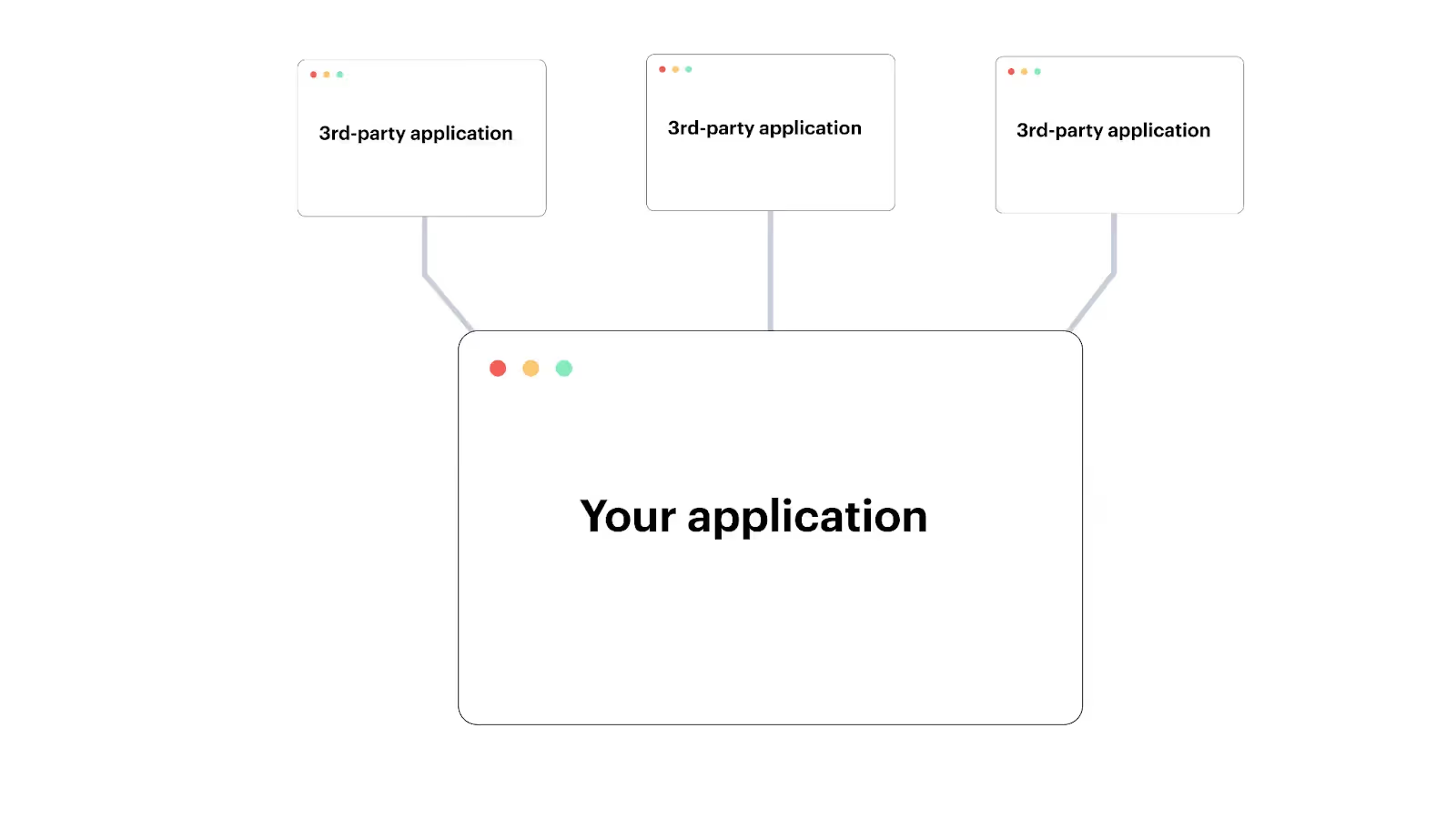
They are connections that are established and maintained between your product and any of your customers’ applications. The connections are often built on APIs so that data can be synced quickly, reliably, and at a high volume.
Note: For all intents and purposes, product integrations and customer-facing integrations mean the same thing.
To help bring our definition to life, let’s break down a few customer-facing integration use cases:
To help customers manage users in your product, you can connect to their respective HRIS solutions and enable them to implement the following automated provisioning flows:
Related: What are white label API integrations?
Say you offer a compliance automation platform that helps customers identify and work on specific tasks that would help them comply with important frameworks, like GDPR, HIPAA, ISO 27001, etc.
To help customers share these tasks with the relevant teams internally and collaborate on them with ease, you can offer integrations that allow teams to sync tasks from your platform with tickets in customers’ ticketing platforms bidirectionally.
More specifically, you can power the following syncs: Any time a task is created in your platform, a corresponding ticket gets created in the customer's ticketing tool; and whenever a ticket or task is modified—up until its completion—the changes are reflected in the other platform.
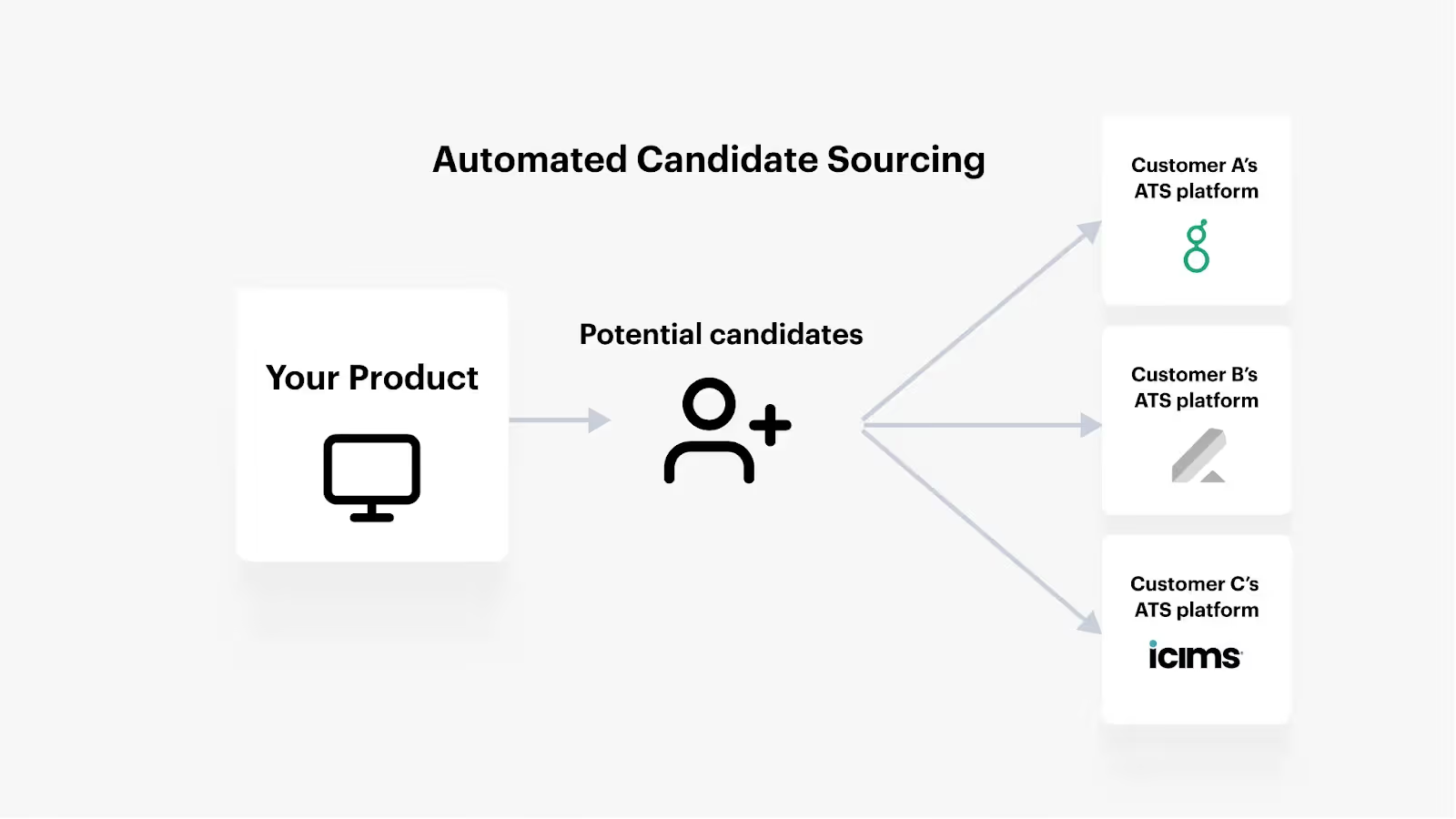
Say you offer a recruiting automation solution that helps recruiting teams identify ideal candidates for certain roles.
To help recruiters find and follow-up on the candidates your platform recommends quickly, you can integrate with customers’ applicant tracking systems (ATSs) and build a flow where once a candidate is recommended in your product, they automatically get created in the associated customer’s ATS.
You generally face one of three options: native integrations, an embedded integration platform as a service (iPaaS), and a unified API platform.
This simply refers to integrations that are built and maintained by your engineers.
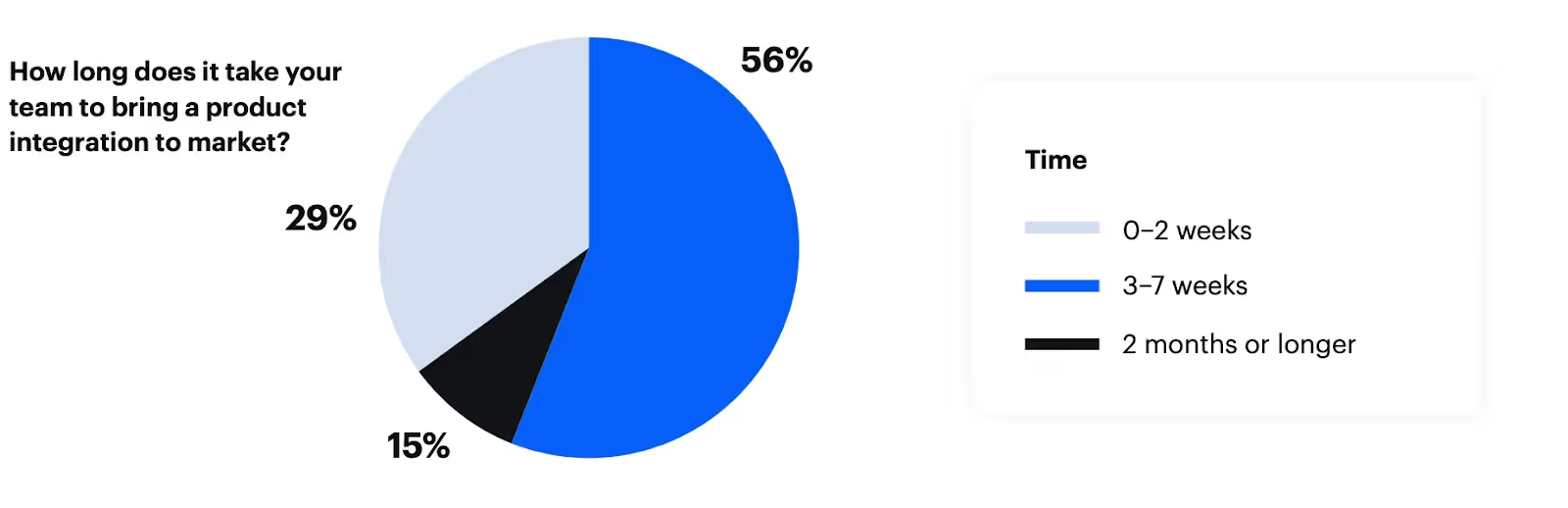
While this approach allows you to avoid paying and relying on a 3rd-party, it also comes with notable drawbacks. You’ll have to enlist several engineers with building and maintaining the integrations, which may not be the best use of their time. Your team may also take several weeks to build a single integration. And if they’re tasked with building dozens of integrations, this could lead to significant delays and frustrations for everyone involved.
These customer-facing integrations are built through an embedded iPaaS.
Your team can integrate applications and implement automations faster through the platform’s pre-built connectors and automation templates. Moreover, these platforms often provide robust security features and comply with security regulations and audits, like GDPR and SOC 2 Type II.
However, the platform requires technical expertise to use, which can force your engineers to get involved. The platform also forces your engineers to build one integration at a time, which prevents them from easily scaling your integration builds. And finally, the platform lacks the observability features your team needs to pinpoint and address integration issues on time.
A unified API solution (or universal API solution) lets you access a whole category of integrations through a single integration build.
For instance, you can build to a unified API and then add dozens of HRIS integrations to your product.
This type of platform is inherently more scalable than the other approaches, as it allows your team to add hundreds of integrations in a matter of weeks.
In addition, through Merge, the leading unified API solution, you'll receive enterprise-grade security and compliance controls, Integration Observability features that let your customer-facing employees manage integrations, integration maintenance support from our team of partner engineers, and more.
{{this-blog-only-cta}}
Learn how Merge can help you add hundreds of secure, reliable, and performant integrations to your product within weeks.






.avif)

.png)