|
VOOZH | about |
|
VOOZH | about |
We use cookies to improve your experience on our site. By using our site, you are agreeing to the collection and use of data as described in our Privacy Policy.
Cookie Settings×Table of contents
Product integrations, or integrations that are built between your product and your customers’ applications, are a critical way for SaaS companies to generate more revenue.
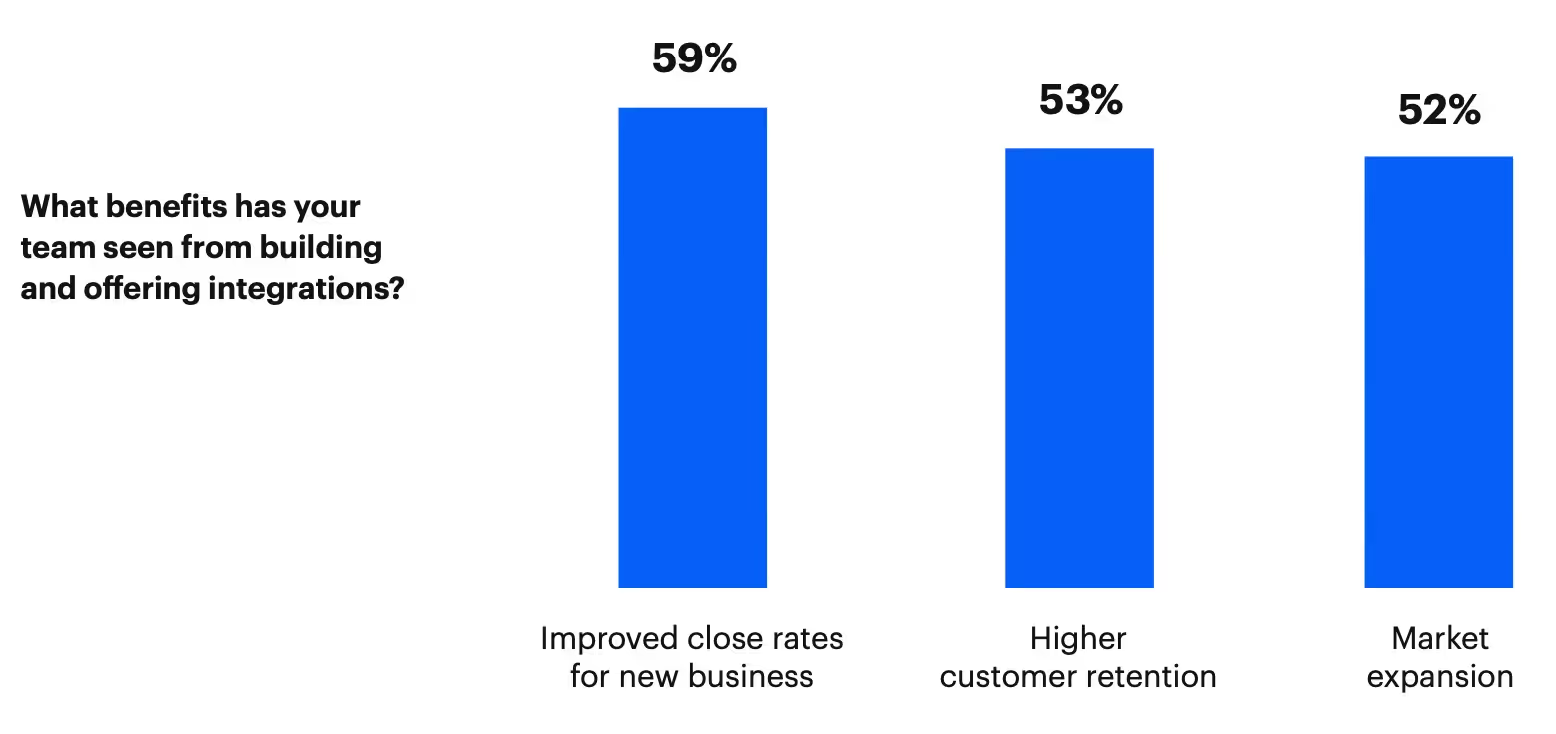
Case in point: Through our State of Product Integrations report, which involved surveying hundreds of PMs and engineers, we learned that product integrations help more than half of SaaS companies reduce churn, increase new business sales, and expand to new markets.
To reap these benefits over time, we’ll break down specific tactics to implement and maintain product integrations successfully.
Your engineers likely can’t handle more than a handful of integration requests at a time, which means that you'll need to pick and choose the integrations that get prioritized.
To prioritize requests strategically and objectively, you can score them against several variables:
Note: There may be other factors worth considering as you review and compare integration requests. The guidance on this page is just meant to help you start building your own assessment methodology.
Once you know the answers to these questions for a given integration and can assign specific ranges for each criteria that correspond to certain values (e.g., 0, 1, 2), you can score each integration.
Related: How to choose between building and buying integrations
Product integrations will, inevitably, break. When they do, your engineers will need to pinpoint the issue quickly so that they can work on resolving it as soon as possible.
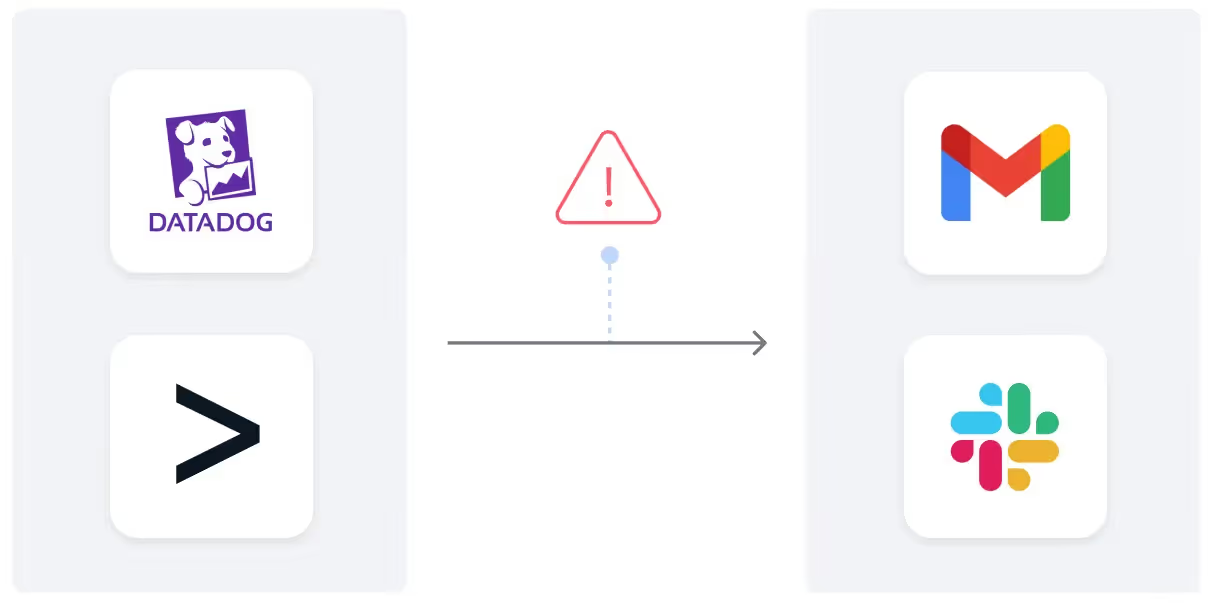
To that end, you can connect the monitoring tool your engineers use to collect logs of API requests and responses (e.g., Datadog) with the platforms these teams tend to check often already, such as Slack and Gmail.
Once you’ve built the integration, you can build an automation where once a specific alert is detected via an API log, key details from that alert get routed to a predefined email alias and/or channel in your messaging tool.
You can take this a step further by using a large language model (LLM)-powered agent as part of the workflow automation. More specifically, based on the information provided in the log, the agent can attempt to diagnose the issue and, based on its diagnosis, provide a potential solution. The agent can then include all of this information within the email or chat message, allowing engineering to resolve the issue faster.
Related: A guide to building a product integration strategy
To ensure that each of your product integrations generates a meaningful ROI, you’ll need to take a thoughtful approach to raising awareness of them (both with customers and prospects), pricing them, enabling sales to talk about them, etc.
And while it’s impossible to cover each of each of these areas in depth here, here are some high-level guidelines to keep in mind:
In addition, if you can provide demo accounts that show certain integrations in action and train the reps on using them, prospects can better visualize how certain integrations work and get excited about adopting them.
Related: How to evaluate product management tools
Your product and engineering teams don’t have to manage integrations on their own. In fact, they shouldn’t, as integration development and maintenance likely isn’t one of your engineering team’s core competencies. It also distracts them from working on your product, which can have a significant long-term impact on your business.
While you have a few options for outsourcing integrations, your best option is a universal API solution (otherwise known as a unified API solution).
Using this type of solution, you can build to a single, aggregated API and then access hundreds of customer-facing integrations. This makes the process of scaling integrations significantly easier and faster.
In addition, with Merge, the leading universal API platform, you can access Integration Observability tooling to easily detect, diagnose, and resolve issues. And you’ll receive integration maintenance support on your engineers’ behalf.
{{this-blog-only-cta}}
In case you have any more questions, we’ve addressed several more common ones below.
Among other tasks, a product manager for integrations usually decides which integrations get prioritized, scope out the requirements for building each, and ensure that go-to-market teams are enabled to sell, support, and market each integration successfully.
Here are a few to keep in mind and prepare for:
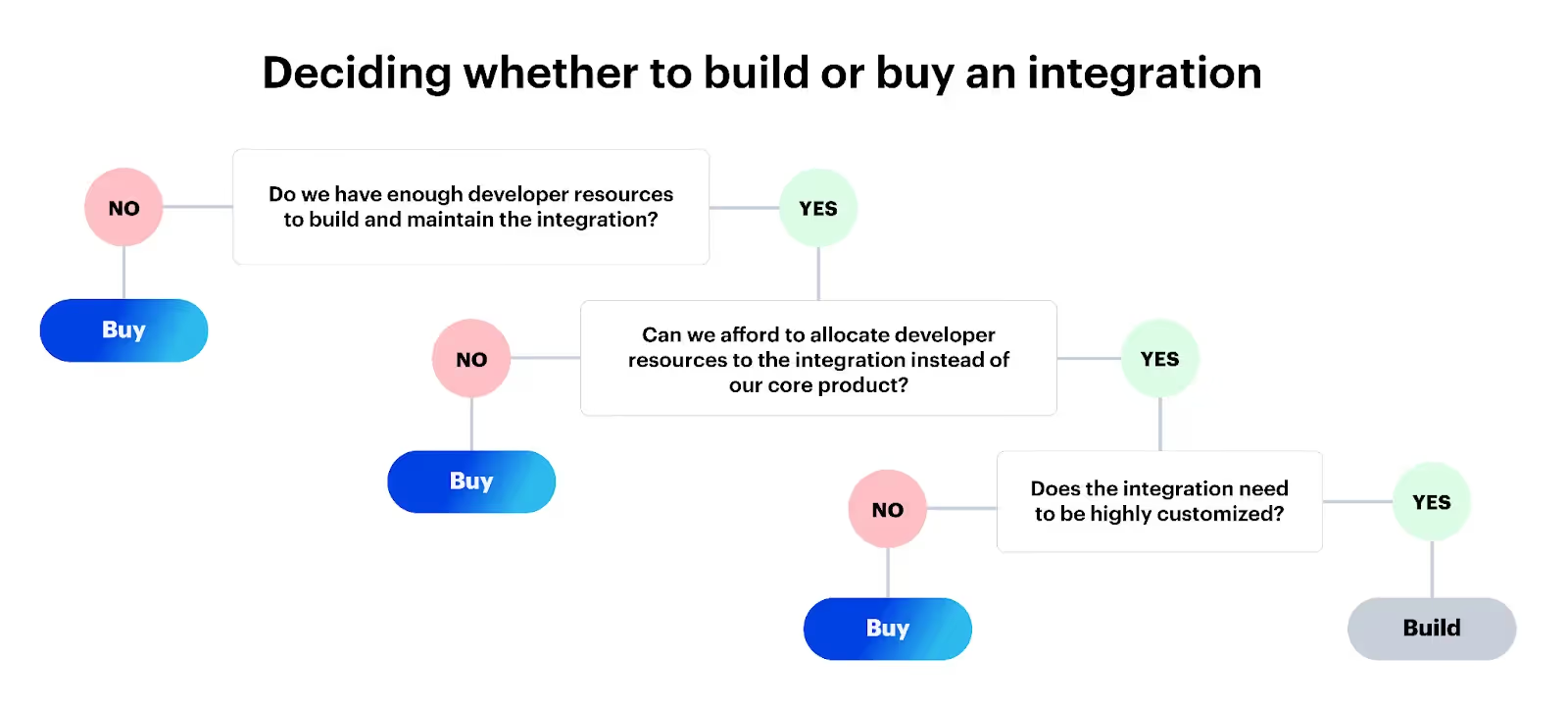
The decision depends on several factors, and you’ll need to review each carefully.
Here’s a decision tree that can help you decide whether to outsource a given product integration:
Unlike other product features, product integrations require working with a 3rd-party provider’s API. This introduces risk, as your team can’t fully control the 3rd-party API provider’s performance and improvements over time.
Moreover, the timeline of building a product integration largely depends on the 3rd-party API provider. For instance, they may require you to enter into a formal partnership agreement to access their sandbox environment and documentation, which can take months.
Learn how Merge can help you build reliable, secure, and performant integrations at scale by scheduling a demo with us.








.png)