|
VOOZH | about |
|
VOOZH | about |
We use cookies to improve your experience on our site. By using our site, you are agreeing to the collection and use of data as described in our Privacy Policy.
Cookie Settings×Table of contents
Making meaningful improvements to your product requires crafting product experience strategies thoughtfully and executing against them successfully.
We’ll help you do both by walking through several real-world examples.
But first, let’s align on what a product experience (PX) strategy is and why it’s important.
It’s the process of collecting qualitative and quantitative customer feedback, setting a goal based on that feedback, executing against that goal, and measuring success over time.
Your product experience strategies essentially serve as the north star for making the product improvements you need to support a best-in-market solution.
Related: What is a product roadmap?
We’ll break down each of the steps you need to take to implement a product experience strategy and use an example each step of the way to make it more tangible.
You’ll need to start by assessing the top churn factors and upsell/cross-sell opportunities.
To get the full picture of these opportunities, you can tap into a variety of sources:
For example, OneRange, a learning and development platform, needed to offer HRIS integrations with their product to help customers automatically assign the right courses to the right employees on time.
However, through customer research, they found that their file-based HRIS integrations—where customers would continually export files from their HRISs and import them into OneRange—were tedious and time consuming for customers. They could also lead to human errors that would compromise OneRange's ability to deliver learning resources to employees on time.
Once you’ve identified the top opportunity, you can use a framework that lets you make it actionable—such as SMART (specific, measurable, achievable, relevant, and time-bound).
Continuing with our OneRange example, they landed on the following SMART goal to provide reliable and automated HRIS integrations: offer 50+ API-based HRIS integrations within 3 weeks.
Related: How to come up with product objectives
You’ll need to decide whether to implement the solution through internal resources or outsource it.
This involves understanding your team’s current skill sets, the opportunity costs associated with an internal implementation (i.e., what product initiatives would need to be deprioritized), whether there are ongoing resourcing needs following an internal implementation, and so on.
When OneRange navigated the decision to build or outsource their HRIS integrations, they landed on the former (they partnered with Merge) because it would allow their limited engineering capacity to be fully invested on their core product over time. It would also allow them to launch all of the HRIS integrations they needed within the timeframe their customers and prospects wanted.
Regardless of the approach you take, you'll need to measure your progress frequently to see if things are on track and if you need to course correct. That could mean setting time and/or event-based check-ins for your team.
For OneRange, their check-in was relatively easy. Since they used a time-bound product objective that was fairly short, they were able to measure their progress quickly; in other words, they measured the number of API-based HRIS integrations they were able to offer at the 3 week mark.
They actually executed against this goal just within that timeframe—here’s a case study that talks about it—so they didn’t need to make any changes.
Note: As your customers’ and prospects’ expectations for your product evolve, you may find that your existing product experience strategies will need to be fine tuned, if not altered. Whenever this happens to a given strategy, you can follow steps 1 through 4 above to update it.
To make these steps more actionable, let’s walk through how a few real-world companies have implemented product experience strategies.
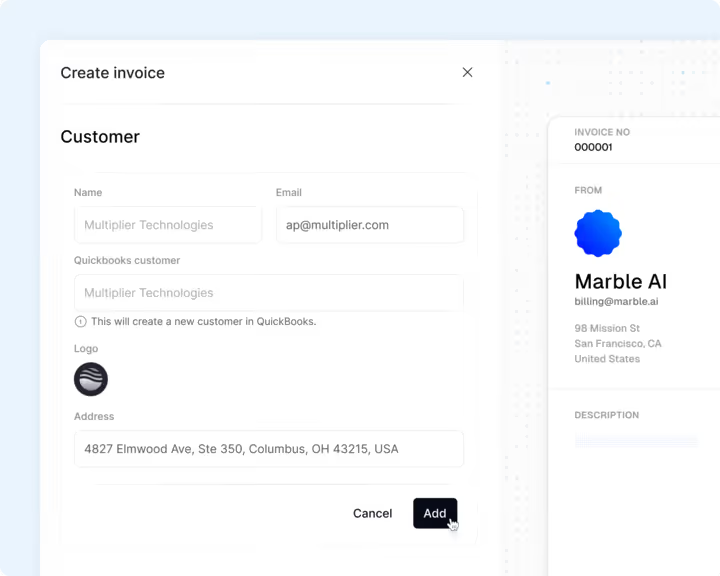
Acctual, which offers a platform that lets you pay and invoice in crypto, noticed that many users weren’t completing the invoice creation workflow in their product.
After looking at their customer behavior more closely, they found that it was because users didn’t know they had to create a contact first; users were populating the invoice and trying to create it only to get an error message that they needed to create a contact (which was on a separate page).
After discovering this, the team at Acctual added copy within the product’s UI to clarify that the user needs to create a contact before an associated invoice. They also separated the invoice creation and contact creation workflows.
Since implementing this solution, they saw a dramatic improvement in their invoice creation completion rate—giving them confidence that they were on the right track.
Related: How to come up with effective AI product ideas
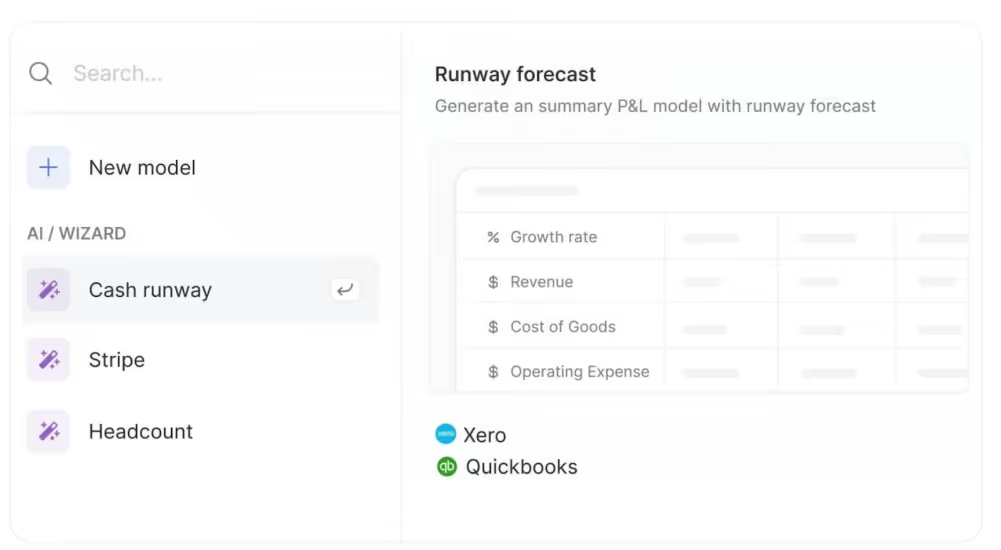
Causal, a financial planning platform, found that users were a bit slow to adopt their solution, which was eventually leading to churn.
To tackle this, they built an “AI Wizard” that uses customers’ ERP data to populate customizable financial models.
These financial models provide a great starting point for users to understand how Causal works and how it can provide value, which helps users start leveraging the platform faster.
Taimur Abdaal, Causal’s CEO and co-founder, shares more context:
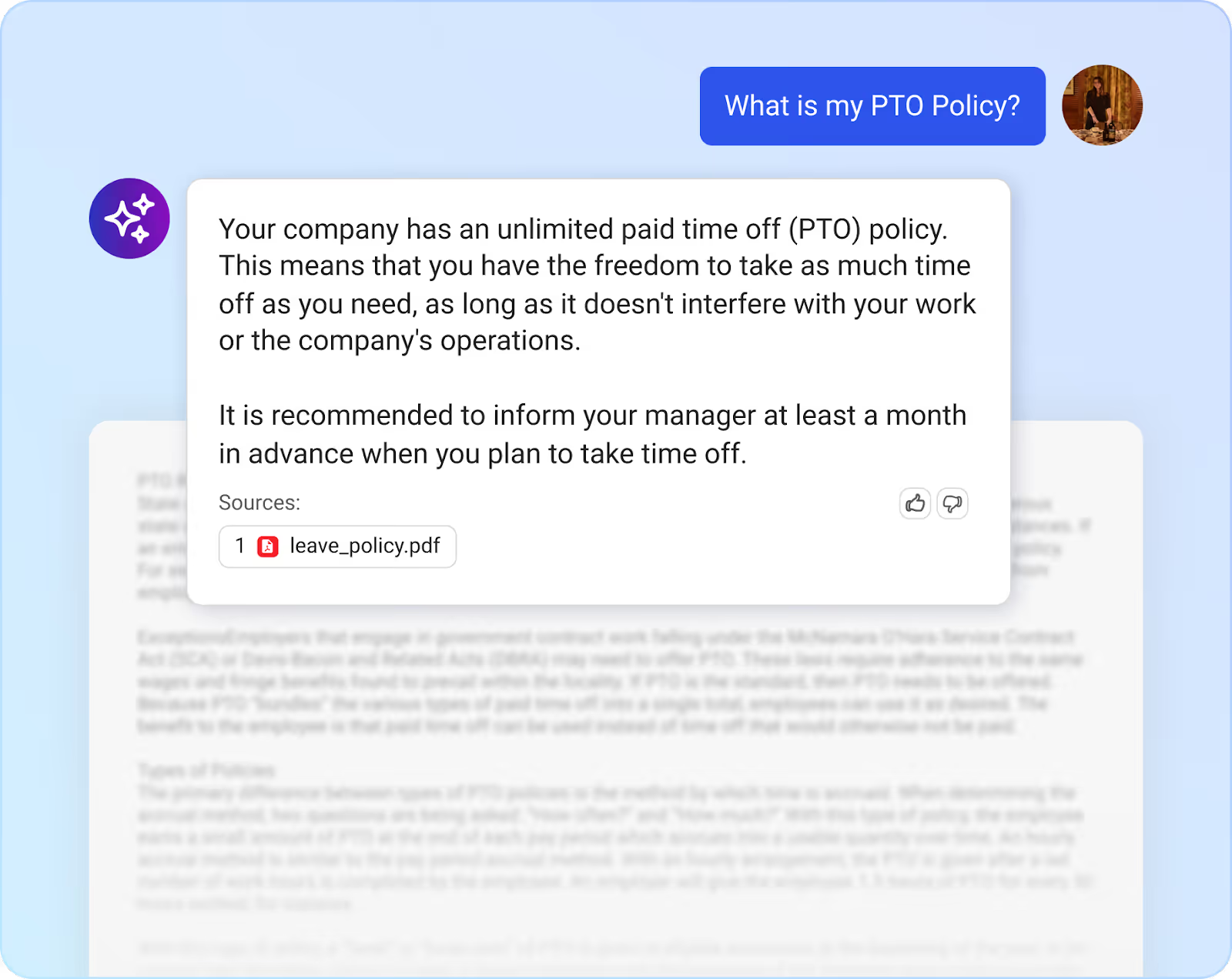
Assembly, an HR software platform, found that their customers wanted them to offer an enterprise AI search solution that could answer employees’ work-related questions in plain text.
To do this, they needed to implement customer-facing file storage integrations for all the providers their customers use—Google Drive, Box, Dropbox, Sharepoint, and OneDrive.
They initially tried implementing these integrations internally but found the process of having their engineers build and maintain them to be extremely complex and time consuming. For example, the process of building these integrations with access control levels (ACLs)—so that users can only access the information from documents that meet their level of permissions—proved extremely difficult.
With this in mind, they decided to outsource their file storage integrations to Merge, which allowed them to add all the ones they needed within a few weeks.
Since building their enterprise AI search, they’ve improved their Net Promoter Score®, experienced higher product usage, and unblocked several deals—all of which give them confidence that the implementation was a success.
In case you or your team need more convincing, a product experience strategy is critical for several reasons:
Your product likely has several areas for improvement. Trying to tackle them all at once can stretch your limited resources thin, resulting in burn out across your team and poor execution.
A product experience strategy helps address this by keeping your team focused on the product improvements that matter most to your customers and prospects.
Customer feedback is at the core of any product experience strategy.
As a result, executing any effectively lets you build the product features and functionality your customers truly need to realize value from your platform.
According to research by Forrester, just 3% of companies are customer-obsessed (i.e., they prioritize their customers’ needs).
Product experience strategies serve as a forcing function to make and keep your platform customer-centric. This gives your product an edge over all of your rivals, who likely (based on the data point above) prioritize other areas, such as short-term revenue gains.
A product experience strategy can include any part of the customer’s experience with your solution—from onboarding to off-boarding.
As a result, it lets you focus on the product areas that truly matter the most and that allow you to build a more powerful, end-to-end solution.
A well thought out and implemented PX strategy can ultimately improve your revenue. Case in point: Bain & Company found that organizations that deliver a great customer experience grow 4-8% faster in their respective market.
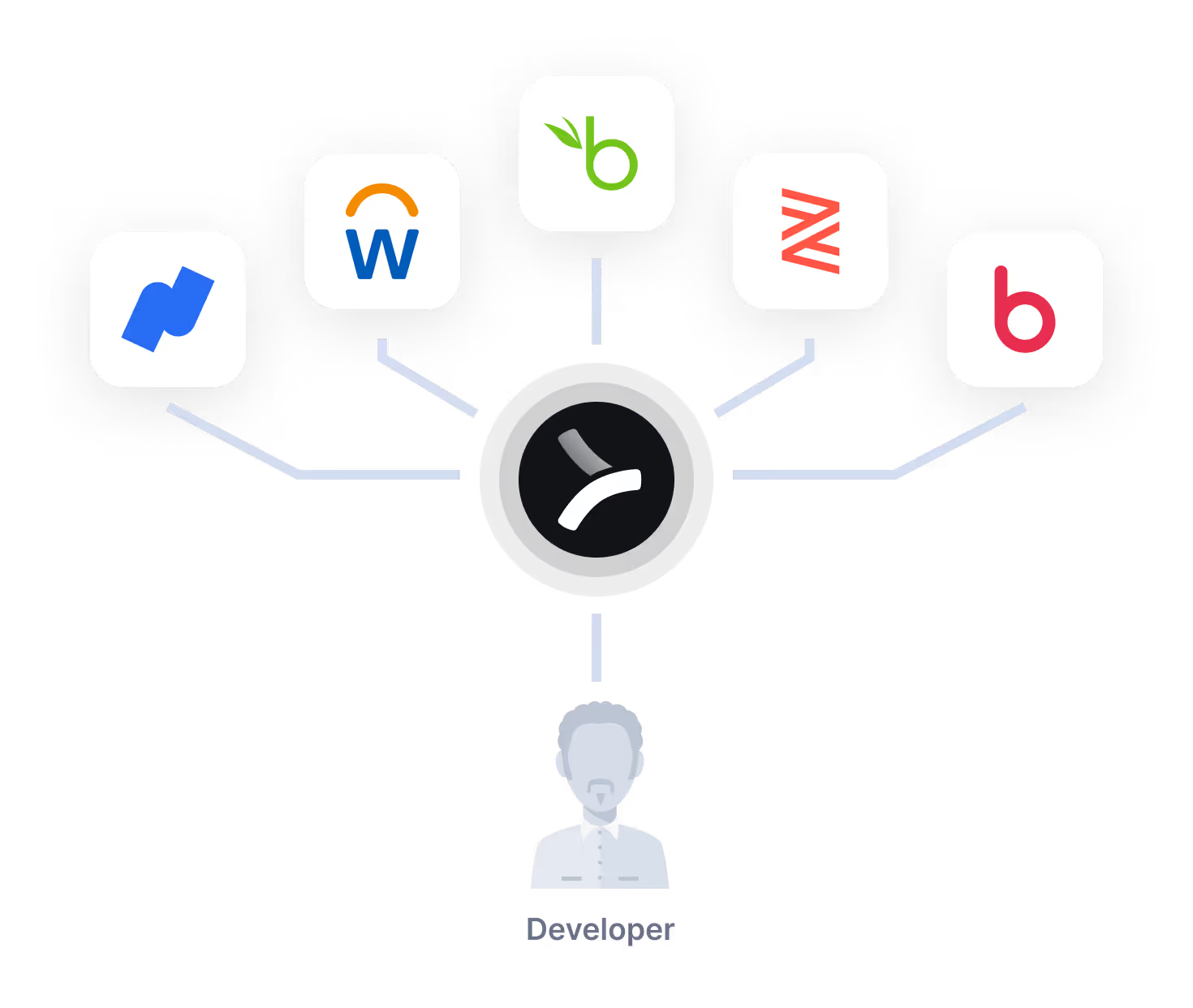
Merge, the leading unified API solution, lets you add hundreds of integrations to your product through a single build, whether that’s file storage solutions, CRMs, HRISs, ticketing tools, and more. The platform also maintains the integrations on your team’s behalf, saving your engineers countless hours.
This lets you tackle a wide range of product experience strategies that help you improve your product’s time to value, increase a certain feature’s level of adoption, elevate your customer retention rate, and more.
Learn more about how Merge can support your product experience strategies by scheduling a demo with one of our integration experts.


.avif)


.png)