|
VOOZH | about |
|
VOOZH | about |
Savings rate is typically the go-to way to measure how well you’re optimizing cloud costs. That makes sense — it shows you how much you’re actually saving compared to paying on-demand rates.
But measuring savings alone is not enough.
Commitment-based discounts—Savings Plans, Reserved Instances, Committed Use Discounts—don’t just improve your rate. They require you to commit to future spend. And that commitment introduces risk that you need to measure and quantify as part of your decision-making.
In this article, we’ll break down how commitment lock-in risk actually works, why it matters just as much as savings rate, and how to build a strategy that captures discounts without limiting your ability to adapt.
When you purchase an AWS Savings Plan, you’re making an hourly commitment. Whether you use that capacity or not, AWS charges you. This creates a fundamental tension between cost savings and operational freedom.
Consider what happens in common scenarios:
The community has learned this lesson the hard way. We see it in practice all the time—VPs choosing not to renew hundred-thousand-dollar Savings Plans, teams capping long-term commitments at a fraction of their infrastructure, or deliberately leaving savings on the table to avoid getting locked in. Overcommitting is painful, hard to unwind, and when it goes wrong, it’s your head on the line.
Commitment lock-in risk is the time-based exposure created by committing to cloud spend in exchange for discounted rates. It reflects how long your current savings depend on maintaining enough usage to cover those commitments.
In practice, it comes down to two variables: how much you’ve committed and how long those commitments last. More coverage increases the amount of spend you’re locked into, and longer terms extend how long that constraint exists.
For example:
Both improve their savings, but the second team is locked in three times longer to maintain that outcome.
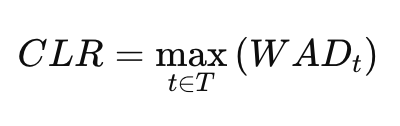
Commitment lock-in risk (CLR) is defined as the maximum weighted average duration of your commitment portfolio over time.
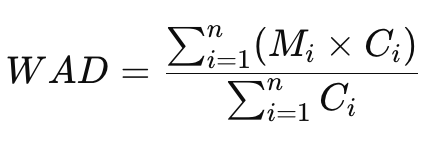
Weighted Average Duration = (sum of remaining months × commitment value) ÷ (total commitment value)
CLR = max (weighted average duration measured over time, assuming expiring commitments are replaced to maintain coverage)
Where:
In practice, this means:
That maximum value (in months) is your commitment lock-in risk.
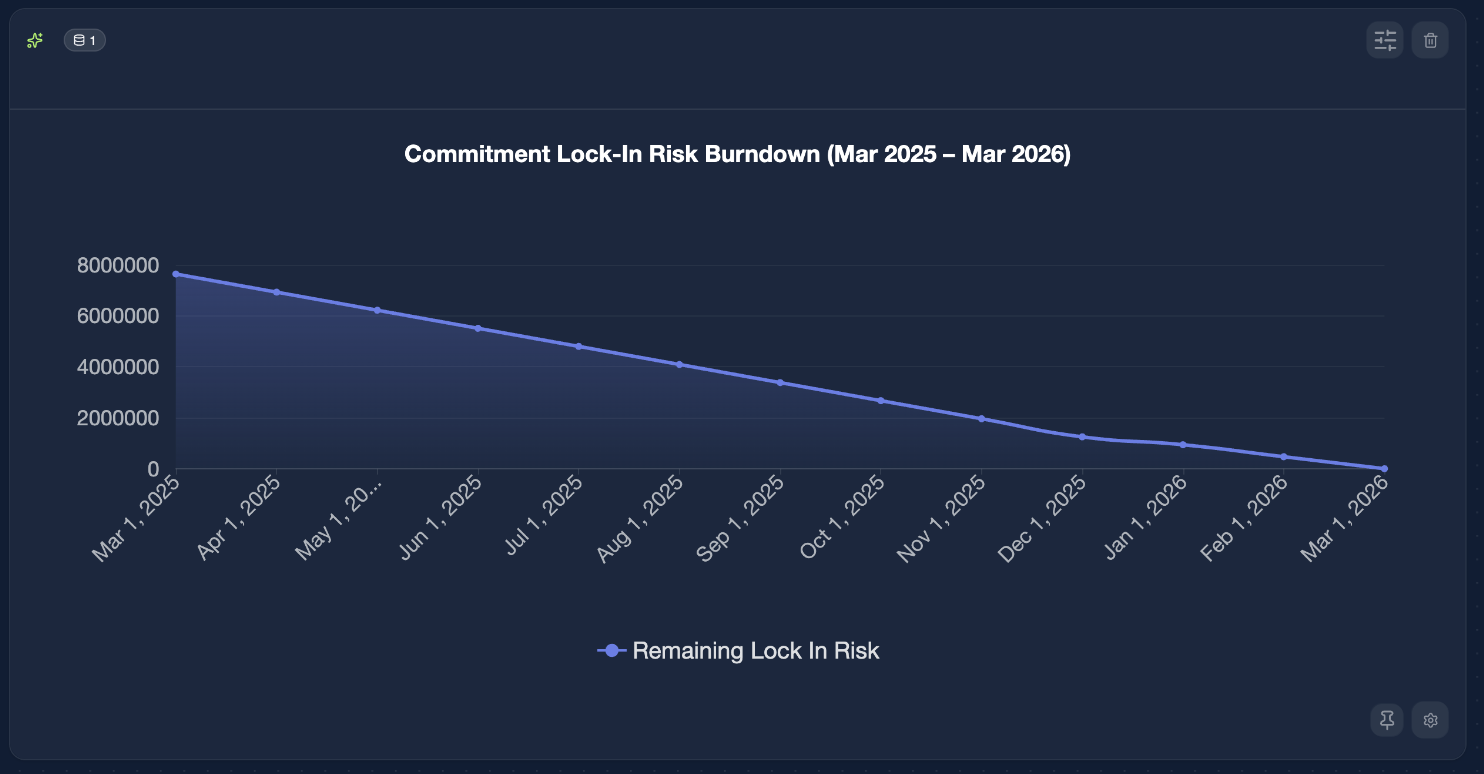
To better understand how this works, let’s look at a simple example. Consider a single 3-year AWS Compute Savings Plan (CSP) with the following details:
There are 1,096 days between now and the expiration date, so the current Weighted Average Duration = (1,096 days × $12/hr) ÷ $12/hr = 1,096 days = 36.0 months.
If we project forward and measure the Weighted Average Duration over time (assuming the commitment is renewed at expiration to maintain coverage), we get the following pattern:
| Date | Weighted Average Duration (months) |
|---|---|
| 3/1/25 | 36.0 |
| 3/2/25 | 36.0 |
| 3/3/25 | 35.9 |
| ... | ... |
| 2/27/28 | 0.1 |
| 2/28/28 | 0.0 |
| 3/1/28 | 36.0 |
| 3/2/28 | 36.0 |
| 3/3/28 | 35.9 |
| ... | ... |
| 2/28/29 | 36.1 |
| 3/1/29 | 36.0 |
The Commitment Lock-In Risk is the maximum Weighted Average Duration value in the set, which is 36.0 months.
Conceptually, this means that to achieve and maintain this level of savings, this commitment portfolio carries up to 36 months of lock-in at any given point in time.
In the above example, achieving a higher realized savings rate requires accepting up to 36 months of lock-in. That’s incredibly risky for most teams.
That trade-off is the core decision behind every commitment strategy: how much risk are you willing to take on to increase savings?
In practice, most teams don’t optimize for maximum savings. They optimize for a level of commitment their infrastructure can realistically support without creating excessive lock-in.
Let’s talk about a few ways to figure out your optimal coverage point and lower your Commitment Lock-In Risk.
AWS will happily recommend 80-90% commitment coverage based on your current usage patterns. Ignore this recommendation.
Practitioners often suggest starting at 50% of your baseline compute spend to get meaningful savings/cost efficiency while preserving flexibility for the inevitable changes ahead.
Why 50%?
50% allows you to scale down significantly without hitting that commitment if you find other ways to save.
The math works in your favor even at partial coverage. If Savings Plans deliver 40% commitment savings over on-demand, covering 50% of workloads still yields 20% overall savings — without the risk of over-commitment.
AWS offers two primary Savings Plan types for compute workloads:
The discount delta matters less than you might think. An extra 10% savings on a commitment you can’t use is worthless. A smaller discount on flexible capacity that adapts to your infrastructure is pure value.
Use EC2 Instance SPs only for:
Everything else should use Compute SPs.
Don’t treat all compute workloads the same. Different workload types deserve different commitment strategies.
This layering approach lets you capture 60-70% of available Savings Plan discounts while maintaining freedom to optimize the remaining 30-40% of infrastructure.
Many organizations purchase Savings Plans in large batches aligned with annual budget cycles. This creates concentration risk.
A better approach is Savings Plan Laddering — distributing commitments over time instead of in single purchases.
Rather than buying $10,000/hour in January, structure it as:
Benefits of laddering:
Laddering works best with 1-year plans where quarterly reviews make sense. For 3-year commitments, consider semi-annual or annual laddering cycles.
Managing Commitment Lock-In Risk (CLR) requires continuously adjusting coverage, duration, timing and commitment mix as your usage changes.
But in practice, it is very difficult to manage this manually at scale. Usage shifts daily, commitments span years, and small mistakes compound into long-term lock-in.
nOps automated Commitment Management employs all of the strategies included in this list to minimize your Commitment Lock-In Risk while maximizing your Effective Savings Rate.
nOps is entrusted with $4 billion in cloud spending and was recently rated #1 in G2’s Cloud Cost Management category.
Last Updated: June 7, 2026, Commitment Management
Last Updated: June 7, 2026, Commitment Management
AI-powered rate optimization with risk-free guarantee
AI-powered commitment management with risk-free guarantee