







8EF5 | pdb_00008ef5
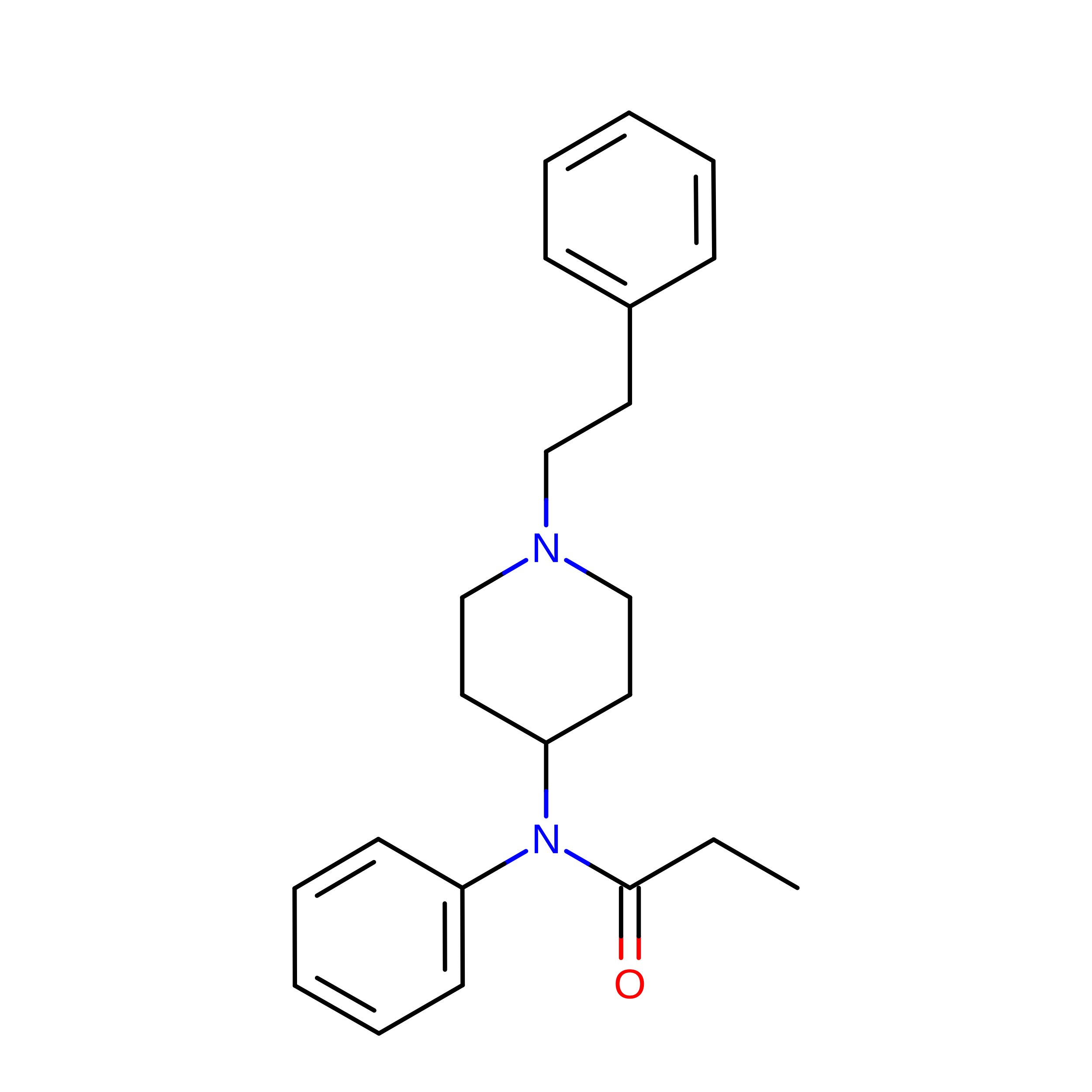
Fentanyl-bound mu-opioid receptor-Gi complex
- PDB DOI: https://doi.org/10.2210/pdb8EF5/pdb
- EM Map EMD-28066: EMDB EMDataResource
- Classification: SIGNALING PROTEIN
- Organism(s): Homo sapiens, Rattus norvegicus, Bos taurus, synthetic construct
- Expression System: Spodoptera frugiperda, Escherichia coli
- Mutation(s): No
- Membrane Protein: Yes OPMPDBTMmpstruc
- Deposited: 2022-09-08 Released: 2022-11-09
- Deposition Author(s): Zhuang, Y., Wang, Y., Guo, S., Zhou, X.E., Rao, Q., He, X., He, B., Liu, J., Zhou, Q., Wang, X., Liu, W., Jiang, X., Yang, D., Chen, X., Jiang, Y., Jiang, H., Shen, J., Melcher, K., Wang, M., Xie, X., Xu, H.E.
- Funding Organization(s): Ministry of Science and Technology (MoST, China), Chinese Academy of Sciences
Experimental Data Snapshot
- Method: ELECTRON MICROSCOPY
- Resolution: 3.30 Å
- Aggregation State: PARTICLE
- Reconstruction Method: SINGLE PARTICLE
wwPDB Validation 3D Report Full Report

- 👁 Image
Download Mendeley

Molecular recognition of morphine and fentanyl by the human mu-opioid receptor.
Zhuang, Y., Wang, Y., He, B., He, X., Zhou, X.E., Guo, S., Rao, Q., Yang, J., Liu, J., Zhou, Q., Wang, X., Liu, M., Liu, W., Jiang, X., Yang, D., Jiang, H., Shen, J., Melcher, K., Chen, H., Jiang, Y., Cheng, X., Wang, M.W., Xie, X., Xu, H.E.(2022) Cell 185: 4361-4375.e19
- PubMed: 36368306 Search on PubMed
- DOI: https://doi.org/10.1016/j.cell.2022.09.041
- Primary Citation Related Structures:
8EF5, 8EF6, 8EFB, 8EFL, 8EFO, 8EFQ - PubMed Abstract:
Morphine and fentanyl are among the most used opioid drugs that confer analgesia and unwanted side effects through both G protein and arrestin signaling pathways of μ-opioid receptor (μOR). Here, we report structures of the human μOR-G protein complexes bound to morphine and fentanyl, which uncover key differences in how they bind the receptor. We also report structures of μOR bound to TRV130, PZM21, and SR17018, which reveal preferential interactions of these agonists with TM3 side of the ligand-binding pocket rather than TM6/7 side. In contrast, morphine and fentanyl form dual interactions with both TM3 and TM6/7 regions. Mutations at the TM6/7 interface abolish arrestin recruitment of μOR promoted by morphine and fentanyl. Ligands designed to reduce TM6/7 interactions display preferential G protein signaling. Our results provide crucial insights into fentanyl recognition and signaling of μOR, which may facilitate rational design of next-generation analgesics.
- The CAS Key Laboratory of Receptor Research, Center for Structure and Function of Drug Targets, Shanghai Institute of Materia Medica, Chinese Academy of Sciences, Shanghai 201203, China. Electronic address: zhuangyouwen@simm.ac.cn.
- The CAS Key Laboratory of Receptor Research, Center for Structure and Function of Drug Targets, Shanghai Institute of Materia Medica, Chinese Academy of Sciences, Shanghai 201203, China; University of Chinese Academy of Sciences, Beijing 100049, China.
- University of Chinese Academy of Sciences, Beijing 100049, China; The State Key Laboratory of Drug Research, The National Center for Drug Screening, Shanghai Institute of Materia Medica, Chinese Academy of Sciences, Shanghai 201203, China; School of Life Science and Technology, ShanghaiTech University, Shanghai 201210, China.
- Department of Structural Biology, Van Andel Research Institute, Grand Rapids, MI 49503, USA.
- University of Chinese Academy of Sciences, Beijing 100049, China; The State Key Laboratory of Drug Research, The National Center for Drug Screening, Shanghai Institute of Materia Medica, Chinese Academy of Sciences, Shanghai 201203, China; School of Chinese Materia Medica, Nanjing University of Chinese Medicine, Nanjing 210046, China.
- School of Life Science and Technology, ShanghaiTech University, Shanghai 201210, China.
- The CAS Key Laboratory of Receptor Research, Center for Structure and Function of Drug Targets, Shanghai Institute of Materia Medica, Chinese Academy of Sciences, Shanghai 201203, China.
- School of Chinese Materia Medica, Nanjing University of Chinese Medicine, Nanjing 210046, China.
- Department of Pharmacology, School of Basic Medical Sciences, Fudan University, Shanghai 200032, China.
- The CAS Key Laboratory of Receptor Research, Center for Structure and Function of Drug Targets, Shanghai Institute of Materia Medica, Chinese Academy of Sciences, Shanghai 201203, China; University of Chinese Academy of Sciences, Beijing 100049, China; The State Key Laboratory of Drug Research, The National Center for Drug Screening, Shanghai Institute of Materia Medica, Chinese Academy of Sciences, Shanghai 201203, China.
- The CAS Key Laboratory of Receptor Research, Center for Structure and Function of Drug Targets, Shanghai Institute of Materia Medica, Chinese Academy of Sciences, Shanghai 201203, China; University of Chinese Academy of Sciences, Beijing 100049, China; School of Life Science and Technology, ShanghaiTech University, Shanghai 201210, China.
- Shanghai Key Laboratory of Crime Scene Evidence, Shanghai Research Institute of Criminal Science and Technology, Shanghai 200083, China; Shanghai Yuansi Standard Science and Technology Co., Ltd, Shanghai 200080, China.
- The CAS Key Laboratory of Receptor Research, Center for Structure and Function of Drug Targets, Shanghai Institute of Materia Medica, Chinese Academy of Sciences, Shanghai 201203, China; University of Chinese Academy of Sciences, Beijing 100049, China; The State Key Laboratory of Drug Research, The National Center for Drug Screening, Shanghai Institute of Materia Medica, Chinese Academy of Sciences, Shanghai 201203, China; School of Life Science and Technology, ShanghaiTech University, Shanghai 201210, China; Department of Pharmacology, School of Basic Medical Sciences, Fudan University, Shanghai 200032, China. Electronic address: mwwang@simm.ac.cn.
- The CAS Key Laboratory of Receptor Research, Center for Structure and Function of Drug Targets, Shanghai Institute of Materia Medica, Chinese Academy of Sciences, Shanghai 201203, China; University of Chinese Academy of Sciences, Beijing 100049, China; The State Key Laboratory of Drug Research, The National Center for Drug Screening, Shanghai Institute of Materia Medica, Chinese Academy of Sciences, Shanghai 201203, China; School of Life Science and Technology, ShanghaiTech University, Shanghai 201210, China; School of Chinese Materia Medica, Nanjing University of Chinese Medicine, Nanjing 210046, China; School of Pharmaceutical Science and Technology, Hangzhou Institute for Advanced Study, UCAS, Hangzhou 310024, China. Electronic address: xxie@simm.ac.cn.
- The CAS Key Laboratory of Receptor Research, Center for Structure and Function of Drug Targets, Shanghai Institute of Materia Medica, Chinese Academy of Sciences, Shanghai 201203, China; University of Chinese Academy of Sciences, Beijing 100049, China. Electronic address: eric.xu@simm.ac.cn.
Organizational Affiliation:
Explore in 3D: Structure | Sequence Annotations | Electron Density | Validation Report | Ligand Interaction (CLR) | Predict Membrane
Explore in 3D: Structure | Sequence Annotations | Electron Density | Validation Report | Ligand Interaction (CLR) | Predict Membrane
Global Symmetry: Asymmetric - C1
Global Stoichiometry: Hetero 7-mer - A2B1C1D1E1F1
Local Symmetry: Cyclic - C2 (Explore in 3D)
Local Stoichiometry: Homo 2-mer - A2
Find Similar Assemblies
Biological assembly 1 assigned by authors.
Biological Assembly Evidence: gel filtration
Macromolecule Content
- Total Structure Weight: 240.57 kDa
- Atom Count: 11,705
- Modeled Residue Count: 1,441
- Deposited Residue Count: 2,111
- Unique protein chains: 5
Entity ID: 1 | |||||
|---|---|---|---|---|---|
| Molecule | Chains | Sequence Length | Organism | Details | Image |
| Mu-type opioid receptor | A [auth R], F [auth M] | 367 | Homo sapiens | Mutation(s): 0 Gene Names: OPRM1, MOR1 Membrane Entity: Yes | 👁 Image |
UniProt & NIH Common Fund Data Resources | |||||
Find proteins for P35372 (Homo sapiens) Explore P35372 Go to UniProtKB: P35372 | |||||
PHAROS: P35372 GTEx: ENSG00000112038 | |||||
Entity Groups | |||||
| Sequence Clusters | 30% Identity50% Identity70% Identity90% Identity95% Identity100% Identity | ||||
| UniProt Group | P35372 | ||||
Sequence AnnotationsExpand | |||||
| |||||

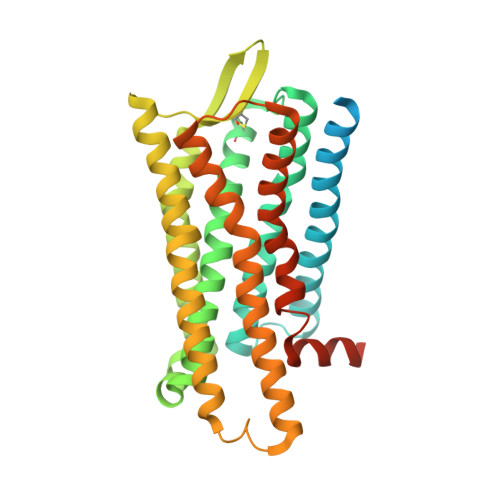
Entity ID: 2 | |||||
|---|---|---|---|---|---|
| Molecule | Chains | Sequence Length | Organism | Details | Image |
| Guanine nucleotide-binding protein G(i) subunit alpha-1 | B [auth A], G [auth F] | 354 | Homo sapiens | Mutation(s): 0 Gene Names: GNAI1 EC: 3.6.5 Membrane Entity: Yes | 👁 Image |
UniProt & NIH Common Fund Data Resources | |||||
Find proteins for P63096 (Homo sapiens) Explore P63096 Go to UniProtKB: P63096 | |||||
PHAROS: P63096 GTEx: ENSG00000127955 | |||||
Entity Groups | |||||
| Sequence Clusters | 30% Identity50% Identity70% Identity90% Identity95% Identity100% Identity | ||||
| UniProt Group | P63096 | ||||
Sequence AnnotationsExpand | |||||
| |||||

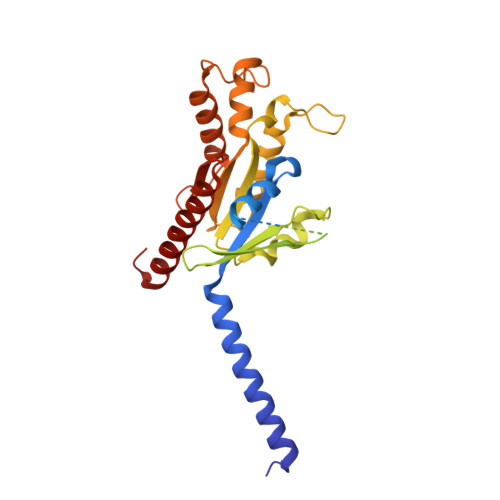
Entity ID: 3 | |||||
|---|---|---|---|---|---|
| Molecule | Chains | Sequence Length | Organism | Details | Image |
| Guanine nucleotide-binding protein G(I)/G(S)/G(T) subunit beta-1 | C [auth B] | 353 | Rattus norvegicus | Mutation(s): 0 Gene Names: Gnb1 | 👁 Image |
UniProt | |||||
Find proteins for P54311 (Rattus norvegicus) Explore P54311 Go to UniProtKB: P54311 | |||||
Entity Groups | |||||
| Sequence Clusters | 30% Identity50% Identity70% Identity90% Identity95% Identity100% Identity | ||||
| UniProt Group | P54311 | ||||
Sequence AnnotationsExpand | |||||
| |||||

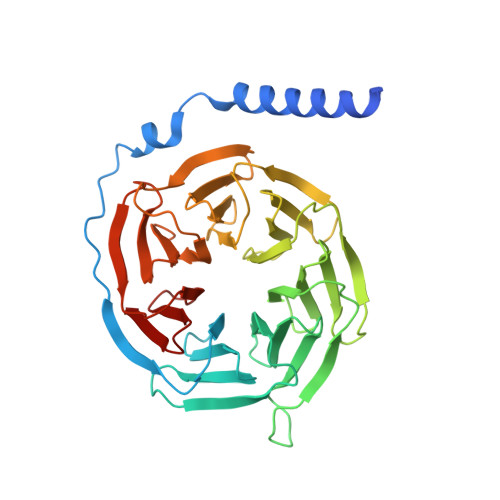
Entity ID: 4 | |||||
|---|---|---|---|---|---|
| Molecule | Chains | Sequence Length | Organism | Details | Image |
| Guanine nucleotide-binding protein G(I)/G(S)/G(O) subunit gamma-2 | D [auth C] | 68 | Bos taurus | Mutation(s): 0 Gene Names: GNG2 Membrane Entity: Yes | 👁 Image |
UniProt | |||||
Find proteins for P63212 (Bos taurus) Explore P63212 Go to UniProtKB: P63212 | |||||
Entity Groups | |||||
| Sequence Clusters | 30% Identity50% Identity70% Identity90% Identity95% Identity100% Identity | ||||
| UniProt Group | P63212 | ||||
Sequence AnnotationsExpand | |||||
| |||||

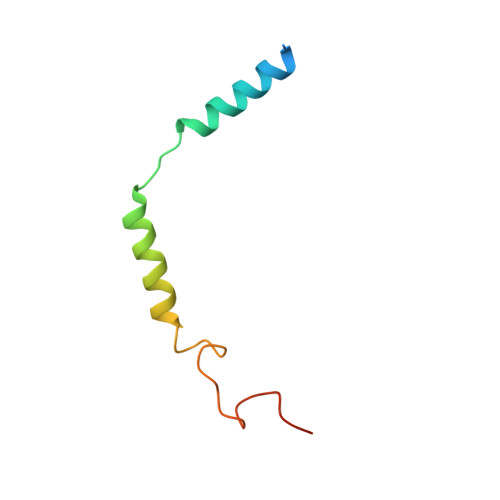
Entity ID: 5 | |||||
|---|---|---|---|---|---|
| Molecule | Chains | Sequence Length | Organism | Details | Image |
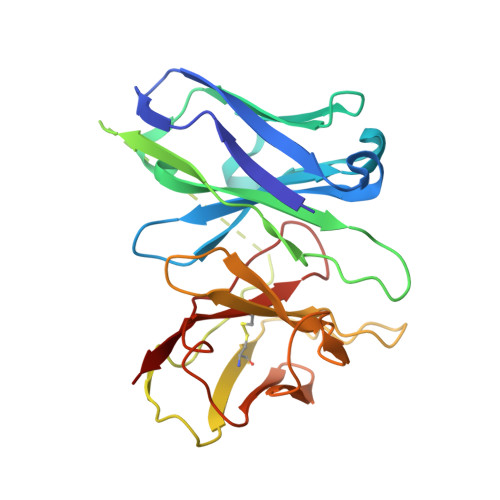
| scFv16 | 248 | synthetic construct | Mutation(s): 0 | 👁 Image | |
Entity Groups | |||||
| Sequence Clusters | 30% Identity50% Identity70% Identity90% Identity95% Identity100% Identity | ||||
Sequence AnnotationsExpand | |||||
| |||||



Experimental Data
- Method: ELECTRON MICROSCOPY
- Resolution: 3.30 Å
- Aggregation State: PARTICLE
- Reconstruction Method: SINGLE PARTICLE
| Task | Software Package | Version |
|---|---|---|
| MODEL REFINEMENT | PHENIX |
Deposition Data
- Released Date: 2022-11-09 Deposition Author(s): Zhuang, Y., Wang, Y., Guo, S., Zhou, X.E., Rao, Q., He, X., He, B., Liu, J., Zhou, Q., Wang, X., Liu, W., Jiang, X., Yang, D., Chen, X., Jiang, Y., Jiang, H., Shen, J., Melcher, K., Wang, M., Xie, X., Xu, H.E.
| Funding Organization | Location | Grant Number |
|---|---|---|
| Ministry of Science and Technology (MoST, China) | China | 2018YFA0507002 |
| Chinese Academy of Sciences | China | XDB08020303 |
| Chinese Academy of Sciences | China | E1G707R078 |
Revision History (Full details and data files)
- Version 1.0: 2022-11-09
Type: Initial release - Version 1.1: 2022-11-30
Changes: Database references - Version 1.2: 2024-11-20
Changes: Data collection, Structure summary - Version 1.3: 2025-05-14
Changes: Data collection







