|
VOOZH | about |
|
VOOZH | about |
Mines, explosive remnants of war, and improvised explosive devices active in 57 countries and territories continue to kill and injure thousands, with civilians—especially children—most affected. These weapons are indiscriminate, remain deadly for decades after conflict, and hinder communities striving for sustainable peace. Though cheap to make, they are costly and difficult to clear. The 2026 International Day for Mine Awareness and Assistance in Mine Action (4 April) underscores that clearing contaminated land and ensuring communities can live free from fear are essential foundations for lasting peace.
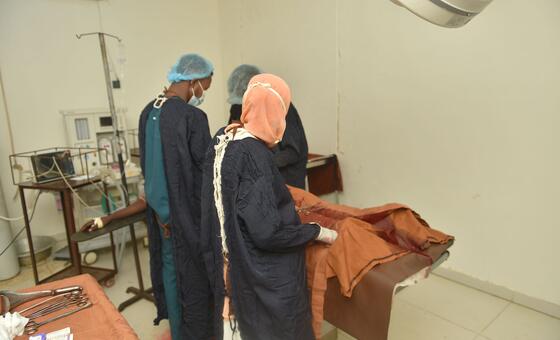
3 April 2026 — As violence forces tens of thousands to flee Sudan’s South Kordofan state, doctors in a key maternity hospital are facing impossible choices – with too few supplies, too many...
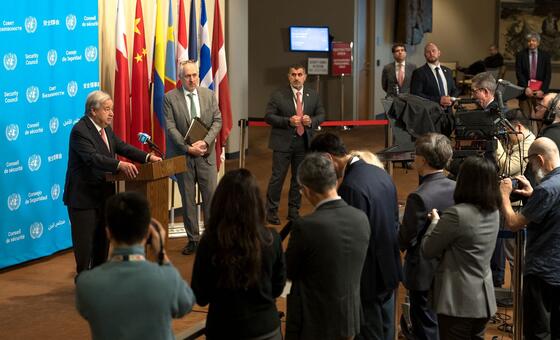
2 April 2026 — The Middle East crisis has lurched into its second month, prompting UN Secretary-General António Guterres to issue a stark warning on Thursday morning that the world is “on the edge...
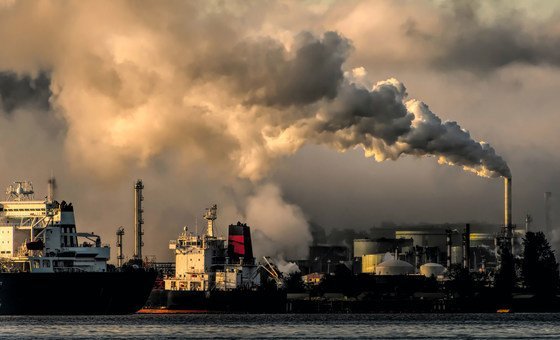
2 April 2026 — The ongoing crisis in the Middle East is exposing a central vulnerability in the global economy: the dependence on fossil fuels flowing through regions affected by conflict, a...
The Sustainable Development Goals are a call for action by all countries — poor, rich and middle-income — to promote prosperity while protecting the planet.
The Goals can improve life for all of us. Cleaner air. Safer cities. Equality. Better jobs. These issues matter to everyone. But progress is too slow. We have to act, urgently, to accelerate changes that add up to better lives on a healthier planet. Find new inspiring actions on the app and at un.org/actnow.
Today, half the world is under 30, and this generation is a powerful force for peace. The UN "Hear Us. Act Now for a Peaceful World" campaign, launched on the International Day of Peace, aims to include, invest in, and partner with young people to build lasting peace.
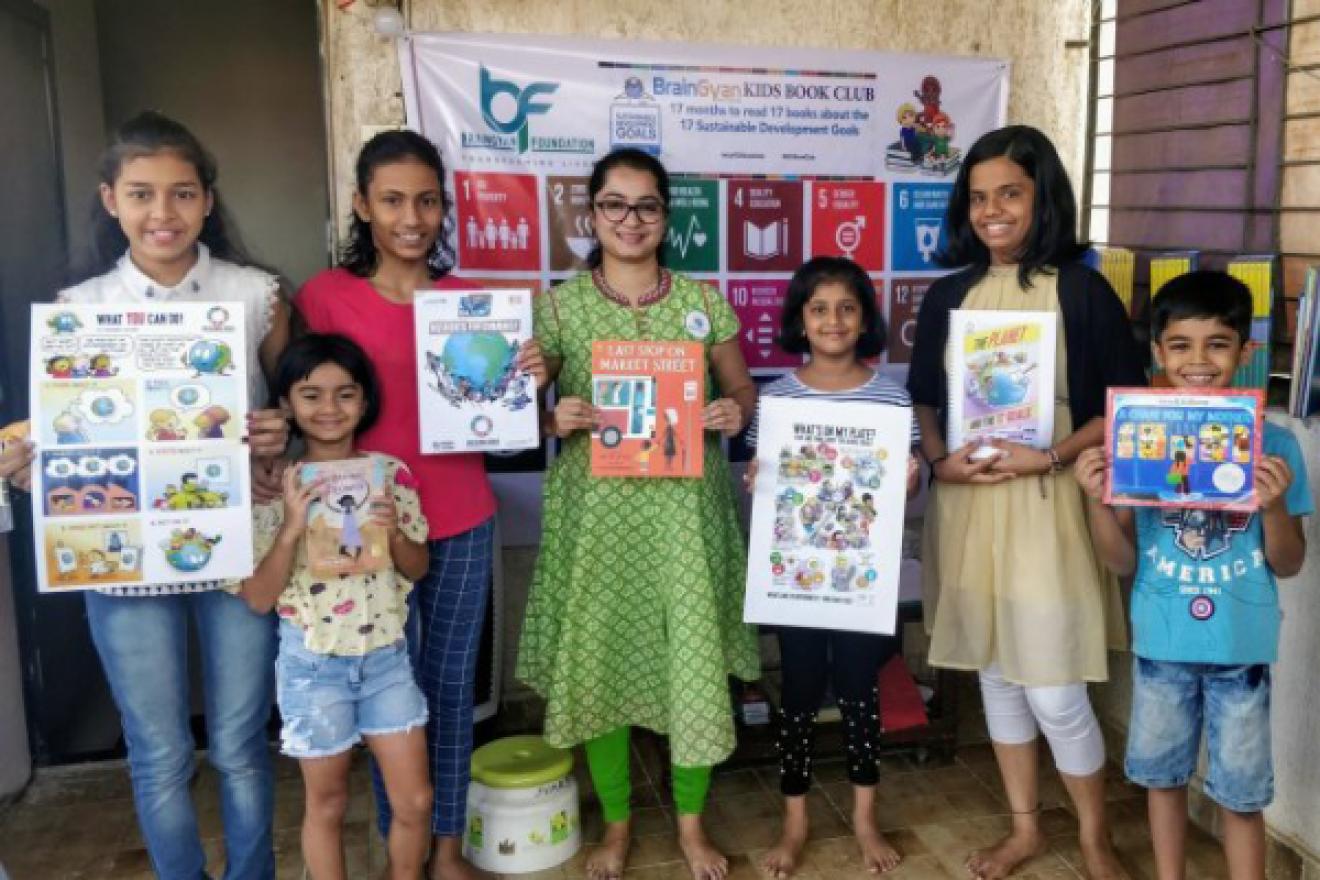
Reading and learning are essential to children’s growth and development; stories can fuel their imagination and raise awareness of new possibilities. The SDG Book Club aims to encourage them to learn about the Goals in a fun, engaging way, empowering them to make a difference.
Revitalize the global partnership for sustainable development
Featured stories from across the United Nations and our world-wide family of agencies, funds, and programmes.
We waste over 1 billion tonnes of food each year, squandering the resources behind its production and transport. This loss equals 1.3 discarded meals for every person facing hunger, making it both a humanitarian tragedy and a climate threat, as up to 10% of global emissions come from wasted food. Addressing the problem requires action across the entire food system—from policy to agribusiness—yet individuals can also help reduce waste. Here are seven practical tips.
Half a century after armed agents stormed a Rio de Janeiro home and vanished Brazilian congressman Rubens Paiva without a trace, his daughters stepped into a Geneva hearing room carrying fifty‑five years of silence, grief and unanswered questions, transforming their family’s long‑suppressed trauma into a public appeal before the UN Committee on Enforced Disappearances, echoing the campaign call to put victims first and demand urgent global action as families worldwide continue to suffer without truth, justice or accountability.
What if the key to healthier children and stronger farmers fit in the palm of your hand? Bhutan’s One‑Child, One‑Egg initiative links smallholder poultry farmers with school feeding programmes to combat malnutrition and support rural livelihoods. The pilot provides eggs to 32,000 students in 343 schools, boosting nutrition, energy and attentiveness. Farmers like Tenzin Drukpa now benefit from a reliable market that aids recovery and strengthens community wellbeing.
To protect low-income households, small businesses, farmers and vulnerable communities from financial risk,
Her life today looks very different from the years abroad, a reminder of the harm trafficking causes and the strength required to rebuild. Healing begins anew with the help of IOM and partners.
What began as disruption in a key energy corridor is now feeding through the entire global economy, UN Trade and Development warns in its second assessment. Update follows initial assessment of March 10.
Lebanon: a month after hostilities began, newborns spend first weeks displaced and a growing health crisis unfolds, while UNFPA races against time, attacks, displacement and shortages trying to deliver emergency support.
Due to the powers vested in its Charter and its unique international character, the United Nations can take action on the issues confronting humanity in the 21st century, including:
The United Nations came into being in 1945, following the devastation of the Second World War, with one central mission: the maintenance of international peace and security. The UN does this by working to prevent conflict; helping parties in conflict make peace; peacekeeping; and creating the conditions to allow peace to hold and flourish. These activities often overlap and should reinforce one another, to be effective. The UN Security Council has the primary responsibility for international peace and security. The General Assembly and the Secretary-General play major, important, and complementary roles, along with other UN offices and bodies.
The term “human rights” was mentioned seven times in the UN's founding Charter, making the promotion and protection of human rights a key purpose and guiding principle of the Organization. In 1948, the Universal Declaration of Human Rights brought human rights into the realm of international law. Since then, the Organization has diligently protected human rights through legal instruments and on-the-ground activities.
One of the purposes of the United Nations, as stated in its Charter, is "to achieve international co-operation in solving international problems of an economic, social, cultural, or humanitarian character." The UN first did this in the aftermath of the Second World War on the devastated continent of Europe, which it helped to rebuild. The Organization is now relied upon by the international community to coordinate humanitarian relief operations due to natural and man-made disasters in areas beyond the relief capacity of national authorities alone.
From the start in 1945, one of the main priorities of the United Nations was to “achieve international co-operation in solving international problems of an economic, social, cultural, or humanitarian character and in promoting and encouraging respect for human rights and for fundamental freedoms for all without distinction as to race, sex, language, or religion.” Improving people’s well-being continues to be one of the main focuses of the UN. The global understanding of development has changed over the years, and countries now have agreed that sustainable development offers the best path forward for improving the lives of people everywhere.
The UN Charter, in its Preamble, set an objective: "to establish conditions under which justice and respect for the obligations arising from treaties and other sources of international law can be maintained." Ever since, the development of, and respect for international law has been a key part of the work of the Organization. This work is carried out in many ways - by courts, tribunals, multilateral treaties - and by the Security Council, which can approve peacekeeping missions, impose sanctions, or authorize the use of force when there is a threat to international peace and security, if it deems this necessary. These powers are given to it by the UN Charter, which is considered an international treaty. As such, it is an instrument of international law, and UN Member States are bound by it. The UN Charter codifies the major principles of international relations, from sovereign equality of States to the prohibition of the use of force in international relations.
The main parts of the UN structure are the General Assembly, the
Security Council, the Economic and Social Council, the Trusteeship Council, the International Court of Justice, and the UN Secretariat. All were established in 1945 when the UN was founded.
The General Assembly is the main deliberative, policymaking and representative organ of the UN. All 193 Member States of the UN are represented in the General Assembly, making it the only UN body with universal representation.
The Security Council has primary responsibility, under the UN Charter, for the maintenance of international peace and security. It has 15 Members (5 permanent and 10 non-permanent members). Each Member has one vote. Under the Charter, all Member States are obligated to comply with Council decisions.
The Economic and Social Council is the principal body for coordination, policy review, policy dialogue and recommendations on economic, social and environmental issues, as well as implementation of internationally agreed development goals.
The Trusteeship Council was established in 1945 by the UN Charter, under Chapter XIII, to provide international supervision for 11 Trust Territories that had been placed under the administration of seven Member States, and ensure that adequate steps were taken to prepare the Territories for self-government and independence.
The International Court of Justice is the principal judicial organ of the United Nations. Its seat is at the Peace Palace in the Hague (Netherlands). It is the only one of the six principal organs of the United Nations not located in New York (United States of America).
The Secretariat comprises the Secretary-General and tens of thousands of international UN staff members who carry out the day-to-day work of the UN as mandated by the General Assembly and the Organization's other principal organs.
On 25 November 2025, the President of the General Assembly and the President of the Security Council initiated the process of selecting and appointing the next Secretary-General. Candidates are nominated by a Member State or a group of Member States. Learn more about the multi-step selection and appointment process of the next United Nations Secretary-General.
Climate change is the defining issue of our time and now is the defining moment to do something about it. There is still time to tackle climate change, but it will require an unprecedented effort from all sectors of society.
Women and girls represent half of the world’s population and, therefore, also half of its potential. Gender equality, besides being a fundamental human right, is essential to achieve peaceful societies, with full human potential and sustainable development.
While global poverty rates have been cut by more than half since 2000, one in ten people in developing regions still lives on less than US$1.90 a day — the internationally agreed poverty line, and millions of others live on slightly more than this daily amount.
As the world’s only truly universal global organization, the United Nations has become the foremost forum to address issues that transcend national boundaries and cannot be resolved by any one country acting alone.
Find out more in
Find out more in
Find out more in
Video and audio from across the United Nations and our world-wide family of agencies, funds, and programmes.
Syria’s new chapter is beginning — but beneath the soil of war, landmines and explosive remnants still threaten every step toward recovery, reconstruction, and economic development. No More Mines. Mine action is the silent enabler that makes rebuilding possible — clearing the path for communities, development, recovery, reconstruction and a lasting peace. Invest in mine action. Invest in Syria’s future.
Are social media bans the best way to keep your child safe online? You might be thinking that, but age limits alone will not fix broken systems. Here are 3 things that need to happen to truly protect children in digital spaces.
Subscribe to UNICEF on YouTube, see all of UNICEF's latest trending videos, and visit UNICEF's website for more about its work.
Organized fraud is crime at industrial scale. It operates across borders, platforms, sectors; generating mass victimization and significant illicit profits. Technology lowered the cost of deception. With proceeds reinvested into other forms of crime, this fraud fuels wider criminal activity. While global losses are difficult to quantify, credible estimates place them at a scale comparable to annual economic outputs of a major national economy. More at UN Office on Drugs and Crime.
In this episode (Ep 3) of The Work We Do from the Food and Agriculture Organization of the United Nations (FAO), we hear an interview with guest David Laborde, Director of the Agrifood Economics and Policy Division at FAO.
David shares his journey as a trade economist and how it has shaped his approach to today's agrifood systems. Discussed are the role of trade in food security and the true cost of the food we consume. We also dive into the art of policymaking in complex systems, from balancing competing priorities to managing unintended consequences to navigate difficult tradeoffs.
Images from across the United Nations and our world-wide family of agencies, funds, and programmes.
How to farm with success in Mozambique
Central Mozambique’s 2024 El Niño‑induced drought—the worst in a century—left families like those of Linda Castigo Phei in Manica province and Evaristo Chigo in Sofala province struggling as half the crops failed and 3.5 million people faced food insecurity. With most households relying on agriculture, the drought deepened existing hardships. Linda and Evaristo recall planting without training or reliable inputs, never knowing if crops would survive. Thanks to technical support funded by the UN's Global Emergency Fund (CERF), thousands like them have begun to recover and rebuild their livelihoods.
Signs of Safety – The dangers left behind by conflict, through the eyes of children
Explosive ordnance contamination remains a deadly, often hidden threat long after conflicts end, endangering lives, livelihoods and especially curious children. In the Occupied Palestinian Territory (OPT), Sudan and Syria, differing conflicts create the same indiscriminate risks. Communities —often the first to spot dangers—play a vital role in sharing warnings and promoting safe behaviour. Through Explosive Ordnance Risk Education, UNMAS supports people facing layered challenges, strengthening safety and resilience. The exhibition highlights the universal risks of explosive ordnance and showcases how children’s voices and insights help champion safer behaviours.