
Although the Raspberry Pi wasn’t the first-ever SBC, its release in 2012 marked a turning point for the DIY landscape. Initially developed as a means to get students interested in coding, the RPi boards saw unprecedented success over the years, exposing a huge crowd of coders, tinkerers, and even beginners to the complex yet satisfying world of do-it-yourself projects.
What’s more, even though many competitors with superior specs and mouth-watering prices have appeared in recent times, they still aren’t a match for lean, mean, green Raspberry Pi machines. So, here’s a list of reasons why the Raspberry Pi remains my preferred SBC even in 2024.

10 simple Raspberry Pi projects for beginners
You don't need to be a DIY god to create these projects with your Raspberry Pi
6 More HATs and accessories
No, not the fashionable kind
While the newer Raspberry Pi models pack plenty of inputs and connectors, there are still a lot of peripherals that might not work well with these miniature devices. That’s where HATs, or Hardware Attached On Top, come in handy. Typically attached to the GPIO pins, these tiny boards can expand the functionality of your Raspberry Pi.
From simple port and GPIO expansion boards to more complex weather sensors, sim modules, and servo drivers, you can bring pretty much any project to life with these convenient little boards. Sure, HATs are available for other SBCs, but their numbers pale in comparison to the sheer army of HATs that are compatible with Raspberry Pi boards.
5 Easily-accessible schematics
For 3D modelers and DIY gods
If you’re a DIY enthusiast who’s also into 3D modeling, then you’ll be glad to know that the Raspberry Pi Foundation releases mechanical drawings, schematics, and even 3D models of their boards. These resources may not seem like a big deal if you’re just starting out. But for those into hardware modding, being able to browse and edit the official 3D models makes Raspberry Pi boards a lot better than the average SBC, which barely come with mechanical drawings, let alone full-blown CAD models.
4 Beginner-friendly documentation
At last, a manual worth reading
One of the biggest reasons behind the meteoric success of the RPi boards is that the Raspberry Pi Foundation went out on a limb to make the tiny systems as accessible for beginners as possible. For instance, the official beginner guide for the Raspberry Pi family is chock full of illustrations, renders, and well-labeled images to break down all the complex aspects of the SBC lineup. Plus, its simple, conversational tone makes it far more approachable than your average user manual.
Contrast these simple-to-understand PDFs to the complex documentation provided by rivals, and it’s clear why most newcomers stick to the Raspberry Pi boards. Not to mention, there’s a plethora of resources on beginner, intermediate, and advanced Raspberry Pi projects out there, more so than any other SBC.
3 Better software support
Even the more powerful SBCs aren't compatible with this many apps
Another neat aspect of the Raspberry Pi is the rich set of libraries, packages, and apps that work right out-of-the-box with the SBC family. Part of the credit goes to the Raspberry Pi OS, which already comes with over half of the important packages pre-installed.
Heck, there’s even a GUI-based application store, called Pi-Apps, that lets you install Raspberry Pi-compatible apps with just the click of a button. Unlike the borderline useless Amazon Appstore on the deprecated Windows Subsystem for Android, Pi-Apps has a huge library of useful packages, including IDEs, theme generators, productivity apps, and even games and emulators! Factor in the unending number of GitHub projects that are compatible with the Raspberry Pi boards, and the RPi family handily crushes all rivals when it comes to running more applications.
2 Compatibility with multiple operating systems
No need to stay on the official OS
When I reviewed the Raspberry Pi 5, I adored the Raspberry Pi OS for being highly optimized for the tiny system. However, that’s not the only operating system you can run on a palm-sized computer. For lovers of Linux desktop distros, you have Ubuntu, EndeavourOS, Gentoo, Manjaro, and that’s just the officially supported operating systems. If you’re willing to get your hands dirty, you can easily go for more complex projects, such as installing Windows 11 and NixOS on the SBCs.
You can even set up a bunch of useful firmware created for specific use cases. If you’re into emulation, you can go for Lakka, RetroPie, or Recalbox, while those looking for a functioning Android firmware can look into LineageOS, AOSP, or Enteria. Then there’s the media server-based OS LibreELEC, the security camera-oriented firmware MotionEyeOS, and OpenWrt, an OS capable of turning the RPi into a network-wide firewall. There aren’t many SBCs out there that are compatible with this many operating systems, and even if they are, the performance issues and bugs would make for a rather aggravating experience.

How to emulate games on your Raspberry Pi
Here's everything you need to know to emulate older gaming systems on the Raspberry Pi.
1 Backed by a thriving community
Easily the most helpful and supportive tech community I've ever seen
Combine the Raspberry Pi’s open-source nature with lively blogs and forums where enthusiasts can show off their projects, and you get one of the most vibrant communities in the entire SBC landscape. Sure, with SBCs becoming more popular, rival boards have seen an uptick in their user base. However, Raspberry Pi’s humongous community easily surpasses those of its competitors, both in terms of number of users and the collection of projects.
Speaking of, the majority of the projects created by the community are just as open-source as the SBCs themselves. As such, you can grab their source codes, purchase the necessary peripherals, and build them all by yourself. Personally, Raspberry Pi’s active community is my favorite aspect of these devices, and it’s the reason why I never moved over to any other SBC.
Raspberry Pi: Plenty of pros, but a few cons as well
Just like every other product, the Raspberry Pi family has its fair share of glaring issues. The price hike on the base model, for one, is quite the buzzkill, and the same goes for the atrocious supply issues that have been plaguing the Raspberry Pi for years. The specs, too, are starting to become underwhelming for the price. Certain design changes in the newest member of the Raspberry Pi family, such as the lack of an aux port and the removal of hardware encoding, also don’t jive well with me.
Nevertheless, the Raspberry Pi remains my favorite SBC lineup, and I’d still recommend it to anyone looking for a tiny device to tinker with.
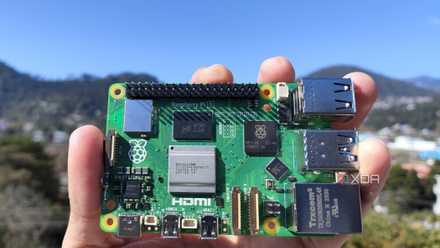
Raspberry Pi 5 review: The holy grail of DIY projects got even better (and rarer)
The Raspberry Pi 5 is one of the most powerful consumer-grade SBCs out there. Sadly, its limited stock means you'll have a hard time finding one.