
More often than not, people on the internet advise you to get rid of PC hardware that is perfectly usable, even years after it was considered obsolete. Every year, we are introduced to newer and faster PC components, but that doesn't make what you already have obsolete. Nine times out of ten, if you are itching for an upgrade, chances are that you don't need to upgrade. However, in the remaining cases, you might be chugging along with ancient components that have no place in 2025.
I'm going to dive into seven such cases where it actually makes sense to get rid of your old hardware as soon as possible. You might be holding back the performance of your system by a mile, and in some cases, risking the safety of your PC by trusting a component way past its shelf life.

10 ways to repurpose old PC components for DIY projects
Struggling to put old PC components to good use? Here are 10 excellent ways to repurpose them into something great.
7 8 GB of RAM
Pushing the limits
Instead of admonishing you for running 8 GB of RAM in 2025, I will get down from my high horse and illustrate the potential downsides of the same. Eight gigabytes of RAM used to be just fine around 10 years ago. In fact, when I built my first-gen Ryzen system in 2017, I started with a single 8 GB stick, planning to upgrade to 16 GB down the line. Today, however, you will struggle to run day-to-day workloads with just 8 GB of RAM.
Working with one or two browser tabs can still go smoothly, but the moment you try to push the system by playing a YouTube video, working on a deadline by launching a few more browser tabs, and navigating some folders and settings, you will quickly feel the system slowing down to a crawl. You don't need to go as far as believing Redditors that 32 GB is the minimum today, but upgrading to 16 GB is something you should definitely consider.
With an 8 GB system, you most probably have DDR4 or DDR3 RAM, and adding another 8 GB stick should not cost you a lot, considering the added performance and peace of mind you will get from it. Although a complete system upgrade is always recommended for ancient PCs, upgrading your RAM is a good place to start.

How much RAM do you need in your computer?
Let's explore how much RAM you need in your computer in order to properly tackle a variety of tasks.
6 Hard drive as primary storage
How long did it take to load this page?
This one is probably going to be the least controversial entry on the list, since hard drives have been universally discarded by the PC community, at least as primary storage. Not long ago, you could find numerous build suggestions recommending a combination of a smaller SSD and larger hard drive, with the OS and a few games on the SSD, and everything else on the hard drive. With the falling prices and increasing speeds of SSDs, however, hard drives were soon relegated to archival storage and NAS devices.
If the entirety of your data still resides on a hard drive, then there's absolutely no reason not to get an SSD into your system ASAP. Not only will you treat yourself to a day and night difference in system responsiveness, game loading times, and boot time, but also avoid losing your data to an aging hard drive. HDDs usually develop faults in 3 to 5 years of usage, so if your hard drive is already 5 years old (or more), moving to an SSD might be a smart, proactive decision.
In terms of investment, today's Gen4 NVMe SSDs (5,000 MB/s models) cost virtually the same as a SATA SSD, and a 1 TB drive based on either of the technologies should not cost you more than $60. In 2025, that is certainly a steal for injecting what is essentially a shot of adrenaline into your system.

3 reasons HDDs are still worth it
HDDs might be on their way out, but they're still better than SSDs in some areas
5 PSUs with no 80 Plus rating
Playing with fire, literally
If you are using an obsolete or cheap pre-built PC, or one that you built years ago on a shoestring budget, there is a chance that you have a power supply without any 80 Plus rating. 80 Plus is one of the most popular PSU efficiency rating standards that certifies that power supply runs at a minimum of 80% efficiency. While there are multiple 80 Plus tiers, ranging from standard to Titanium, the minimum that is usually recommended is 80 Plus Bronze. Efficiency alone doesn't guarantee that a particular PSU is a high-quality unit, but it gives you some amount of confidence in the unit's construction.
The PSU is responsible for delivering the right amount of voltage to every component inside your PC. A poor-quality unit is often prone to routing the wrong voltage, incapable of handling power surges, or likely to fry itself while taking some of your precious hardware with it. Even if your unrated power supply hasn't shown any reasons for concern yet, I would recommend not waiting for the worst to happen before replacing it. The cost of an affordable 80 Plus bronze PSU will always be a fraction of what you could be looking at if your cheap PSU blows up.
80 Plus isn't the only efficiency standard anymore, since the Cybenetics and PPLP standards have also seen some level of adoption. Whichever PSU rating you go with, it's always recommended to look for reviews online and ask fellow users on Reddit before buying the right PSU for your PC. Also, not every unit from a well-known or reliable brand will be worth buying. Some models are known to cause problems, while others could be mired in scandals. So, do your due diligence before trusting a particular model to power your precious hardware.

What are PSU Ratings? 80 Plus and Cybenetics explained
When choosing a new PSU for your PC, it is crucial to make sure that it has a proper rating.
4 AMD Ryzen 1000 and older CPUs
Time to leave the iconic chips behind
AMD's first-gen Ryzen CPUs based on the brand-new Zen architecture kickstarted a new era of modern CPUs, forcing Intel to break out of its complacent slumber. We finally saw some real competition in the CPU space and early adopters of the AM4 platform had zero regrets once initial issues were ironed out. However, CPUs like the Ryzen 3 1200, Ryzen 5 1600, and Ryzen 7 1700 are almost 8 years old, and, more importantly, are showing their age now.
While AM4 won't be dead for a long time, you should still consider swapping your Ryzen 1000 CPU for a Ryzen 5000 chip for some massive performance gains. Many B350 motherboards support Ryzen 5000 CPUs with a BIOS update, so you won't need a new motherboard in most cases. You can get up to double the performance in many titles, and around 70% more performance, on average.
You could also consider jumping to the new AM5 platform from your old AM4 CPU, and this is something those with pre-Ryzen CPUs should do in 2025. AM5 CPUs support DDR5 RAM and will get you a system that will last longer, even supporting CPUs that will be launched in 2027 (at least). With AMD's track record supporting AM4, there's no reason to doubt similar support for the AM5 platform.

Besides the obvious, here are 6 things to remember when buying a CPU
Before buying your next processor, remember to look deeper than the basic specs and compatibility
3 Intel 7th Gen Core and older CPUs
The generational gains are truly worth it
In the Intel camp, you don't need to upgrade (necessarily) if you have any of the CPUs belonging to the 8th Gen Core family or newer. The 7th Gen Core processors are where I would draw the line. The Kaby Lake processors came out back in 2016, and while they offer more than playable framerates in modern games (especially at 1080p), there's a strong argument to be made for upgrading from, say, a Core i7-7700K to a Core i7-14700K.
If you compare the gaming performance of the Core i7-8700K or the Core i9-9900K to the Core i9-13900K or Core i9-14900K, you'll see that although the 8th Gen and 9th Gen parts are slower, the experience isn't markedly different. However, moving from the 7700K to the 14700K can net you almost double the performance in many titles, plus the 7700K tends to dip below 60 FPS in some of the latest games. This upgrade can literally be game-changing for most users.

Do you really need to upgrade your CPU in 2024?
With both AMD and Intel missing the mark this generation in performance gains, maybe it's a good time to pause your upgrading habit.
2 AMD RX 500 series and older GPUs
It's the end of the line for Polaris

Coming to the most anticipated component of any PC, you should look at a GPU upgrade if you're running one of AMD's RX 500 series GPUs (RX 570, RX 580, RX 590, etc.). The RX 580 was the most popular SKU from this series, and aged quite well, enabling gamers to play the latest games at 1080p for many years after the GPU's launch back in 2017.
However, in 2025, the RX 580 and other RX 500 GPUs are ill-equipped to handle many modern titles such as Cyberpunk 2077, Alan Wake 2, Hogwarts Legacy, The Last of Us Part 1, and Red Dead Redemption 2, if you always want to remain above 60 FPS. Even at the lowest settings at 1080p, the RX 580 struggles to provide a 60+ FPS experience in demanding games, plus it exhibits some graphical anomalies in many games, owing to its age.
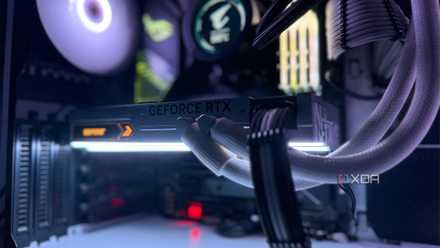
Upgrading to something like the RTX 4060 will give you up to 3 times the FPS, plus all the benefits of the Ada Lovelace architecture, such as ray tracing, DLSS upscaling, and frame generation. You can also consider the RX 7600 XT for a similar boost in performance but with inferior ray tracing performance.
4 telltale signs it's time to upgrade your graphics card
Don't wait till your GPU dies
1 Nvidia GTX 10 series and older GPUs
Pascal is borderline obsolete
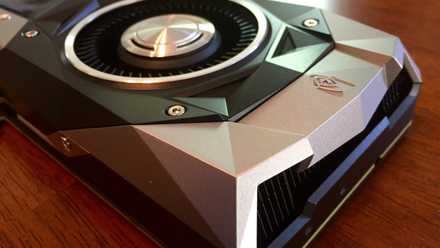
Nvidia owners running GTX 10 series GPUs like the GTX 1050 Ti, GTX 1060, and GTX 1070 should finally consider upgrading to an RTX card in 2025. While some of the Pascal GPUs like the revered GTX 1080 Ti can still be retained for a few more years, the lower-tier SKUs aren't equipped to handle the latest games at 60+ FPS.
Even the GTX 1070 dips way below 60 FPS in the most demanding titles, even after using low settings and enabling upscaling. Upgrading to a newer RTX graphics card like the RTX 4060 or something more powerful such as the RTX 4070 Super will be life-changing. Not only will you be able to experience ray tracing but also play the latest titles the way they're meant to be played. The GPU stock situation right now is terrible, and even previous-gen GPUs are tough to find, so you might have to look at the pre-owned market.
10 older GPUs that are still going strong in 2024
It's a tough world out there for old graphics cards, but these 10 champs are still kicking it
Sometimes it's time to say goodbye
You might not want to part with your years-old CPU or GPU, but an upgrade might hold something even better in store. Leaving your hard drive behind is probably easier in comparison, and upgrading from 8GB of RAM is something you should definitely consider in 2025. Lastly, a power supply without any efficiency rating is a ticking time bomb, whether it has shown any signs of failure or not.