
It's no secret that AMD's recent RX 9070 XT is one of the best graphics cards you can buy with its highly competitive price and solid 4K performance. Still, I didn't expect it to fly so close to Nvidia's last-gen RTX 4080 Super. These two GPUs are in completely different performance classes, but despite that, they deliver similar specs and performance. And even with AMD taking a slight backseat overall, the RX 9070 XT is the GPU to buy.
I'll be covering both cards here point-for-point, but if you want to dive deeper into either of them, make sure to read our AMD RX 9070 XT review and Nvidia RTX 4080 Super review.
-
ASRock Radeon RX 9070 XT Steel Legend
8.5/10- Memory Clock Speed
- 2518 MHz
- Architecture
- RDNA 4
- Process
- 5 nm
- Shader Units
- 128
- Ray Accelerators/Cores
- 64
- AI Accelerators/Cores
- 64
The Radeon RX 9070 XT is one of AMD's first GPUs powered by RDNA 4, capable of smooth 4K gaming with powerful internals and more advanced upscaling and frame generation technologies. It's the graphics card to buy for 4K gaming.
Pros & Cons- Excellent 4K performance
- Vastly improved ray tracing and upscaling
- FSR 4 can more than double FPS
- Still not quite as good as Nvidia for RT
- FSR 4 support is somewhat limited
-
Nvidia GeForce RTX 4080 Super
7.5/10- Brand
- Nvidia
- Cooling Method
- Air cooling
- Interface
- PCIe 4.0 x16
- Memory
- 16GB GDDR6X
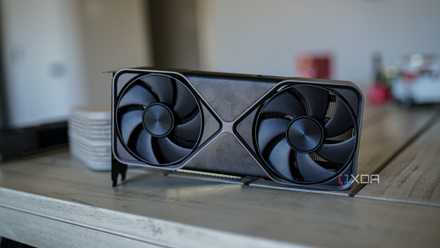
The Nvidia GeForce RTX 4080 Super FE is a gorgeous high-end graphics card with one of the best cooling solutions I've ever used. It's worth considering for high-end PC builds for 4K gamers, even if it isn't necessarily the best value proposition.
Pros & Cons- Solid performance for higher-resolution gaming
- Impeccable build quality and cooling performance
- Whisper quiet cooling fans
- Three-slot design covers useful PCIe slots on motherboard
- 12VHPWR socket requires a new PSU or a bulky adapter
RX 9070 XT vs RTX 4080 Super: Surprisingly similar specs
Two different performance classes, but largely similar specs
-
AMD Radeon RX 9070 XT
- Shader Units
- 128
- Ray Accelerators/Cores
- 64
- AI Accelerators/Cores
- 64
- Base Clock Speed
- 1660 MHz
- Boost Clock Speed
- 2970 MHz
- Memory Clock Speed
- 2518 MHz
- Memory Capacity
- 16 GB GDDR6
- Memory Bus
- 256-bit
- Memory Bandwidth
- 644.6 GB/s
- Power Draw
- 304 W
- Architecture
- RDNA 4
- Process
- 5 nm
- Price
- $599
-
Nvidia GeForce RTX 4080
- Shader Units
- 10240
- Ray Accelerators/Cores
- 80
- AI Accelerators/Cores
- 320
- Base Clock Speed
- 2295MHz
- Boost Clock Speed
- 2550MHz
- Memory Clock Speed
- 1438MHz
- Memory Capacity
- 16GB GDDR6X
- Memory Bus
- 256-bit
- Memory Bandwidth
- 736.3 GB/s
- Power Draw
- 320W
- Architecture
- Ada Lovelace
- Process
- 5nm
- Price
- $1000
The RX 9070 XT and RTX 4080 Super are in two different performance classes, with AMD's card targeting midrange gamers looking for solid 4K performance and stellar 1440p performance, and Nvidia's pushing more toward flagship 4K frame rates. Despite that, the two cards have very similar specs, and it'd be easy to mistake the RX 9070 XT as a direct RTX 4080 Super competitor if you ignored the price and naming conventions.
AMD and Nvidia use different architecture designs, so the cores and clock speeds aren't really important here. The performance they can deliver is what's important. Elsewhere, the comparisons are clearer. Memory is where the RX 9070 XT punches above its weight class, with AMD delivering 16GB of GDDR6 memory, matching what the RTX 4080 Super offers. Nvidia uses faster GDDR6X modules, and the overall memory bandwidth is higher as a result, but that doesn't amount to much of a performance difference.
5 reasons your GPU's VRAM capacity matters more than ever
Remember the fears about low VRAM on GPUs? They're all coming true
Power is another area where these two GPUs are similar, but that's a win for Nvidia. The RTX 4080 Super -- and all Ada Lovelace cards, for that matter -- is extremely efficient. It's able to deliver higher performance than the RX 9070 XT while operating within a very similar power window, which is impressive. Both cards are built on a 5nm node, too, so Nvidia isn't getting any extra efficiency points purely on a more advanced process.
Winner: Tie
RX 9070 XT vs RTX 4080 Super: Pricing is all over the place
But AMD still holds the edge
As with most graphics cards in 2025, pricing for the RX 9070 XT and RTX 4080 Super is all over the place. That's largely because inventory is all over the place, and you'll sometimes need to spend up for an overclocked model just because that's the only thing in stock. As far as list prices go, the RX 9070 XT is supposed to cost $600, while the RTX 4080 Super is supposed to cost $1,000. The price at retailers is a little more complicated.
Starting with the RX 9070 XT, it's sold out across the internet, though my local Micro Center has restocked the GPU regularly since it released. Some cards are still listed for $600, but most of the models I've seen in stock are between $700 and $800. Given the limited inventory, prices on the secondhand market are higher. Most models have sold for around $900 on eBay, but there are some that have sold for closer to $750. Cards at that price are few and far between, so if you're shopping secondhand, you'll need to be diligent.
MSI hikes Nvidia GPU prices at the worst possible time
Not that they were available at a reasonable price anyway.
If nothing else, the RX 9070 XT at least briefly sold for list price, and AMD says it expects more inventory soon. The RTX 4080 Super, on the other hand, never sold for list price. I've never seen a model in stock for less than $1,200 -- the list price of the original RTX 4080 -- and that situation isn't helped by the limited inventory available today. If you can find a model in stock, you can expect to spend around $1,500. You're much more likely to find one on the secondhand market, though you'll still need to pay above list price.
At the time of writing, the going rate is anywhere from $1,300 to $1,500, with Founders Edition and overclocked models leaning toward the more expensive end of the range. A few models have sold for $1,200, but I wouldn't expect to see many models below that price, at least not for the next several months. Even with the dire state of GPU pricing right now, AMD handily wins this round.
Winner: RX 9070 XT
RX 9070 XT vs RTX 4080 Super: Performance is closer than you think
Nvidia is faster overall, but AMD isn't far behind
Given the price disparity between the RX 9070 XT and RTX 4080 Super, it shouldn't come as a surprise that the Nvidia GPU comes out on top for performance. The margins are a little tighter than you might expect, though. Despite being around half the price (on paper), the RX 9070 XT delivers performance with 10% of the RTX 4080 Super across games, and sometimes, it even holds a slight lead.
Out of the batch of games I tested, the RX 9070 XT actually led in Cyberpunk 2077. Despite being a game pushed by Nvidia, AMD's GPUs have shown outsized performance gains in this title over the past couple of years. Those gains are enough for the RX 9070 XT to actually win across both 1440p and 4K. It's particularly important at 4K, where the RX 9070 XT is able to manage an average above 60 fps while the RTX 4080 Super falls short of that mark. Nvidia still takes the lead with ray tracing, though.
|
Game |
RX 9070 XT |
RTX 4080 Super |
|---|---|---|
|
DOOM Eternal (Ultra Nightmare) |
|
|
|
Cyberpunk 2077 (Ultra) |
|
|
|
Forza Horizon 5 (Extreme) |
|
|
|
Shadow of the Tomb Raider (Highest) |
|
|
|
The Witcher 3 (Ultra+) |
|
|
The RTX 4080 Super leads in all of the other titles I tested, but that doesn't always add up to a meaningful difference in your gameplay experience. In Shadow of the Tomb Raider, for example, the RTX 4080 Super is clearly ahead. But that boost in frame rate won't make the game significantly smoother. Similarly, in Doom Eternal, both GPUs are able to pass 200 fps at 4K, and even over 150 fps with ray tracing turned on, all without upscaling. Despite showing a large difference in frame rate, those extra frames make less of a difference when the performance is already this high.
The one big exception was The Witcher 3, specifically the new enhanced version of the game. The RTX 4080 Super is leagues faster in this game, and I suspect that has to do with the fact that Nvidia was heavily involved in the marketing of the update. It seems Nvidia's GPUs, or maybe its drivers, are better optimized for this title. That's not surprising considering this is one of the few remaining games that still sports Nvidia's HairWorks middleware, which is unheard of in games released today.
Raw frame rates aren't all that's important in games today. Upscaling and frame generation play a critical role, too, and unlike previous matchups between AMD and Nvidia, the RX 9070 XT and RTX 4080 Super are equally matched here. The RTX 4080 Super supports Nvidia's DLSS 4, including Super Resolution and Frame Generation. Unlike recent GPUs like the RTX 5070, however, the RTX 4080 Super doesn't support Multi-Frame Generation (MFG).

4 ways FSR 4 gives DLSS 4 a run for its money
FSR is no longer an afterthought for gamers
The RX 9070 XT supports FSR 4, which also comes with upscaling and single frame generation. Unlike previous versions of FSR, this version uses an AI model that runs on dedicated hardware on RX 9000 GPUs. That's almost identical DLSS, and based on our testing of FSR 4, it delivers frame rates and image quality that's almost identical to DLSS. From a quality and performance standpoint, these two GPUs are largely the same.
Nvidia earns its stripes with game support. FSR 4 is brand new, and it's only available in a limited number of games. Nvidia has been building its DLSS catalog for years, though, and you'll be able to access upscaling and frame generation in hundreds of games. Thankfully, AMD includes driver-based upscaling and frame generation, which is something the RTX 4080 Super doesn't have access to.
Winner: RTX 4080 Super
Which one should you buy?
Although the RTX 4080 Super clearly delivers better performance, it's hard to justify how expensive it is compared to the RX 9070 XT. In most games, AMD's card delivers performance within 10% of Nvidia's last-gen GPU, and it comes in hundreds of dollars cheaper. That's true even now when GPU prices are much higher than they ought to be.
ASRock Radeon RX 9070 XT Steel Legend
- Memory Clock Speed
- 2518 MHz
- Architecture
- RDNA 4
- Process
- 5 nm
- Shader Units
- 128
The RTX 4080 Super still has its place, particularly when it comes to DLSS and ray tracing performance. Still, I'd recommend being patient if you want to go with Nvidia's GPU. It's a solid card at $1,200, but I wouldn't spend much more than that.
Nvidia GeForce RTX 4080 Super
- Brand
- Nvidia
- Cooling Method
- Air cooling
- Interface
- PCIe 4.0 x16
- Memory
- 16GB GDDR6X