
In the GPU wars, AMD has always lagged behind Nvidia in ray tracing performance. Whether you look at the RX 6000, RX 7000, or even the latest RX 9000 series, Nvidia still holds the better cards when it comes to demanding ray-traced titles. While AMD's RDNA 4 GPUs are closer than ever to Nvidia's offerings, I'm more impressed by what Team Red has achieved with its latest iteration of FSR.
FSR 4 represents one of the biggest leaps in AMD's upscaler in ages. FSR 3 was nearly unusable due to a myriad of issues, such as blurring, shimmering, and handling of fine details. In contrast, FSR 4 is now highly competitive with Nvidia's DLSS 4, offering virtually the same performance and visual quality. On top of that, it's available to a wider audience, thanks to value-for-money GPUs like the RX 9070 XT.

3 reasons why AMD finally used AI for FSR 4
AMD's FSR 3 wasn't far behind the competition, but FSR 4 needed sweeping changes for truly impressive gains
4 The visual differences are slimmer than ever
FSR is no longer inferior
The biggest complaint gamers had with FSR 3 was the inferior image quality when compared to DLSS 3. Where DLSS resulted in a mostly flawless (as most people perceived it) upscaled image, the visual artifacts present in FSR's output were immediately recognizable. Fast-moving objects appearing blurred, shimmering around fences, hair, and the like, and an overall choppy experience were common complaints with FSR 3.
The experience with FSR 4 couldn't be more different — almost all the deficiencies of FSR 3 have been eliminated, resulting in a vastly superior image and motion clarity. Even when compared to Nvidia's DLSS 4, which is still ahead, the differences aren't huge. The DLSS 4 image is more stable and clear for now, but improvements in FSR 4 are sure to get rid of the minor differences between the two upscalers.
The biggest takeaway from the RX 9000 launch is that FSR is now competing head-to-head with DLSS. If you were contemplating switching from Nvidia to AMD this generation, FSR should not be an area of concern anymore. The benefits of FSR 4, however, are limited to the RX 9000 series, whereas most features of DLSS 4 are available on older-gen RTX cards.
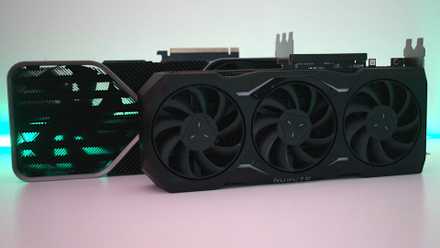
5 reasons DLSS and FSR are game-changers for budget gaming PCs
Budget gaming PCs deal with aa ton of constraints. DLSS and FSR help ease the load
3 It offers the same performance uplift
Another win for AMD
While prior versions of FSR and DLSS weren't too far apart in terms of the percentage performance uplift either, this time, the gap has been reduced further. Coupled with the fact that FSR 4 now looks almost similar to DLSS 4 in most respects, this ensures that AMD can deliver a similar experience to the leading upscaler in the industry. Whether you look at the Quality, Balanced, or Performance modes, FSR 4 and DLSS 4 are neck and neck. A few frames here and there won't change the actual experience you get as a gamer.
It's clear that the visual advances in FSR haven't come at the cost of performance. AMD's upscaler runs without a lot of overhead, allowing it to compete with DLSS 4 where it matters. The underlying transformer model in DLSS 4, plus other improvements, makes it harder to run compared to FSR 4, which still primarily uses a CNN model. The net result evens out most of the overhead differences, however, making the two technologies more similar than ever, in terms of performance uplift.

AMD doesn't want to repeat past mistakes with FSR 4
AMD's AI-assisted FSR 4 releases in a matter of days, and it already has a ton of support.
2 It is more accessible, thanks to RX 9000 GPUs
The value is stronger with FSR 4
When you're getting essentially the same upscaling quality and performance from FSR 4 and DLSS 4, the next thing to consider is the price of entry. FSR 4 is currently only available on two GPUs: RX 9070 XT and RX 9070. With the kind of 4K and 1440p performance these cards offer at $599 and $549 MSRPs, respectively, FSR 4 becomes much more attractive than DLSS 4. The RTX 5070 at $549 is pretty similar to the RX 9070, but the latter is still more impressive due to other factors.
The RTX 5070 struggles in some titles due to its 12GB VRAM, whereas the RX 9070 has 50% more VRAM at 16GB. This alone makes the AMD option the longer-lasting $549 GPU. VRAM usage in games is only set to increase, as seen in Indiana Jones and the Great Circle. As more gamers are likely to consider the RX 9000 GPUs over the likes of the RTX 5070 and the pricier RTX 5070 Ti, FSR 4 adoption will steadily increase.
ASRock Radeon RX 9070 Steel Legend
- Memory Clock Speed
- 2518 MHz
- Architecture
- RDNA 4
- Process
- 5 nm
- Shader Units
- 128
- Ray Accelerators/Cores
- 56
- AI Accelerators/Cores
- 112
AMD's RX 9070 is one of the most affordable 4K gaming GPUs on the market, thanks to the advanced RDNA 4 architecture and a drastically improved FSR 4.

AMD listened — The Radeon RX 9070 XT is the "best 4K GPU for less than $600"
Here's how much you'll need to pay for solid 4K gaming with AMD in 2025.
1 FSR 4 vs. FSR 3 is a bigger leap
A game-changing upgrade
DLSS 4 might have debuted a new transformer model for upscaling and the much-touted Multi Frame Generation feature, but compared to the jump from FSR 3 to FSR 4, it's only an evolutionary update. Sure, the transformer model improves the image quality of DLSS upscaling, but the drastic improvements seen in FSR 4 are on a whole different level. The low bar set by FSR 3 helps make this feat appear bigger, but AMD has truly kicked it out of the park with FSR 4.
Like I said before, no one expected FSR 4 to be this much better compared to FSR 3. Fewer artifacts, slightly more performance, and some more competition for DLSS was all anyone expected, but what we got was something that can't even be termed as the same technology as FSR 3; the leap is just too big. If it wasn't for the impressive pricing and overall performance of the RX 9000 cards, FSR 4 would be the biggest thing being discussed online right now.
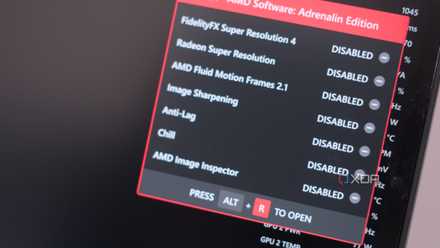
5 settings to change to get the most out of your AMD RDNA 4 GPU
Ready to unlock the full potential of your new AMD GPU?
FSR and DLSS are finally competing in the same game
It used to be that FSR was miles behind DLSS in terms of image quality and stability, and all discussions regarding AMD's upscaler focused on whether it would be able to come close to DLSS. Now, with FSR 4, AMD has finally bridged the long gap between FSR and DLSS, placing FSR 4 between DLSS 3 and DLSS 4. The differences still exist, and DLSS 4 leads in some areas, but FSR is no longer an afterthought for gamers. The more attractive pricing of the RX 9000 GPUs further helps the case for FSR 4, spurring adoption and incentivizing AMD to refine it further.