
When people think of home network upgrades, mesh Wi-Fi or a fancy router is usually what they think about. After all, the marketing around mesh networks makes it seem that they're a silver bullet to every Wi-Fi problem. However, many mesh systems cause the exact problems that they promise to solve. Even Wi-Fi 7 routers boast blazing-fast speeds and better coverage than ever, but they a Wi-Fi 7 router won't fix what's truly wrong with your home network. Before you rush to buy a fancy Wi-Fi router or invest in an expensive mesh system, consider some other upgrades that deliver way better performance per dollar. Your home network might not even need a dedicated mesh network; it might just need a few optimizations to perform dramatically better.

5 things I wish I knew before upgrading my home network
I didn't expect a single cable could bring my network to its knees.
Switch to a better DNS already
Better late than never
If you've never touched your router's settings since the ISP installed it, you're probably still using the default DNS to access the internet. On the surface, this might seem perfectly normal, but it allows your ISP to monitor your DNS queries. They can use DNS filters to block any parts of the internet they deem inappropriate, and even sell your data to advertisers for targeted ad campaigns. Besides privacy concerns, your default DNS is almost always going to be slower when resolving queries. With a private DNS like Cloudflare, AdGuard, or Quad9, you're almost always guaranteed a snappier browsing experience while ensuring data privacy.
Self-hosting your DNS server will take things a step further, thanks to local domain rebinds for home labs, and the ability to get different DNS results on different devices. You can completely cut your ISP out of the loop and have significantly more control over your traffic compared to a commercial DNS. Still, the latter is a big step up from the ISP DNS you're using right now.

4 router settings most people never change that actually fix slow Wi-Fi
Don't blame your router or internet plan before checking your router's settings
Use VLANs to improve both performance and security
Give network segmentation a try
Virtual networks are criminally underrated. It's not just for advanced users running home servers; it can tangibly benefit almost anyone using high-bandwidth devices and smart home devices on the same network. Home automation devices often consume more bandwidth than they should, saturating your Wi-Fi with broadcast traffic and slowing things down for the devices that need that precious bandwidth the most. You can't really get rid of either of these devices, and that's where VLANs come in.
Virtual networks can separate the network traffic across devices while keeping everything on the same physical network. By offloading all your IoT devices to a VLAN of their own, you prevent them from impacting your main network. Your most-preferred devices, like smartphones, laptops, TVs, and PCs, can enjoy lower latency and a more reliable connection. You could also implement bandwidth limits on the IoT VLAN to prevent your smart devices from consuming too much data. VLANs are also handy when you wish to secure your network from easy exploits via home automation devices. Any successful intrusion will be limited to the IoT VLAN alone, unable to penetrate into your main network. Of course, firewalls and other security tools should also be used to complement VLANs, but the latter is a good place to start in any home network.

5 reasons my VLANs only separate wired devices from wireless
The easiest way to boost network performance and control without overcomplicating things.
Introduce some wired access points
The benefits of mesh without the cost
Depending on the size of your house, you might be thinking about buying a mesh network or a better router to supplement network coverage. Thankfully, you don't always need to do that. One or two wired access points are all that most people need to cover every part of their house with a fast and reliable connection. Wi-Fi extenders depend on wireless radios alone to send data back and forth from your devices to the router, halving your bandwidth and leading to a worse connection. A wired AP, on the other hand, uses Ethernet for the backhaul, eliminating any wireless dependency. The AP receives a consistently performant connection from the router, and your wireless devices can enjoy the same excellent performance anywhere in the house.
You don't even need to spend hundreds of dollars on a commercial AP; that would defeat the point of bypassing a mesh network. Repurposing an old router into a wired AP is deceptively simple. You just need to connect it to your main router with an Ethernet cable (ideally Cat6 or Cat6a), disable DHCP on the old router, and set the same SSID and password on both of them to enable seamless roaming for your wireless devices. You could choose to install a custom firmware if you want better QoS settings on the old router.
I ran wired backhaul to every room in my house, and it was so worth it
After years of being Wi-Fi first, now I've seen the light
Invest in a cheap managed switch
It can do wonders for home labbers and NAS users
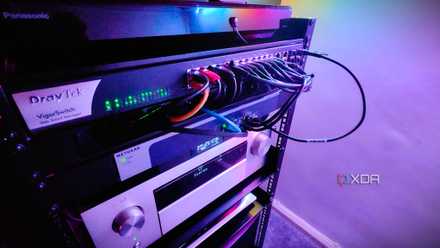
A managed switch might sound like an enterprise device, but 8-port Gigabit switches are more common in home networks than you think. Instead of a Wi-Fi 7 router or mesh system, you may just need a managed switch to make your home network great again. Thanks to features like VLANs, port tagging, link aggregation, and better QoS, you can ensure your home lab traffic doesn't clog up your main network, and your NAS downloads don't slow down when multiple users are accessing it. The average user doesn't really need a switch, but the moment you have a NAS, home lab, and tons of smart devices, a $20–$40 managed switch becomes a cheap but fantastic investment.
Save on networking deals: switches, APs, and cables
Without the heavy traffic from your home lab flooding the main network, almost every device feels like it has jumped to a way faster connection. Everything feels snappier, latency improves drastically, and network reliability becomes second nature. A switch might feel like adding complexity to your network, but your router can probably not handle everything a managed switch can. It's fairly easy to set up for advanced users who need the best performance for their home lab or server.
NETGEAR 5-Port Gigabit Ethernet Unmanaged Switch
For people who need a basic Gigabit Ethernet switch, this five-port one from Netgear covers the essentials while hitting a very affordable price point.

The smartest upgrade I made to my home network cost under $20
A simple fix to an annoying problem
Home network upgrades don't need to be expensive
The common myth that you need an expensive router or mesh system to upgrade your network hides the fact that most upgrades are free or cheap. Changing your DNS server and setting up VLANs often doesn't need any new hardware. And you can even use old routers to set up wired access points across your house for superior coverage. Even spending $20 on a managed switch is more than fair, considering what you're getting in return.