
So, I just played Cronos: The New Dawn over the last weekend, and after staying tensed up throu8ghout its 20-hour campaign, I can safely say that it is definitely one of the best survival-horror games we've gotten in this generation. I may have my fair share of complaints from the current console generation, but a lack of ambitious survival horror AAA games isn't one of them. Still, it isn't as if they all succeeded, which is where the other elephant in the room comes in.
Dead Space has always been the gold standard for survival-horror space, and for good reasons. Throw in a space element in the mix, and you're definitely going to have to do a lot to set yourself apart from EA's epic franchise. So, when former Dead Space devs decided to make the callisto protocol, everyone had high hopes, and yet three years later, barely anyone remembers that game.
Cronos: The New Dawn, Bloober Team's own horror IP, does a lot of things right, which is why it deserves more flowers than The Callisto Protocol. Sure, it had time on its hands to learn from the latter's missteps, but there's so much more to it, too. Here's everything Bloober Team's new survival-horror game does right, and why you should make sure that you play this game as soon as you can.
Cronos: The New Dawn puts atmosphere over spectacle
Strip away the plot and characters, and only one environment remains scary
Inarguably the biggest difference between the two games is how they approach the atmosphere. The Callisto Protocol went all-in on spectacle with its flashy gore animation, cinematic angles, and set-piece moments that wanted to shock players instead of terrify them. Shock, however, just isn't the same as horror, because after the tenth over-the-top death scene, the impact was gone.
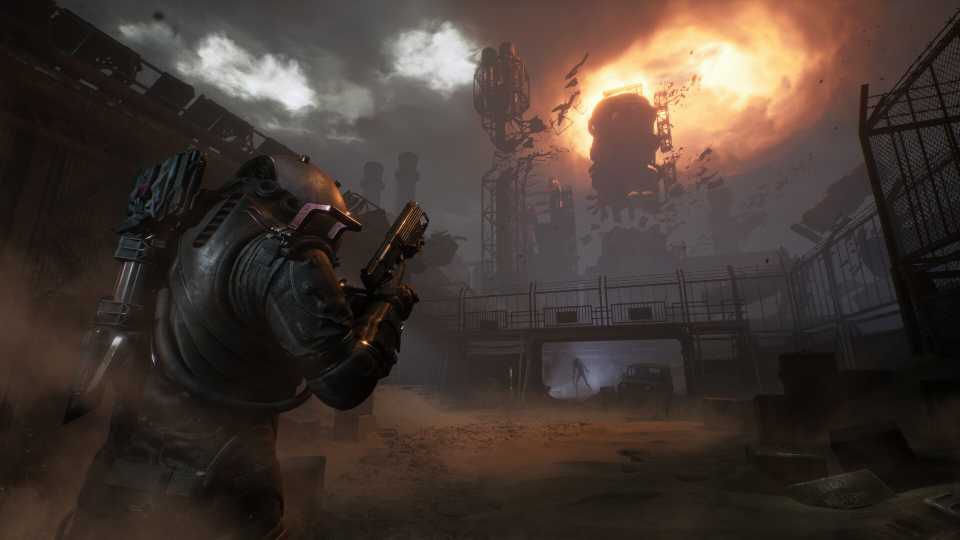
I may not have died as much in Cronos, especially since there is no difficulty slider in the game, but the atmosphere itself made sure that my grip on the controller was vice-like. Fog-drenched forests, ruined villages, and unsettling silence is what drives the scares in Cronos: The New Dawn, and the 'horror' lingers at you, waiting for your guard to slip up. It also relies way less on jump scares, which makes it even more impactful, because you'll remember it for the way it made you walk the length of an empty hallway painfully slowly, expecting a surprise, only to give you nothing but a realization of your own stress and fear.
Cronos: The New Dawn relies way less on jump scares, which makes it more impactful.
Simply put — compare the city of New Dawn and the Black Iron Prison. The two locations for Cronos and Callisto, respectively, are very different if you strip away the characters, the scary alien monsters, and everything about the plot. What remains then in New Dawn is still a fog and dust-ridden '80s Polish town that exists inside a time-fracture and a haunting Steelworks factory that is genuinely scary to look at even without the darkness and the monsters. On the other hand, Black Iron Prison would look like it came right out of a sci-fi movie, which, while still being good design, doesn't immediately scream 'horror'. Only one of these games has its environments and atmosphere doing the talking for it and adding to the theme, and that is The New Dawn.
Tighter resource management makes a world of difference
The 'survival' aspect is just as important as the horror
Survival horror lives and dies by how much it lets you sweat over every bullet and medkit. This is one aspect where The Callisto Protocol genuinely fumbled. Resources in the game were scattered around pretty generously, and by the midway point, you could definitely muscle your way through most encounters, thus evaporating the tension. Cronos, on the other hand, nails this balance, and then some.
In fact, in New Dawn, every single bullet genuinely counts, and the game makes sure that it doesn't even give you enough for each enemy. This is how it forces you to keep moving, thinking, and looking for environmental ways to tackle the threat, instead of simply dodging and unloading clips into enemies. Every single shot in the game feels like a decision, and I had to reload to my last checkpoint multiple times when I ran out of bullets because of too many missed shots.
Every single shot in Cronos: The New Dawn feels like a heavy decision.
This constant pressure is what keeps the game feeling continually oppressive, because you're not just thinking about the next threat that is going to pop out, but also constantly scanning every inch of the screen to figure out how you'll deal with it. Since the game never lets you be comfortable, that unease bleeds into every step forward. Callisto has you feeling like an action hero by the end, but Cronos makes sure you feel like prey.
Callisto's only combat invention worked against it
How can I fear a monster I can punch to death?
One of Callisto Protocol's biggest misfires was its obsession with melee combat. The game basically funnels you into close encounters, giving you a dodge mechanic that lets you trade blows with enemies, a-la The Last of Us, or a hundred other dodge-and-counter games. You got a powerful, futuristic baton to hit the aliens with, too, which genuinely stripped away the fear. When you know you can just square up with a monster and beat it down, do the stakes not collapse as quickly as the monster itself?
Cronos learned from that, and made sure it did the opposite. In The New Dawn, confrontation is rarely the smartest option, and you're always on the back foot. Enemies are dangerous, unpredictable, and better avoided when possible. There were plenty of times I just took a couple of hits in an ambush to just make it to the next ladder instead of trying to stand my ground, because I knew it simply wouldn't work. Every single combat encounter feels like rolling the dice — do I sneak past? Do I risk wasting ammo? Do I even have enough to make it through if I do fight? That's the sort of helplessness that builds far more tension than Callisto's combat loop ever did.
-
👁 Placeholder Image
OpenCritic Reviews - Top Critic Avg: 67/100 Critics Rec: 42%

- Released
- December 2, 2022
- ESRB
- M for Mature: Blood and Gore, Intense Violence, Strong Language
- Developer(s)
- Striking Distance Studios
- Publisher(s)
- Krafton
- Engine
- Unreal Engine 4



WHERE TO PLAY


In this narrative-driven, third-person survival horror game set 300 years in the future, the player will take on the role of Jacob Lee – a victim of fate thrown into Black Iron Prison, a maximum-security penitentiary located on Jupiter's moon, Callisto. When inmates begin to transform into monstrous creatures, the prison is thrown into chaos. To survive, Jacob must battle his way to safety to escape Black Iron Prison, while uncovering the dark and disturbing secrets buried beneath the surface of Callisto. Using a unique blend of shooting and close-quarters combat, Jacob will need to adapt his tactics to combat the rapidly evolving creatures while scavenging to unlock new weapons, gear, and abilities to outrun the growing threat and escape the horrors of Jupiter's Dead Moon.
- Genre(s)
- Survival Horror
The New Dawn's plot and narrative action are simply superior
Cronos presents a more gripping and novel story
If I had a dollar for every time a horror game leaned on the "secret experiment gone wrong" trope, I could probably afford all the other horror games coming out this year. The Callisto Protocol was guilty as charged, too, with a paper-thin story about corporations, prisons, and the age-old "we-bit-off-more-than-we-could-chew" science experiments. Again, Cronos manages to sidestep this laziness and elevate itself by presenting a tighter and more original story, driven by mystery rather than cliché.
Where Jacob Lee in The Callisto Protocol is fighting for survival and making his way through an off-planet prison to leave that place, The Traveler in Cronos is actively making her way through time rifts and a dilapidated city to find out what happened. There's a mystery here being solved where the player, as the protagonist, isn't just reacting to what's going on, and instead, is moving towards the center of the mystery to reveal its layers.
This difference alone is incredibly crucial, because you're compelled to push forward because you want to understand the world, and not because an NPC told you to go to a certain area to find the next McGuffin you need. Horror works when the story reinforces the dread instead of undermining it, and Cronos tells a tale worth being scared in.
-
👁 Placeholder Image
OpenCritic Reviews - Top Critic Avg: 78/100 Critics Rec: 77%
- Released
- September 5, 2025
- ESRB
- Mature 17+ / Intense Violence, Blood and Gore, Strong Language
- Developer(s)
- Bloober Team
- Publisher(s)
- Bloober Team



WHERE TO PLAY

- Engine
- Unreal Engine 5
- Genre(s)
- Survival Horror, Science Fiction, Action
Cronos: The New Dawn genuinely felt like Dead Space 4
A good survival horror game needs to remember to treat both the survival and the horror aspects with respect.
The Callisto Protocol wanted to be the second coming of Dead Space, but instead, it wound up being a reminder of how survival horror can often miss the point when it chases flash over fear. I've stated in my review how Cronos doesn't do a lot of new things in its core gameplay loop, and yet, as long as it knows what it is and makes sure that both the survival and horror aspects of its survival-horror tag are treated with respect, it will manage to outmuscle any new horror game on the block this generation.