
By 2022–2023, building a DDR5 system stopped being "too expensive," with prices of motherboards and memory dropping sufficiently to incentivize mass adoption. By 2024–2025, DDR5 had become the norm, and building a DDR4 system had become a niche instead, relevant only for budget builders. What has happened in the last few months, however, has turned the scales again, making people think twice before building a DDR5 PC. Thanks to outrageous RAM prices, it's now much more expensive to build a DDR5 system than a DDR4 one. The performance differences are getting dwarfed by the huge gulf in the price of DDR4 and DDR5 RAM. We're now at a stage where building a DDR4 system is the smarter recommendation.
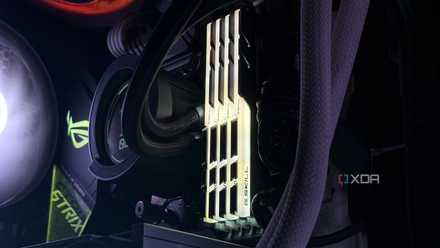
DDR4 RAM isn't dead yet, and won't be for years
The dominant memory standard from the last decade is here to stay for a little longer
DDR5 was the default choice until it wasn't
The DRAM supply crisis changed everything
For the first few years after DDR5 motherboards and memory arrived on the market, it made more sense to continue building DDR4 systems to save money and enjoy mostly the same performance. Even after AMD's AM5 platform promised extended longevity and faster CPUs in 2022, users weren't flocking to build Ryzen 7000 systems. Gradually, however, DDR5 got its due as prices normalized and people could buy a DDR5 motherboard and 32GB memory kit for around $150 and $100, respectively. The conventional recommendation switched from DDR4 to DDR5, and the inevitable switch to the new standard was finally complete. DDR4 had finally become the niche instead of DDR5.
Around September 2025, however, consumer RAM prices across the board started seeing an uptick. There was a sudden surge in enterprise demand for High Bandwidth Memory (HBM) to feed AI data centers. Memory manufacturers naturally shifted priorities and reassigned DRAM supply from consumer to enterprise memory. This supply shock sent prices skyrocketing, but between a typical DDR5 and DDR4 kit, it was obviously cheaper to buy the former. Combined with cheaper motherboards and CPUs on older platforms, this has suddenly made DDR4 builds more attractive than they've been in a long time.

With RAM prices going crazy, AM4 still looks like the best platform for a budget gaming PC
Skyrocketing DDR5 prices make DDR4 and AM4 the lesser of two evils
DDR4 gaming is still great
No wonder it has stuck around
The lower platform cost isn't the only reason to consider DDR4 builds again. Sure, the price gulf between a DDR5 and DDR4 system has widened, but you're still looking at only about a $150 difference between a DDR4-3600 and DDR5-6000 kit. Overall, this is only a $100 increase in the DDR4 vs. DDR5 prices, compared to a few months ago. The other side of the conversation is the performance that a DDR4 system is still capable of, especially for gaming. Benchmarks might show you a 20–40% performance difference in gaming between a DDR4 and DDR5 system, but this gap starts to close as you increase the resolution from 1080p to 1440p and 4K.
The FPS at high resolutions starts to become GPU-bound, and the memory differences start to diminish. As long as you have enough memory, the transfer rate matters less than your GPU grunt. This makes DDR4 systems still a viable alternative for gaming-only builds. You can not only save more money than you could before by going with an older platform, but also enjoy mostly the same performance, realistically speaking. Besides, the money you save in this new economy can go toward buying a faster GPU, which would easily make the most difference to gaming performance anyway.
Stop believing these 6 PC hardware "rules" in 2026
Not every PC hardware tip needs to be adhered to forever
The used market is more favorable for older DDR4 hardware
Pre-owned DDR4 parts have never been better
In this entire discussion focused on pricing, things become even more lopsided the moment you factor in the used market. Since DDR4 memory, motherboards, and CPUs are older and constitute a substantial portion of the secondary market, you can save even more by building a PC entirely with used parts. A Ryzen 5000 processor, B550 motherboard, and 32GB kit of DDR4-3600 memory can make a heck of a gaming build even in 2026, as long as you have a capable graphics card. With the money you save by going with pre-owned DDR4 components, you could even invest in a new graphics card, such as the RX 9070 or RTX 5070.
Besides, the steady stream of enterprise DDR4 memory into the used market further amplifies the options budget builders have access to. The memory crisis doesn't seem to be ending soon, with reports projecting it could continue well into 2028. As more and more cost-conscious builders consider DDR4 systems, the market for older components will only get better, creating a self-sustaining cycle.

At this rate, AMD's AM4 platform might just outlive the PowerPC era
It's not unthinkable that AMD still has big plans for AM4
DDR4 PCs are undergoing a resurgence
The silver lining among all the doom and gloom surrounding consumer memory prices is that people are recognizing the longevity of DDR4 systems. The lower platform cost, reliable performance, and a thriving secondary market have combined to make DDR4 PCs great again, not just for budget builders but for everyone. If the memory crisis doesn't get resolved soon, we might see a steady rise in the market share of DDR4 PCs again.