
Building a PC is still one of the best ways to craft a machine exactly the way you like it. You get to choose every single component, have absolute control over the esthetics, and can save a few bucks compared to buying a pre-built PC. If anything goes wrong, that's also on your head, but at least it's a great learning experience.
Over the last 20 years, PC building has obviously undergone sweeping changes. The state of desktop PC hardware isn't what it used to be, many users have been priced out of the market, and innovative products are few and far between. However, that isn't what this article is about. I'm about to get into six different ways PC builders are doing things differently today than 20 years ago — adapting to the rapid advancement of PC hardware and modern technological awareness.
5 disappointing PC hardware realities that just won't change
For seasoned members of the PC community, some harsh realities haven't changed in a long time
6 Overclocking was expected on every CPU
Modern processors come jacked out of the box
In the olden days (early 2000s), when I was barely a teenager, overclocking your processor was customary — it was basically a sin not to do it if you were an enthusiast. Of course, users like myself, who only built their first PC years later, never knew or cared about it. But if you put together your own PC back in those days, overclocking your CPU to squeeze every last MHz of power was fairly common.
Today's CPUs are mostly running near their full potential at stock settings, and there's very little to be gained by investing hours in overclocking.
The thing is, you would have left a significant amount of performance on the table if you chose to ignore overclocking then. However, today's CPUs are mostly running near their full potential at stock settings, and there's very little to be gained by investing hours in overclocking. Overclocking isn't even the niche phenomenon it used to be, with modern CPUs running close to their thermal limits even at stock settings. Pushing these CPUs further to any significant degree needs enthusiast-grade cooling setups, which most users don't have or even want to consider.

5 overkill PC building trends that aren't worth the trouble
PC building has seen many overkill trends over the years. These are the ones just not worth it anymore.
5 PC cases were largely ignored
The focus on looks wasn't as strong
Even though the PC case is the first thing one might notice when looking at a PC, it's what is inside that builders used to care about 20 years ago. You'd find countless builds with the most incredible components of their time encased in a bland slab of black metal. No one was stressing about intake & exhaust fan placement, the lack of air vents, or making their PCs look sleek and sexy from the outside.
Maybe it was the lack of all-pervasive social media or great-looking cases, but PC builders merrily went about their business, focused only on building the most powerful PC they could afford. The mid-2000s might have brought aggressive designs, LED lighting, and transparent side panels to PC cases, but these features took their sweet time to arrive at every price point. Compare that to today, where even the most budget PC cases focus hard on looks, if nothing else.

5 of my favorite PC cases you might not have heard of
Here's to some amazing PC cases that might have flown under your radar
4 We seldom replaced stock coolers
Aftermarket cooling was far from a given
Unlike today, where the stock coolers are barely enough for anything but the most barebones processors, they were pretty much the standard in the 2000s. The first two PCs that I built in the mid-2000s only ever had stock coolers. And they were enough for all I did with those rigs — low-end gaming, casual browsing, and downloading media.
Aftermarket CPU coolers gained ground slowly as PC building went mainstream, and more and more users started building their own rigs. From the most basic air coolers to heavy-duty liquid coolers and custom loops, PC cooling transformed from an afterthought into one of the most serious considerations when building a PC. Today, inadequate cooling can instantly throttle your processor, limit performance, or ruin your otherwise silent gaming PC.

How to choose the perfect CPU cooler while building a new PC
Here are the things you should consider while choosing the perfect CPU cooler for your shiny new PC build
3 We played fast and loose with PSUs
PSU awareness was comically low
If you've been part of the community for quite some time, you'd have noticed the increasing awareness around the importance of using a high-quality power supply. This only started around 10 years ago, before which the average PC builder rarely used to care about what PSU they were buying. As long as it belonged to a brand they had heard of once or twice, they were satisfied. Researching PSU tier lists, efficiency ratings, and watching reviews was unheard of.
After several cheap power supplies started exploding and creators started covering the outrage, the general community started taking PSUs seriously.
If you go further back, off-brand and no-name power supplies were commonplace in many builds, unless you were looking at an enthusiast build or one built by an experienced user. Leaving precious components at the mercy of questionable PSUs was something PC builders did without even giving it a second thought. After several cheap power supplies started exploding and creators started covering the outrage, the general community started taking PSUs seriously.

4 reasons why you should always go for quality PSUs
While they might seem tempting when you're on a budget, cheap PSUs from no-name brands aren't worth it in the long run
2 SSDs were basically non-existent
We never cared about loading times
The era of the SSD truly kickstarted in the late 2000s and early 2010s when prices started falling and the larger user base became aware of the significant benefits of switching over from HDDs. Prior to that, SSDs were too expensive to be considered by the average builder. Someone building a $1,000 gaming PC even around 2015 was happy to install a 1TB spinning hard drive and call it a day, reserving the bulk of their budget for the GPU and CPU.
When HDDs were all we had for PC storage, there was no reason to feel that Windows was booting way too slow, or games were taking forever to load. Sure, long loading times might have been a hot topic as bigger-than-ever AAA titles came to the market, but most people didn't even know that an alternative existed. For a long time, SSDs and HDDs co-existed in consumer systems.
Only when the cost per GB of SSDs dropped significantly did PC gamers finally consider dropping the HDD altogether.

3 reasons HDDs are still worth it in 2024
HDDs might be on their way out, but they're still better than SSDs in some areas
1 Buying a GPU was simple
VRAM was the only thing many users looked at
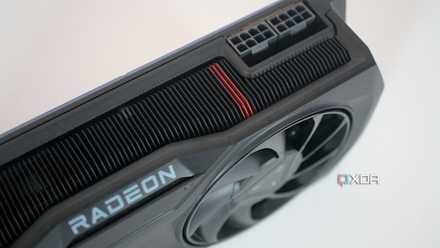
Picking a graphics card for your gaming PC was never as complex as it is today. You need to consume countless reviews and benchmarks about not just the performance of your shortlisted GPUs, but also their thermals, noise levels, and overclocking potential. Moreover, if you aren't shopping for $1,500 or $150 GPUs, there are countless options to consider in between. You even need to decide how much you care about ray tracing, so you can justify spending more for an Nvidia GPU.
There was no need to worry about inadequate VRAM, sub-60 FPS, narrow bus width, high power consumption, or shady tactics from Nvidia or AMD.
Rewind to the early or mid-2000s, where most users probably only cared about the graphics memory when buying a GPU. This was the time when the GeForce 7800 GTX with 256 MB VRAM was a high-end GPU. There was no need to worry about inadequate VRAM, sub-60 FPS, narrow bus width, high power consumption, or shady tactics from Nvidia or AMD. You could simply choose from a handful of GPUs, and buy what you could afford.
Graphics cards have now become luxury commodities, with manufacturers demanding whatever dollar number they come up with. Users have also been conditioned to pay up if they want playable framerates at higher resolutions. There's little chance that graphics cards will ever go back to sane price levels ever again. Something else that has changed is we now have a third contender in the ring as Intel has re-entered the desktop GPU market.

Which GPU should you buy in each $100 price bracket?
There's something here for everyone, regardless of whether you're a budget user or a gaming enthusiast
What will PC building look like 10 years from now?
There are quite a lot of trends that can predict which way PC building will go from here. Nvidia and AMD focusing on AI billions instead of their gaming GPU customers could give way to a decade of stagnant performance and poor consumer interest. As consoles get more powerful thanks to newer CPU and GPU architectures, and deliver stable, high-refresh, and high-resolution gaming experiences, will the allure of PCs start fading?
Even game exclusivity is fast becoming a thing of the past, blurring the lines between the PC, PlayStation, and Xbox. Microsoft hasn't been interested in fighting the console war for years, focusing instead on becoming a gaming services company. It will be exciting to witness how these trends, and more, will affect how PC builders react and adapt once again.