
80 minutes. That's how long it took me after booting up Hell is Us for the first time to text my best friend about it. He's been in love with Elden Ring for three years now, and hasn't played anything new in almost a year, citing a lack of anything 'good enough lately'. So when I told him that Hell is Us is exactly the kind of game he'd love, it was high praise. And high praise is exactly what Rogue Factor's new game deserves.
Since it was being cited as a Soulslike, it was tough for me to get on board with the idea, considering how over-saturated the genre has been lately. Thankfully, Hell is Us pleasantly surprised me by, first and foremost, not being a Soulslike, and secondly, being a damn good game from start to finish.
A review code was provided by the publisher of Hell is Us, Nacon. The game was reviewed and tested on a PC.
Hell Is Us
-
👁 Placeholder Image
OpenCritic Reviews - Top Critic Avg: 78/100 Critics Rec: 79%

- Released
- September 4, 2025
- ESRB
- Mature 17+ // Blood, Intense Violence, Partial Nudity, Sexual Themes, Strong Language, Use of Drugs
- Developer(s)
- Rogue Factor
- Publisher(s)
- Nacon





WHERE TO PLAY


Hell is Us is a 2025 third-person action-adventure AA game by Rogue Factor. Set in the fictional country of Hadea, you play as Remi, an exiled man returning to his war-torn country to find his parents, only to find horrors beyond his comprehension, wrought upon his homeland by war.
- Engine
- Unreal Engine 5
- Genre(s)
- Action, Adventure, Open-World
- Strong, immersive, and impactful storytelling
- Rewarding exploration loop without hand-holding
- Deep and atmospheric in-game world
- Floaty character movement takes away heft
- Enemy variety runs out far too quickly
Hell is Us price and availability
Rogue Factor's Hell is Us is available to play on PC, Xbox Series X|S, and PlayStation 5 and PlayStation 5 Pro. The game is also enhanced for PS5 Pro. It is available in both physical and digital editions for two editions:
- Standard Edition ($50): The base game.
- Deluxe Edition ($70): The base game and exclusive skins, along with a digital artbook, and the original soundtrack for the game.
Hell is Us gave me plenty to love
Rogue Factor has really gone above and beyond, besides nailing the fundamentals
There's a lot to love in Hell is Us, and its setting is certainly near the top of that list. The game takes you to the fictional fractured country of Hadea, which is suffering from an active civil war, leaving all its citizens displaced, contained, injured, starving, or dead. Things are bad, and yet, the protagonist, Remi, must be here for his own motivations and goals, which are revealed as the plot progresses.
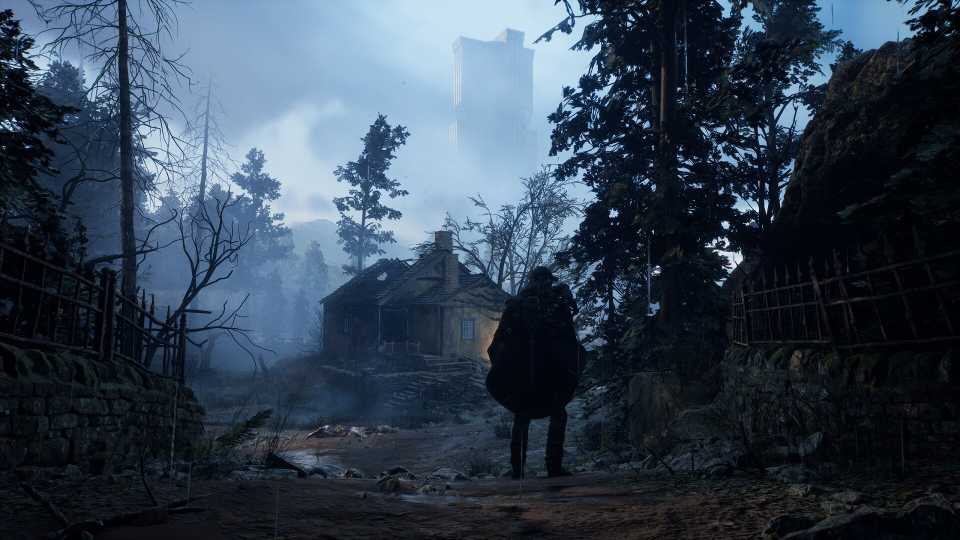
The more you explore each area in Hadea, from broken provinces to bombarded villages, you realize that misery fills the air. There's a palpable, pervading sense of anguish in every square inch of the map, and it's easy to discern, impossible to ignore. Yes, there are horrifying supernatural creatures here, and crazy ancient structures with lore aplenty, but strip all of that away and Hadea is undeniably human and real at every step of the way.
Pair that with a protagonist voiced by Elias Toufexis, my personal favorite voice actor and the man behind Adam Jensen from the modern Deus Ex games, and I couldn't help but crack a smile every time he talked. The one game that kept coming to my mind as I talked to the suffering people of Hadea, or collected the occasional treasure hidden somewhere during my exploration, was Far Cry 2. Visually, the two games couldn't be farther apart, and yet, thematically, Far Cry 2, too, did an incredible job of making you feel the angst and helplessness in the air as you drove, walked, and shot your way through war-torn Africa while suffering from the worst case of Malaria ever in gaming.
Every square inch of the map is beautiful yet tough to look at
Hell is Us is gorgeous, but the suffering it depicts makes you want to avert your eyes
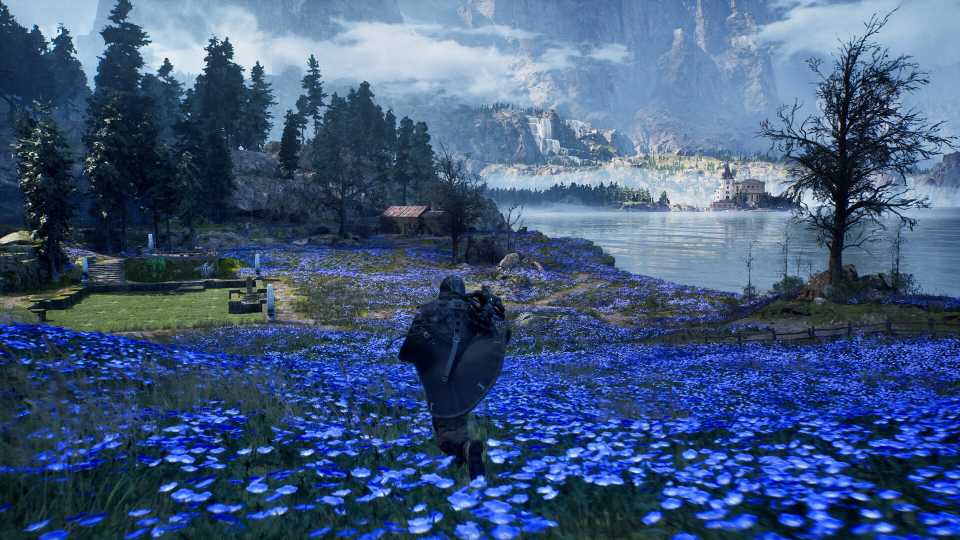
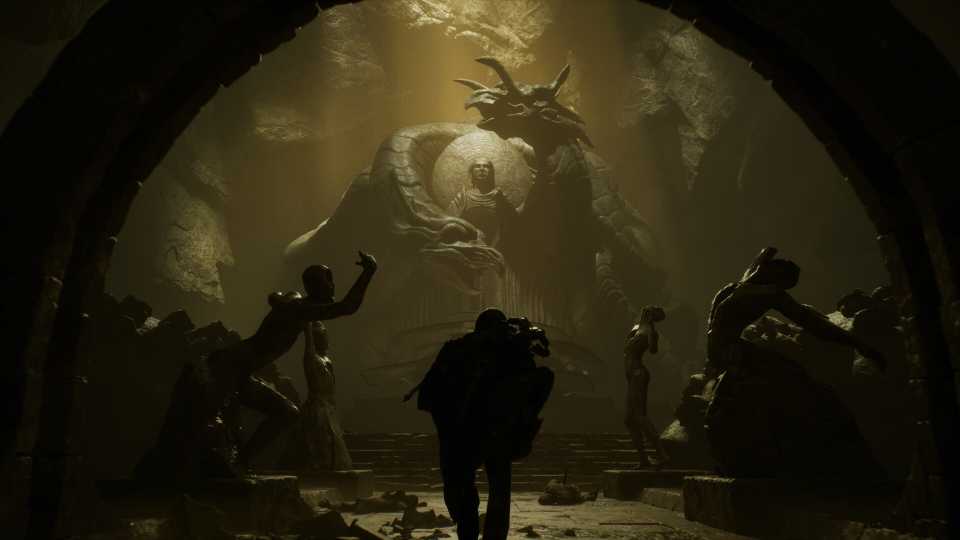
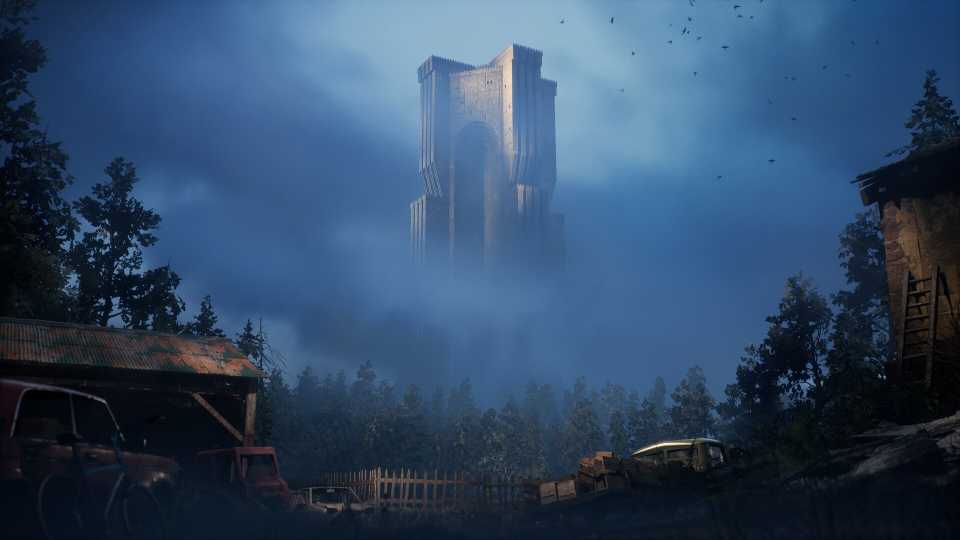
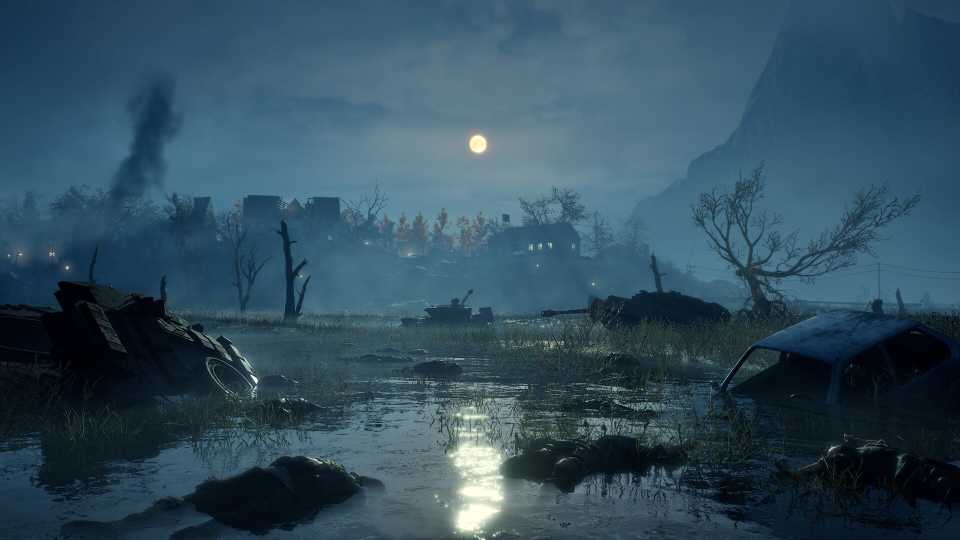
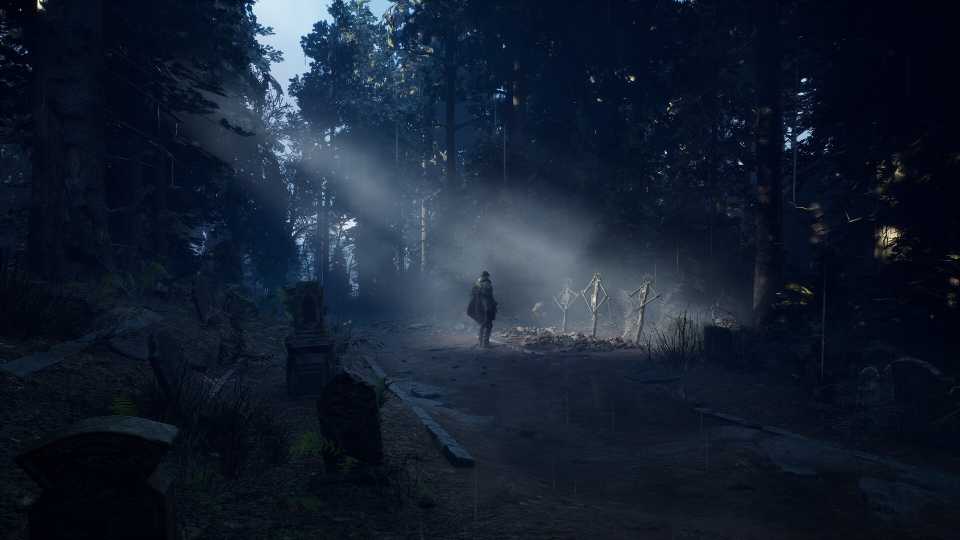
Visually, I have had zero complaints from Hell is Us. The game runs on Unreal Engine 5, which, despite what online forums would have you believe, is a fantastic engine, so long as the devs know exactly what they are doing. Rogue Factor clearly does, brilliantly wielding this engine to render the civil war-afflicted country of Hadea in stunning detail. From its dark, foggy forests and swampy marshes to its destroyed villages and ancient underground structures, Hell is Us never leaves a single frame that looks rough around the edges.
Even on last-gen hardware on PC, the game ran beautifully from start to finish, with barely a stutter or two over my fifteen hours of playtime. Running on an RTX 4070 Ti paired with a Ryzen 5 7600X, Hell is Us never dipped below 80fps with the Very High (second-highest) preset while running on native 1440p resolution, while maxing out the settings and turning on DLSS Frame Generation (2x) netted me 105+ fps at all times, with zero tearing or ghosting. I've got absolutely zero complaints on the performance front, and for that, Rogue Factor deserves an immense amount of praise, especially considering how something like Metal Gear Solid Delta: Snake Eater, also on the same engine, has been struggling on all platforms.
You're either going to hate or love the storytelling
There really is no in-between with this one
There's definitely a main campaign here in Hell is Us, and the 'side quests' that we are used to seeing in most action-adventure games are a little different in this title. Instead of being given quests by NPCs you come across, you're just going to talk to them for a minute or two before the conversations are over, and you're left to figure out what it is that they might need. It's not completely subtle, but it does the job well, and adeptly treads the fine line between expository and immersive.
It's the country of Hadea that is the real meat and potatoes of Hell is Us's storytelling. A state completely bereft of its beauty and peace because of warring religious cults based on an ancient rivalry might sound way too fantasy-like, but it's anything but. Why? Because what we see and experience in the game is simply the result of thousands of years of hatred boiling over, which, quite frankly, doesn't feel all that fictitious in today's day and age. As you slowly make your way through the different villages, towns, and biomes of Hadea, meeting factions, armies, and suffering mothers, fathers, and children, you'll also uncover a story that is immensely deep and intertwined with the world-building of the game.
Themes of human misery, the horrors of war, religious fanaticism and dogmatism run rife in every frame and conversation you'll experience in Hell is Us, and it's clear that the writing team knows the significance of the subject matter they're dealing with. Hell is Us doesn't shy away from digging its fingers into the meat of the matter and showing you the problems with the war machine, and instead of barely scratching the surface without anything to say about it, its narrative is a triumphant effort at holding up a mirror to humanity.
It's clear that Rogue Factor has taken the right pages off the Elden Ring book of open-world exploration.
At one time, I'd almost forgotten my character's personal goals, just as I felt myself getting closer to uncovering the true root of the geopolitical tensions in the country, and that's when I knew that the storytelling really worked for me. While the story really does eventually make you realize how apt the title is, it's the storytelling that might be polarizing. For me, this is the kind of writing that really impressed me about Elden Ring, and it's clear that Rogue Factor has taken the absolute right pages off the Elden Ring book of open-world exploration. Granted, their game is actually only a semi-open-world with huge biomes and areas to explore instead of being one interconnected map you can explore, but the design philosophy is nothing short of remarkable, and its execution even more impressive.
Gameplay in Hell is Us is two-pronged — combat and exploration
It's been a while since I was this invested in a game world
The exploration is what makes Hell is Us such a significantly different title from a sea of other third-person action-adventure games we've seen over the past decade. In fact, I'd argue it's what will keep it relevant for years to come, and that's because the game does not 'hold your hand'. That's a phrase that's been thrown around a lot in Hell is Us's marketing, but it also makes perfect sense because there is no map or objective markers for you to rely on. There isn't even an option to turn them on — they just don't exist. Instead, you can only rely on your sense of where you need to go next, and for that, you must, at every moment, completely don the identity of Remi, the protagonist.
That philosophy extends into the entire world. You would be exploring a sectioned-off part of a forest for about an hour, coming across all sorts of different puzzles that offer no clues or hints whatsoever, and the only thing you can do is remember it for later, or write it down, as I did. Hours later, if you're the kind of person who doesn't want to leave an inch unexplored, you will finally come across the solution to the locked door or puzzle you encountered, and it won't even tell you that it's what you've been looking for. If it looks and feels right, that's when you go back and try to make things work.
The no-hand-holding principle drives immersion in the game, keeping the moment-to-moment gameplay unique and engaging.
The game does give you a datapad, which helps you keep track of your main objective, inventory, and loadouts, giving you only the bare minimum information to remind you of the path you're on and why you're walking it. However, every time you enter a new area, you only know why you're there, with nothing else to go on except your own two feet. Who you have to meet, who to talk to, or where to go, are all things the game leaves completely to you. That principle applies to the side missions, the main campaigns, and the exploration loop, meaning there's never a dull moment, since you have no other choice than to keep your eyes and ears open for any environmental clue or context to pick up. That's what drives immersion in the game, and keeps the moment-to-moment gameplay as unique as it is engaging.
There's actually a lot of puzzle-solving in the game
I think I wasn't actually ready for just how many color-coded, emblem-sealed, and puzzle-locked doors I would run into in Hell is Us, and after a few hours, it really dawned on me just how attuned to clues in the environment I had to be at all times. You're going to be hunting down clues, delivering items to NPCs for important quest items in return, and deciphering treasure hunt maps frequently during your time in Hadea.
Similarly, if you're going through the main campaign, the game only helps you note down the most important stuff about your main objective and where you need to go next. However, it will only do that after you make sure you talk to the right NPCs and ask the right questions about whatever or whoever it is that you need to be going after next.
Easily my biggest complaint about the gameplay is just how incredibly floaty the protagonist is in his movements. It is perhaps the only thing in the gameplay that breaks immersion so much, where I have to be walking through a destroyed village where the houses are still steaming from being burnt, but my character moves like he just came out of a Nintendo 3D platformer. It also takes away heft from the combat, which has its own set of problems we'll get to in just a minute. In fact, the lack of a jump button also made me roll my eyes several times over, which genuinely felt lacking throughout my exploration.
Combat is where the game struggles to remain interesting
The game runs out of enemy types pretty soon
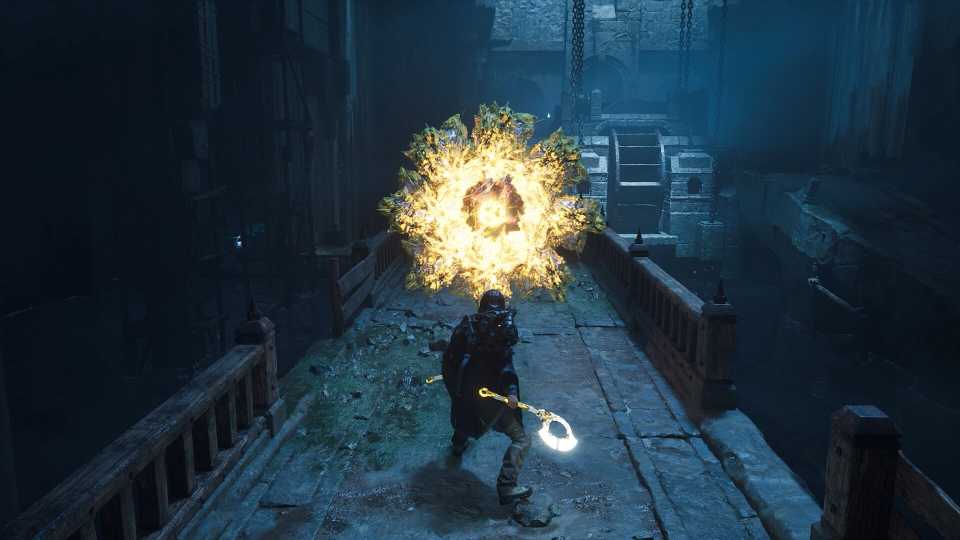
For the first three to four hours, combat in Hell is Us feels great. It's the usual affair — a light attack to spam, a heavy attack when you have a nice opening, a dodge mechanic, and, of course, R3 to lock-on. It isn't completely a run-of-the-mill system, though. You have a trusty drone with you that is packed to the brim with abilities, using which you can engage other enemies in combat, and the drone with its abilities really does prove to be a helpful mechanic/partner.
You'll get plenty of different weapons over the course of the 30-ish hour campaign, and while all of them look different and have different heavy attacks, in essence, they're the same. All of them can block and parry the same, and all of them hit about the same. Now, whichever weapon you choose to use as your main in the game, or the one you use the most, will also be the one that gets upgraded the most, since the weapons upgrade as per usage, which, to me, is the best way in any game for weapons to go up in stats. It also makes you keep switching from one main weapon to another to keep all their stats as closely matched as you can keep them, making for varied combat encounters, at least visually.
Of course, there is a whole "take-weapon-to-blacksmith-for-upgrades" system as well, which is, well, nothing to write home about. It allows you to upgrade your weapons faster and add certain effects to them using shards you collect from killing enemies. Nothing we haven't seen before.
There's a parry and riposte system which, while rewarding, is also terribly forgiving, and even if I ended up missing the timing window for a parry, my character still managed to block the attack everytime, ensuring I remain unscathed. The most interesting aspect of Hell is Us's combat is its in-combat healing mechanic, which, much like Nioh's Ki Pulse system or Bloodborne's Rally mechanic, rewards you for being aggressive. The more you attack, the more health you can steal back from your enemies, as long as you time the button right. In encounters where I was running out of medkits and health, jumping back into the fray to steal the enemies' health was the only resort, and Hell is Us made sure I did that every single time.
The way enemy difficulty goes up in Hell is Us is inarguably the laziest way of enemy scaling in any game.
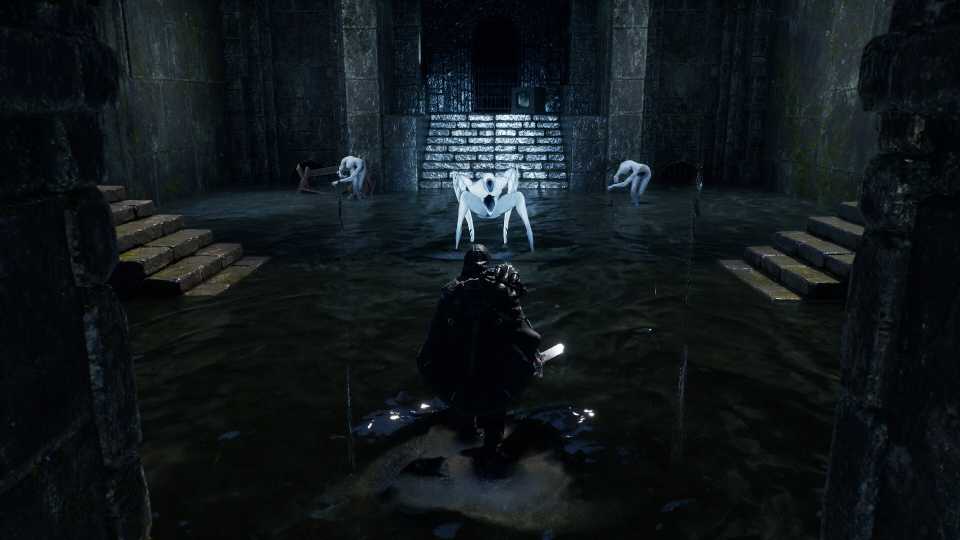
Now, for all the abilities you use on the go, there aren't enough types of enemies to use them on. The Hollow Walkers in Hell is Us are always interesting to look at, but as soon as they lose their luster after the initial hours, you start wondering where the rest of the enemy types are, of which there simply aren't enough. Enemies do scale in difficulty across three levels, but they look and move the same, with their levels merely a way to denote how much more damage they'll dish out, and how little of it they'll take, which, inarguably, is the laziest way of enemy scaling in any game.
The conclusion about combat in Hell is Us? It's immensely engaging and interesting, and yet, once you get the handful of enemies figured out, 'difficult' battles are only the ones that take longer, and not more focus or skill. I'm hoping that a DLC or sequel (which I really hope comes out), fixes the enemy variety, because when the only problem with your combat system is that there isn't more of it, you've clearly done a great job.
Is Hell is Us worth your $50?
It depends on how much commitment you have in you
$50 games this generation have clearly been taking off, with major games like Clair Obscur: Expedition 33, Mafia: The Old Country, and the fantastic Elder Scrolls IV: Oblivion Remastered settling for a $50 price tag. We're not even going to go into what Silksong is doing with its $20 price tag, but for Hell is Us, a $50 asking price feels just right. Heck, I don't think I'd think twice about spending even the standard $60 on this title, considering how immensely rewarding the core gameplay experience of independent exploration, puzzle-solving, and combat.
This game really doesn't hold your hand, and it will end up making you frustrated sometimes when you can't recall what you're supposed to do. In fact, I'd recommend keeping a pen and paper with you for notes, which, in essence, means that Hell is Us demands a heavier investment than most other games in your library. And if that's not a level of commitment you're up for, then it might not be the game for you.
On the other hand, if you love a game looking, feeling, and playing like a proper old-school adventure where you have to do a lot of the stuff yourself, then it is absolutely the right kind of game you should be adding to your library over the weekend. This is exactly the kind of game that needs to exist in 2025 — the kind that makes you go, "Wait a minute, I don't think I've played something like this before."
Hell Is Us
-
👁 Placeholder Image
OpenCritic Reviews - Top Critic Avg: 78/100 Critics Rec: 79%
- Released
- September 4, 2025
- ESRB
- Mature 17+ // Blood, Intense Violence, Partial Nudity, Sexual Themes, Strong Language, Use of Drugs
- Developer(s)
- Rogue Factor
- Publisher(s)
- Nacon
WHERE TO PLAY
Hell is Us is a 2025 third-person action-adventure AA game by Rogue Factor. Set in the fictional country of Hadea, you play as Remi, an exiled man returning to his war-torn country to find his parents, only to find horrors beyond his comprehension, wrought upon his homeland by war.
- Engine
- Unreal Engine 5
- Genre(s)
- Action, Adventure, Open-World
Hell is Us swings for the fences
I'm certain that I'm going to be talking about Hell is Us for years to come.
Hell is Us is the kind of game I didn't know I'd been waiting for, and I'm glad it exists. It's raw, ambitious, and it's frustrating at times, but that's exactly what makes it that much more rewarding. The best games aren't the ones that guide you gently to the credits, and I'm certain that I'm going to be talking about this game for years to come, simply because of its powerful themes and unique approach to both its gameplay and storytelling.
Rogue Factor clearly has swung for the fences here, and sure, not every swing lands exactly right, but the ones that do go for nothing but a homerun, and that's what makes Hell is Us something truly special.