
The modern smart home has a problem, built by competing voice assistant manufacturers that don't want anyone else's devices to take over. No matter how well the devices connect into that ecosystem, they still have to play by the rules set by Amazon and Google, and be at the whimsy of how their voice models work.
It doesn't have to be like this. Like many, I've got my smart home running through Home Assistant, and while my setup is fairly basic, that's not true for many of the other users. Almost anything can be integrated into Home Assistant, from devices designed for the smart home to DIY sensors, and that's before you get into crafting automations that other smart home ecosystems can only aspire to.
My smart home keeps running even when my internet doesn't
Cloud-based convenience only goes so far
Home Assistant is built for local control
No more dropouts in service if your internet goes out
Picture this. It's night, and you want to go to bed, but your lights won't switch off because the internet is out and Alexa isn't able to reach the command servers. It's a situation that anyone with smart lighting knows all too well, because most of the smart home ecosystems are built to be remote-first.
Home Assistant is built for local control as the default, so as long as you have power, you have control. That's the model that all smart home vendors should have been using in the first place, but were too worried about reverse engineering and how to keep customers inside their ecosystem.
That also means privacy by default, since data that doesn't leave your local network can't be siphoned off to train LLMs or fingerprint your online habits for advertising purposes. You can even take it one step further and block every single smart home device from being able to access the wider internet, because all they need is to be able to reach the Home Assistant server for you to be able to use them.

I replaced my smart home hub with a $120 mini PC, and my smart home finally feels responsive
Proprietary hubs are convenient — until they're not.
Home Assistant has no vendor lock-in
You can't say this about any of the big players
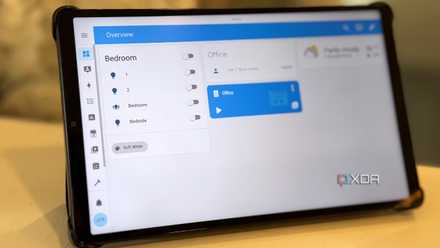
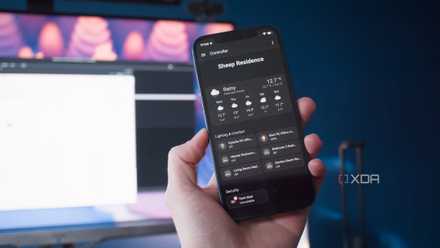
I've owned a lot of different smart devices, and Home Assistant is the first time I've enjoyed using them. Normally, it's a juggling act between multiple apps on my smartphone, or voice assistant integrations that I can never quite remember the phrasing of. That's all gone, with a single dashboard to control everything I've connected to Home Assistant.
You don't have to give up voice control, either. You can create your own voice assistant, or use Home Assistant Voice to rid yourself of Alexa. If you already have smart speakers, you can still use those with Home Assistant, which is what I do as I have collected a lot of Echo Dots over the years and it seems wasteful to replace them.
And you can add so many different things like Zigbee sensors, which are often annoying to get set up on other smart home ecosystems. Home Assistant can even integrate things like home servers, so my Proxmox nodes are watched over by the same system that's paying attention to my lighting and electricity usage. Even if there isn't an official connector, you can almost bet that someone in the community has figured out how to get it integrated with Home Assistant, like my Ecovacs robovacs which work thanks to some talented reverse engineering of the API.
I connected my dumb appliances to Home Assistant, and it felt like upgrading my whole house
Forget replacing all of your old appliances.
Home Assistant is better at automations
And the community is always coming up with more ideas
In all the years that Alexa and Google Assistant have been around, they never got past the simple automation stages. Things like "turn out the lights when I'm not home" are table stakes for smart homes, and Home Assistant leaves them in the dust.
You know how you had to resort to services like IFTTT to chain multiple triggers and tools into automations that work for your life? Home Assistant can do all that natively, with multiple triggers and conditionals able to sit under the same rules. That lets you put presence sensing, weather, time, even energy rates into a single rule, expanding the horizons of what is possible.
I've got an automation that gently wakes the house every morning with a staggered switch on of lighting at increasing levels, at least when it's a weekday. Another that lets the robovacs clean up when nobody is home and likely to be annoyed by them being underfoot, and others that change the thermostat and lighting when people are on the way back home. The only limit is what your imagination can come up with.

I built a Home Assistant automation that saves power daily, and nobody in my family even knows it exists
Saving power without family complaints.
Home Assistant makes good on the promise of a connected smart home
The smart home was supposed to be an interconnected entity that made life easier for us, not harder. Competing ecosystems and standards made it a mess, and every attempt to fix that until now has made things worse. Home Assistant is the first system to take steps toward the smart home I dreamt about while watching sci-fi as a kid, and while it's not perfect, it's a lot smarter than the alternatives. Plus, it's open source and community-driven, which should give it better longevity than vendor-locked solutions.
Home Assistant
- OS
- Windows, macOS, Linux
- iOS compatible
- Yes