
There was a time when games felt like pure magic to me. Not because they were perfect, but because I was — starry-eyed, excited, and ready to believe. If something exploded, if a sword slashed, and if a car flipped and the screen shook, my brain lit up like it had just discovered fire.
I didn't need a reason to play video games. I just needed a controller in my hand and a world on the other side of the screen. However, somewhere along the way, that relationship changed. It wasn't because games got worse, but because I started reviewing them.
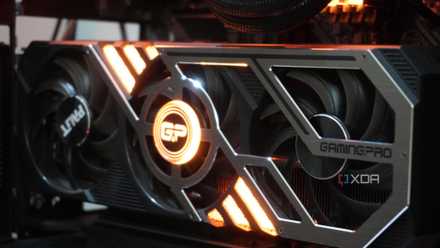
5 reasons I have mentally given up on upgrading my gaming PC
Upgrading my gaming PC isn't my focus anymore, and I have a lot of reasons for it
Critiquing games never occurred to me as a kid
I used to be incapable of disliking any video game
I miss the old version of me sometimes. The one who could put any game in front of him and just play without any internal debates, mental checklists, or constant weighing of "is this good?" like I was holding it up to a light for defects. Back then, I loved games because I loved the platform and the medium itself. How couldn't I? The interactability, the investment, the commitment you gave, and the reward you often got for it.
And the wildest part is, I genuinely can't recall ever "disliking" a game as a kid. Not the way I do now, anyway. Sure, some games didn't grab me, and I'd drop them, but I never really had anything bad to say about them. I either played one for long, or I didn't. There wasn't this instinct to critique, to dissect, or to evaluate. There was only ever the feeling of being glad it existed at all.
Reviewing games meant looking for problems
Suddenly, I was hunting for flaws
A literature degree messes with your brain in a very specific way. You start consuming media with an extra layer of awareness, whether you want to or not. You notice themes. You notice pacing. You notice repetition, structure, subtext, symbolism — the stuff that used to be invisible when I was just there for the ride. And of course, that bled into games too, because they are, of course, my favorite and most beloved medium in the first place.
But it wasn't until I began reviewing games that I realized how differently I had to conduct myself while playing them. Suddenly, I was looking for the problems. The game-breaking bugs, the problems with the writing, the weak character motivations, and the systems that don't talk to each other properly. And what makes it worse is that I was actively hunting them instead of just noticing them.
That's when the magic dies — when you're hunting flaws on purpose. It's a weird kind of heartbreak, realizing your brain has been trained to look for cracks in the glass before you've even taken your first sip.

I'm glad Mafia: The Old Country wasn't nominated at The Game Awards
If there's one AAA game that wasn't snubbed at the 2025 Game Awards but deservedly ignored, it's this one.
I started playing for readers instead of myself
It's been tough to enjoy games for myself
This one is the part I still struggle to admit out loud, because it feels like a betrayal of the thing I love most. But it's true: I stopped playing for myself. I wasn't exploring every crevice and cranny in every game anymore. I wasn't spending thirty minutes trying to get over a wall just out of reach just because I wanted to see what was there. I wasn't being curious anymore. Instead, I was just being efficient, because the game had to be finished for the readers.
And that's the moment the whole thing shifted. I kept thinking: what will readers think? What will they want to know about? What should I focus on? What's "important?" Slowly, quietly, without realizing it, everything started feeling transactional. Even games I'd waited for years for. Games I'd imagined myself sinking into the way I used to. They didn't feel like places and old friends as much as they started feeling like products I needed to process and get through.
Reviewing makes you approach games like purchases to justify — or not justify. It's as if you're trying to defend a $60 decision in court. And that mindset can stop you from enjoying a game emotionally, because it forces you to stay on the outside, describing the feeling instead of letting yourself actually have it.

Has Nintendo broken the ceiling on game pricing?
Nintendo has drawn first blood, and we're going to pay for it.
My standards have risen permanently
And they aren't going back down ever
This is the part where reviewing genuinely improved me as a gamer... but also ruined me a little. My standards have risen permanently. I can articulate what works, what doesn't, and what design choices are doing under the hood. I can tell when a story beat is earned, or when it's cheap. I can tell when mechanics are layered with intent, or when they're just there because "games like this have skill trees." That comes with a cost, though.
Because the kid who just wanted to play a game and have a controller in his hand is gone. That kid could spend hours pressing buttons and watching figures move on screen and somehow feel like he'd experienced something meaningful. Now? Even on days when I've got nothing to do — the dedicated gaming days — I still find myself wanting games to hurry it along.
This isn't because I'm impatient, or because I don't love them. But because I can feel when they're wasting my time. It's clear as day when they're stretching something out, or when the game is padding itself for the sake of being bigger instead of better. Once you learn to see that, it's hard to unsee it. I've stopped asking, "Am I having fun?" and I've started asking,"Is this worth my time?", as if my free hours have turned into a currency I can't afford to waste anymore, which is absolutely true.
I've come to appreciate the craft more than ever
I respect games more now than I ever did as a kid
That sounds contradictory, but it's not. Reviewing didn't just make me harsher. It's made me more aware. I've grown deeply respectful of the craft and what goes into making a game, even the ones we call bad, or the ones that are comparatively "less worth your money." I don't see any game as a failure anymore. I see them as difficult, messy attempts at something unbelievably complex.
I notice animation work now. I notice sound design, I notice tiny accessibility touches that someone fought for in a meeting. I notice the nuances between motion matching and canned transitions. I notice writing cadence — how dialogue flows, how scenes are paced, how silence can sometimes say more than a monologue ever could. I notice environmental storytelling and invisible labor and the sheer number of moving parts required to ship something that functions instead of just merely existing.
And that kind of appreciation is heavy in its own way. Because the more you understand how hard it is to make a game, the more it hurts when one doesn't get the time, budget, or care it deserves.

Where Winds Meet review: I can't believe this ambitious RPG is free-to-play
Where Winds Meet might not be the greatest online RPG ever, but it absolutely deserves an earnest shot from every player.
I miss "dumb fun" gaming
And I fight to get it back
This is the part that still stings the most: I miss "dumb fun" gaming. I miss playing something just because it feels good to play, without any greater purpose or deeper meaning, and just because I found a new game in a demo disc with the monthly gaming magazine. There used to just be the pure joy of moving through a space and being alive inside it.
But reviewing games has changed my brain. That's the only way to describe it. It's like I have to consciously re-learn how to play like a kid again. I have to remind myself not to take notes, not to perform analysis, and not to mentally draft a verdict while I'm still in the tutorial. I'll be playing a game just for the heck of it, and I'll catch myself writing a review in my head like it's muscle memory. After that, I have to stop. I have to pull myself back into the moment, and back into the feeling.
Gaming was never supposed to be a performance, after all. It was never supposed to be this constant act of proving that your time is being used "correctly." Sometimes it's okay to be wasteful — to play something that isn't profound, polished, or perfect. It's okay to play something that makes your brain go quiet for a while. That's not lesser or shallow. That's just human.

5 gaming terms I wish I never knew
FPS, temps, and microtransactions — these are just some of the things I wish I never learned about.
Reviewing video games hasn't affected my love for them
The strangest thing about all this is that reviewing didn't make me love games less. If anything, it made me love them in a more complicated way. Once you start reviewing, you stop being able to live inside games the way you used to. You stand a little outside them now, always aware of the scaffolding. Always aware of the intent. It can feel like waking up one morning and realizing you don't remember the last time you played a game without thinking about how you'd describe it to someone else.
I don't want to pretend the old version of me was better. He was just simpler and had the luxury of innocence — I don't. I know how easily magic can be replaced by obligation. That knowledge doesn't ruin gaming, but it does demand something from me. It demands that I fight for my own wonder, and that I consciously choose to be present.
I'm still that kid who loved when things went boom on the screen. He's still here. He's older, sharper, and a little more tired now, but he's still in love with this medium. That's what reviewing actually did, I think. It didn't take away my love for games. It just proved that love isn't automatic anymore. It's something I have to earn, every time I press "Start."