
I consider myself lucky to have grown up in the best gaming generation, the sixth. As the world moved from DOS and NES to the PlayStation and Xbox, I had a PC as the only way to discover and play games, thanks to tech magazines and their demo CDs. What I truly miss about that time — apart from the abundance of carefree youth — is how simple gaming used to be. You plugged in a cartridge or a CD, and hoped your parents didn’t remember that you were already past your bedtime.
Sure, gaming has evolved, and newer-generation games have made “games” bigger and grander, but “gaming” is still something that felt far more enjoyable back then. Every now and then, I can’t help but look back at the time when I knew far less about gaming and tech than I do today, and yet, I was infinitely happier.

6 DOS games that defined the golden age of DOS gaming
Before steam, there was MS-DOS, which ran a bevy of "new-age" games. These games would go on to become some of the most important in the medium.
5 Frames per second have taken away the joy of booting up and gaming
First-person shooters were the only FPS I knew
Pepperidge Farm remembers when FPS just meant first-person shooter. I even felt cool knowing it meant a game where you don’t see your character — Beachhead 2002, Call of Juarez, Doom, and Wolfenstein 3D were the only “FPS” I knew. Fast-forward a decade, and now the only thing anyone cares about is frames per second. That’s when I waved goodbye to the bliss of being oblivious to “performance issues.”
Now, I sit with overlays on, wondering if 58fps is acceptable or if I should spiral into despair because I only get 90fps instead of the triple digits I paid for with my monitor. What once felt smooth now needs to be smooth. I can’t enjoy a cool explosion or a cutscene transition without watching the framerate dip. I used to play first-party Sony titles on PS3 and early PS4 with no idea what FPS even was — and I had a blast.
Then I switched to PC, and just like that, I couldn’t enjoy anything under 60. FPS was the first term that made me feel like I had to be a technician just to enjoy games. And once that switch flipped, there was no going back.
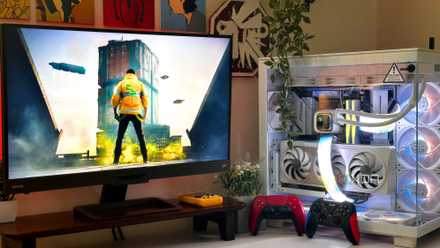
5 reasons high FPS doesn't guarantee a great gaming experience
A lot of other factors are at play
4 I can’t stop thinking about CPU and GPU temperatures
Why are the fans blowing hot air, and why is the PC making noise?
I used to think temperatures were for the weather. Now, they’re a reason to panic mid-boss fight. GPU temp, CPU temp, junction temp — suddenly I’m a part-time hardware therapist, whispering affirmations to my rig so it doesn’t melt down. Not because I cheaped out on a cooler, but because now I know there is a number my temps shouldn’t go above, based on the money I spent. Can’t I just not look and enjoy the game?
HWiNFO lives on my taskbar, right next to Steam. Not because I want it there, but because I need to know if my PC is “running hot.” And for some reason, temps magically drop only when I start monitoring them — like it knows it’s being watched.
Back then, a console either ran the game or it didn’t. It made noise? So what? The PS4 could’ve doubled as a jet engine, and it still ran God of War just fine. Nobody told me about thermal paste or pump alignment like I was building a nuclear reactor. I wasn’t supposed to know this stuff. I just wanted to game. Now, if my CPU hits 85°C, I’m clutching my chest. I miss ignorance. It was simpler — and cooler.

5 cable management habits I learned that improve temperatures more than extra fans
Sometimes, cable management can do much more than extra fans on your PC
3 Tinkering with graphics settings killed my plug-and-play joy
Graphics settings were never supposed to stress me out
For the longest time, graphic settings weren’t even a concept to me. I was just grateful when a game ran. That was the real benchmark — not Ultra vs. Low, but "Does this boot or crash the second I press Play?" Most of the games I grew up with were knock-offs, sketchy ports, or just badly optimized. If they launched, and I could move the character, that was plenty. Frame rate? Who cares? Shadows? Didn’t even know you could turn them off.
But today? Oh, man. I’m knee-deep in optimization rabbit holes before I even hit New Game. Every release is an event — first Digital Foundry drops their settings guide, then it’s hours of me testing what combination gets me the best mix of sharpness, stability, and thermal sanity. It’s like assembling IKEA furniture with no manual and constant fear of stuttering. Honestly, the one thing I really miss from only having a PS4 is the simplicity — I popped in the disc, and the only setting I tweaked was to turn subtitles on, and that was it. No DLSS, no FSR, no texture streaming budgets. Just me, my controller, and a game that ran the way it was meant to. I didn’t know how easy I had it.
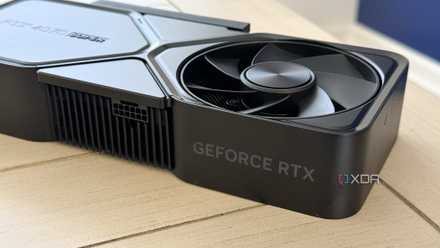
2 Microtransactions have turned games into shopping malls
I miss when games gave rewards, not microtransactions
I remember when the idea of unlocking something in a game was thrilling. You did something cool, hit a milestone, or just kept grinding, and boom — a new costume, weapon, or stage popped up like a surprise gift. But now? The only thing that pops up is a store tab. Skins aren’t earned, they’re bought. Progression isn’t personal, it’s priced. And the worst part? It works. I’ve spent real money on fake things more times than I care to admit.
The moment I truly realized microtransactions had me in a chokehold was when I spent an hour debating whether a cosmetic battle pass skin was “worth it.” Not good. That’s not a conversation I should be having with myself at 2AM. I miss when the only currency I needed in games was patience, not premium coins. We’ve come a long way, but man, I’d be lying if I said I didn’t miss the days when completing a game’s hardest level gave you a reward, not a prompt to visit the store.
The only good microtransaction I’ve ever made, in my opinion, is buying the Fortnite battle pass in 2017 for Season 3. It’s been paying for itself ever since.

5 additional costs you're probably forgetting in a gaming platform
You might buy buy a new console or gaming PC, but with a new gaming platform come hidden costs and fees that will keep clawing into your pockets.
1 I miss playing games, not studying the meta
I used to try my best, now I google someone else's best
There was a time when I just played the game. Lost a round? I'd try again, do better, get smarter. I didn't need to learn about tier lists or weapon builds. I just played. It was raw, messy, and incredibly rewarding. But now, if I want to be even remotely competitive, I have to study spreadsheets, patch notes, and Reddit threads. What happened to the joy of figuring things out myself?
The meta has made it feel like there’s only one “right” way to win — and worse, that if I’m not doing it, I’m wasting my time. Every game is a lab now. I’m checking if my build has synergy. I’m wondering if the gun I like is still viable after the latest nerf. It's exhausting. And the irony is, I used to love the challenge of getting better. Now, I’m just learning how to copy better.

I spent 100 hours recreating my high school in Fortnite and here's how it went
It had been an age-old dream, and what started with the Source engine, ended in Unreal Editor for Fortnite, eight years later.
I miss when gaming just felt like gaming
I can't help but feel like the more I know, the less I just play.
Look, I realize that I'm mourning the loss of childhood as much as I am missing "simpler" times — when it was about the worlds we escaped into, not the spreadsheets we built around them. Somewhere along the way, it stopped being plug and play, and started feeling like prep and pray.
I get it — knowledge is power. And of course I want the latest and best hardware, and I will continue spending hours fretting about frames and temps, but I can't help but feel like the more I know, the less I just play. And maybe, just maybe, I was better off not knowing all this in the first place.