
As your home network expands, so do the burdens of administering the list of network appliances. Maybe you've expanded the number of wired devices in your network, and added additional managed network switches to segregate your house into VLANs for easier management and better security. The question then is how to get tagged VLAN traffic to the other endpoint devices in your network.
You could set up VLAN rules on every port on the intermediate switches, but there's a better way. It's called VLAN trunking, and it essentially passes tagged VLAN traffic transparently through its ports, so that it gets to the endpoint switch with the VLAN rules on it. It's also simple to set up, and will save you many headaches in the long run.

5 reasons you should replace your unmanaged switch with a managed one
You gain a ton of utility by using a managed switch in your home network.
What you need to set up VLAN trunking
VLAN trunking is an integral part of any managed network switch. The only thing you need is the manual for your switch to find out which page on the administration GUI the feature resides on. For it to actually work, however, you will need a minimum of three managed network switches, all connected to each other with Ethernet cables, as you'll be setting VLAN trunking up in the middle device(s) in the chain. You'll need:
- Managed switch with two free ports
- Admin access to the managed switch
- The manual for your switch, if you're not familiar with its layout

RJ45 vs. SFP: Which network interface should you use?
Having a hard time choosing the ideal port for your networking needs? We're here to help out!
How to set up VLAN trunking
Your gateway to easy networking when working with multiple managed switches
VLAN trunking is one of the quickest things to set up on any managed switch. If you've already set up VLANs, you know which admin pages to go to. Once on the VLAN setup pages, look for VLAN trunking, which should be an option next to every port on the managed switch you are logged in to.
It's worth noting that trunking is the default mode on unmanaged switches, passing traffic to the next device that it's attached to. Not every unmanaged switch will pass the "VLAN Frames" through, so it's better to use managed switches across the whole network if you are using VLANs.
For example, on the Zyxel managed switch I have in my home lab, VLAN trunking is found on the following admin page:
SWITCHING > VLAN > VLAN Setup > VLAN Port Setup
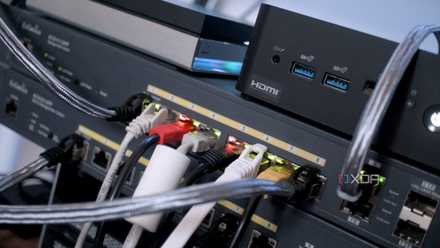
Every port on the switch will have an option to enable or disable VLAN trunking next to it. It's recommended to only enable it for the ports used for the trunk link that connect your endpoint devices together. Otherwise, none of the VLAN rules you've set up will be followed because trunking lets all traffic pass until it gets to the VLAN it's intended for. That means you'll likely set it up on one port on each endpoint switch, and two ports per intermediate switch: one port coming from one endpoint and the other going toward the intended endpoint device. And you can set which VLANs are able to use the trunk port, helping with segmentation and security.
3 reasons you should you be using VLANs on your home network
Virtual LANs are excellent for creating the perfect network.
Why VLAN trunking is a good idea
One word: Simplification
VLAN trunking allows data from various VLANs to traverse the network transparently, so it reaches the endpoint devices that it's intended for, without increasing overhead on the intermediate network devices. It brings other benefits as well, including:
- Enhanced network scalability: Reducing complexity in physical connections makes your network easier to manage
- Optimizes traffic: Enables segmentation and prioritization of network traffic
- Simplifies infrastructure: Reduces hardware requirements and complexity of the rulesets on your managed switches
VLAN trunking is also the best practice for an enterprise environment, which makes your home network experience translate to real world job skills.
Setting up VLAN trunking makes complicated network setups a breeze
Getting VLAN traffic between two endpoints looks like a complicated setup process, but with VLAN trunking you can simplify things to a single trunk link. That saves time on setup, hardware costs, the number of Ethernet cables you need to run, and simplifies your life. It only takes a few minutes and you'll be on your way to simpler network design.