
The last couple of years have felt like we're just on the cusp of the Linux desktop being viable for the average Joe. It's fast, flexible and relatively stable in ways that Windows isn't, but for many people, the moment they need an application that doesn't run on Linux, they swap it out, or leave it installed on a partition that will never be booted from again.
But the calendars have turned to 2026, and while I have tried going full-Linux before, I think now is as good of a time as ever to give it another shot. Anything I need for Windows will be relegated to a virtual machine, and Linux will be my primary OS.
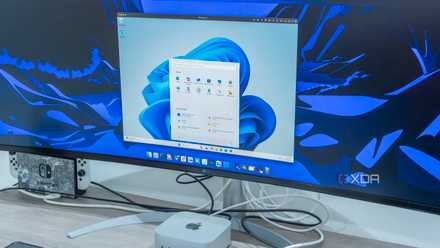
Linux is no longer second fiddle
Windows takes a back seat now
As someone that's pretty experienced with Linux, my reasons for not using it on my main workstation were pretty clear-cut: I use too many applications and play too many games that require full compatibility, and I just wasn't willing to set up a VM to compensate. I had no qualms about using the command line, configuring packages, and working around the day-to-day quirks of using Linux.
I went with CachyOS as my choice of distro, though I didn't put much thought into it this time around. I have experience with Ubuntu and openSUSE, and had dabbled in Bazzite briefly, but I wanted something to split the difference between gaming and productivity, and CachyOS does that nicely. As a new father, I have very little time to game these days, so the incompatibility with third-party anti-cheat solutions in games like Battlefield 6 and Escape From Tarkov no longer bothers me as much as it used to.

5 reasons why 2025 might finally be the year of the Linux desktop
Despite their small share in the consumer PC landscape, 2025 is shaping up to be a solid year for Linux distributions
Windows is now a tool, not the main canvas
Running it in a VM was more functional than I thought
Instead of relying on it to behave as my main OS, having Windows 11 in a virtual machine reframes it completely. Any specific utility or application I use works perfectly fine in a VM. There are some quirks with getting Adobe software to work properly, but most of those have been ironed out.
The isolation from Linux also removes a lot of the traditional frustration associated with Windows. Updates can’t break my bootloader, any driver issues are confined to the VM, and if something goes wrong, I can simply roll back a snapshot rather than troubleshoot my entire system. The performance is totally fine running on my system, and I've even migrated a VM to my Proxmox box, which makes everything besides sharing files a lot less troublesome.
5 reasons I stopped dual-booting Windows and Linux on my PC
It's just not worth the hassle anymore.
There are still Linux-isms that bother me
Dual-booting would be the perfect solution, if not for the quirks that come with it
Setting up hardware passthrough for Windows VMs isn't trivial, and though I have got it working for the most part, there's still small issues that crop up occasionally that steal some of my time. Getting clean audio passthrough has been a struggle for some reason, especially when working in something like Premiere Pro. AMD GPUs also seem to have many more issues with passthrough than Nvidia GPUs do, especially when you're working with anything that likes CUDA. It's just flaky, and that's a bit disappointing. Dual-booting would be the perfect solution, though the baggage that comes with it is just far too much to bear for me.

These 7 Linux myths you still believe simply aren't true
Linux is a completely different beast than it was a decade ago.
Dual-booting isn't a real solution
Windows doesn't like when it's not the only OS
When you're dual-booting Linux and Windows, there seems to be an almost predatory level of sabotage that goes on from the Windows side of the equation. In my experience, when running both on bare metal, if Windows updates, my Linux bootloader is almost certainly toast. It's an annoying repair, but still relatively simple. Even for small, non-feature updates, I've seen the boot order changed without my input, and at worst, Windows will delete the EFI entries entirely, because it decided that it needed a "repair". I've also had Fast Startup seemingly turn itself on to lock-up my Linux partition.
The reason why I call this "predatory" is because there's no good technical reason for this. Windows should be able to play nicely inside its own partitions, but it doesn't, and that makes things extremely frustrating.
These are the only two Linux distros I'd use for gaming
Bazzite and CachyOS should be primary considerations for gamers looking to get out from under Microsoft
I still keep a bare-metal Windows machine around
In case of emergencies
While I'm using my main workstation for the vast majority of work, I am keeping a Windows 11 laptop around, just in case I do need bare-metal access to a Windows machine. Dual-booting unfortunately just isn't an option because Windows cannot behave itself, so I've been resigned to keeping it on its own device.
This machine will primarily be used for applications and games that just refuse to work on Linux or in a VM, which isn't very many things. Most will work with a bit of tinkering, but the amount of tinkering I'm willing to do has decreased sharply over the last few months. I'm considering keeping a mini-ITX PC at my desk for Windows-specific gaming, but I don't see a world where it's installed on my main PC again.
5 reasons why Linux Mint is the best distro for Windows converts
Linux Mint is the friendliest distro for Windows veterans.
Linux is my main OS for 2026
Running Windows 11 in a VM isn't a full Windows replacement for me, but it finally stopped Windows from dictating how I use my computer. Linux is becoming the place where everything starts and ends, while Windows is turning into a tool I access when necessary. I do think Windows gets a much worse rap than it deserves, but for my purposes, I'm ready to move onto Linux for 2026.