
Self-hosting journeys have various ways of getting off of the ground. In my case, my old gaming PC was begging for some sort of home, and instead of being relegated to storage, I decided to install Proxmox on it and give it a new lease on life. Mind you, this created another solution looking for a problem. I now had a box running in my closet drawing power, and I wasn't entirely sure what to do with it. But once I found the right software, things clicked fast, and these 5 apps made everything worth it.

It took some work, but I'm in love with these 6 self-hosted services now
Self-hosting has been an amazing journey
Jellyfin
A functional media server
Jellyfin is a free, open-source media server that lets you stream your own library of movies, TV shows, and music to any device on your network. Point it at a folder, let it scrape the metadata on its own, and your collection of media actually has a front-end that feels good to use.
The setup was surprisingly painless. I pulled the Docker container, mapped my media directory, and had a working instance inside fifteen minutes. The first time I opened the web interface everything was laid out nicely, just as you'd expect on a subscription-based streaming service.
Day to day, Jellyfin handles everything I used to split across multiple paid subscriptions. The Android and Apple TV clients work well enough, and the browser experience is solid, and my Intel CPU has Quick Sync, making any kind of transcoding work way lighter than it would be in software.

Nextcloud
The Google Drive replacement I needed👁 These 5 Nextcloud apps have supercharged my home lab productivity - featured

Jellyfin was only the beginning. Nextcloud was the next app, and it made a huge difference in my productivity. It's a self-hosted file sync and productivity platform which attempts to replace Google Drive, Calendar and Contacts.
Nextcloud was the most complex app on this list to set up properly. There are a lot of moving parts with the web server, the database, the caching layer, and the cron jobs. Getting it dialed in took an evening rather than fifteen minutes, but once it was running, the payoff was immediate. I set up auto-upload on my phone for photos, synced my documents folder across two laptops, and started using the built-in calendar to replace Google Calendar entirely.
What keeps me coming back is the ecosystem. Nextcloud has an app store with add-ons for notes, bookmarks, tasks, password management, and more. It's not going to match Google's polish feature for feature, but it doesn't really need to; it's a totally adequate self-hosted replacement that does exactly what it needs to.

I use these 7 self-hosted apps instead of Google Drive, Notion, and more
Get those cloud-based services off my lawn
Immich
The perfect self-hosted photo library
Immich is a self-hosted photo and video management platform that looks and feels remarkably close to Google Photos. Automatic mobile backup, a timeline view, facial recognition, location-based browsing, smart search, essentially everything you need is there, running entirely on your own hardware.
On my system, everything was handled almost entirely through Docker Compose, and I had everything up and running within about 20 minutes. Once the overwhelming task of syncing my entire photo library up was finished and I set up my family with the mobile app, it really felt like a 1:1 replacement.
Immich is a bit more resource-hungry than the other apps on this list, though. The machine learning features benefit from at least 4 GB of RAM, and a GPU helps if you have a large library. Importing an existing library from Google Takeout takes some patience; the official CLI tool works, but a third-party tool called immich-go can handle bulk imports and Google's messy metadata files a bit more gracefully. In my case, switching from my iCloud library was a bit of a hack, but once all the legwork was finished, it felt worth it.
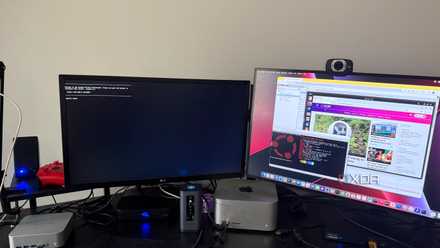
9 Docker containers that run 24/7 on my $100 mini PC
Maximum value budget homelab.
Tailscale
Accessing everything remotely was a must
These services are great at home, but I want my family and I to be able to access them remotely in a secure way, and Tailscale allows for just that. Tailscale is a mesh VPN built on top of WireGuard, you install the client on your server and on whatever devices you want to connect, sign in, and they can see each other as if they're on the same local network. It's essentially a must if you want to access self-hosted services remotely, but it's especially important in my case, as port forwarding is a non-starter. My ISP has put me behind CGNAT, which makes accessing anything from outside my network a bit more complicated. Traditional VPN setups wouldn't work in this scenario, and Tailscale is a lifesaver.
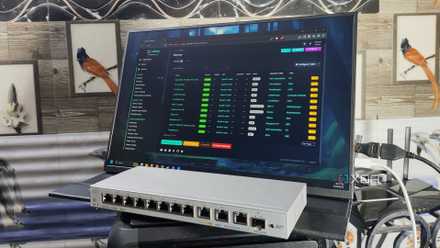
6 free tools every home lab needs
Level up your tinkering game with these neat utilities
A home server is nothing without the apps
Once the foundation of your home server is in place, the cost of trying out new services drops to nearly zero. Spinning up another Docker container takes minutes, and since getting these five apps running at the start, I've started experimenting with dozens of others, and it has costed me nothing. If you've been on the fence about setting up a home server, the barrier to entry is lower than it looks. An old PC or a cheap mini PC, a Linux install, and Docker are really all you need to get started.