
When it comes to multimedia interfaces, HDMI has reigned supreme for over two decades. Who wouldn't want a sleek, all-in-one connector that carries audio, video, and networking? It was originally made as a replacement for the myriad of display standards available in the early 2000s, and while it certainly has its benefits over those and other modern display standards, my own frustrations have been building for years, and now, I can say I'm finally ready to walk away from HDMI entirely.
How HDMI became a behemoth
It captured an impressive amount of marketshare
HDMI was introduced over 2 decades ago as a replacement multimedia interface for many pieces of consumer technology. Analog, S-video, and VGA were all casualties of the introduction of HDMI. It could be used with DVI interfaces with an adapter, carry audio signals, and had a lower profile. Besides being technologically advanced, HDMI is also fully HDCP-compliant, meaning virtually all official HDMI interfaces must fully support it. Industry pressures from Hollywood and other content providers, combined with early support and adoption from many major players in the display game, including Panasonic, Sony, Phillips, and others, meant that HDMI got off the ground in a hurry. Initial versions weren't much better than DVI, but as adoption increased, it became the de facto standard for multimedia interfaces.
It's pretty much impossible to find a display (or any consumer electronics made in the last decade, for that matter) that doesn't support HDMI. There's at least one of them on everything. They're ubiquitous, backwards compatible, and are relatively plug-and-play. So, why am I giving up HDMI for good?

6 hidden HDMI 2.1 tricks your monitor can technically do (but probably doesn't)
Your gaming monitor might have fake HDMI 2.1
My gripes with HDMI
They've been bubbling beneath the surface
My main sticking points with the interface giant fall into a couple categories: specification and compatibility. On the specification front, there's no reason to use it over DisplayPort, especially on a PC. Pushing high refresh rates at resolutions above 1080p using HDMI requires a specific spec cable and both devices to support the right version of HDMI. DisplayPort doesn't have the same cable sensitivity that HDMI does, meaning essentially any device that has a DP port (regardless of the form factor of the port) can push high resolution, daisy-chained displays running at refresh rates well above 144hz.
In order to support these newer versions of HDMI and saturate these high-bandwidth connections, your devices need to officially support them. Manufacturers pay royalties to HDMI in order to use their spec in their devices, and if they don't, they just won't support it. For example, the HDMI Forum recently rejected a request from AMD for HDMI 2.1+ support in their open-source Radeon driver used on Linux. This means Linux users cannot use HDMI to drive 4K displays at 120hz if they have a Radeon graphics card. Despite working for months on supporting HDMI 2.1+ in a way that wouldn't expose the proprietary technology, the HDMI forum still rejected their request.
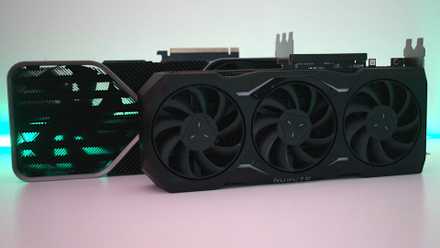
5 things I wish I knew before switching from AMD to Nvidia
Knowing these things would have made my life easier
DisplayPort is my only solace
Why use anything else (if it's available, that is)
As someone who would've loved to have used versions of HDMI 2.1 and above on my Linux system, decisions like that are what have driven me away from using it full stop. I understand protecting your technology, but if display standards are to be used by consumers, why wouldn't you want more users to use it? It's also worth noting that Linux users to this point have been able to use all other versions of HDMI until 2.1 and above.
It's clear that HDMI is relying on the ubiquity it has developed by being the de facto display standard instead of making the standard easier to use. DisplayPort, for its flaws, has continued to innovate. They've pushed the bandwidth ceiling higher and integrated support for things like USB-C, which is something HDMI would just never do.

The specifications for HDMI 2.2 have finally been released, and they're an absolute beast
Good news for people who have a spare 16K monitor kicking around.
HDMI is still a necessary evil
It's not going anywhere, for now
Despite its creators' stubbornness to branch out with compatibility within new versions, HDMI is still the gold standard for TVs. If I could use DisplayPort on my TV, I would, but TV manufacturers don't put DP ports on their products. Along with the lack of ARC and eARC, the demand just isn't there, and unfortunately, I'll be forced to use HDMI until something better comes along. One promising interface, GPMI (General Purpose Media Interface) was announced earlier this year, and is said to be a successor to HDMI in some ways. It has all the same features of supporting audio and networking, but also sports increased bandwidth and even carries power, allowing it to function as a power cable.
HDMI might be too big to fail
HDMI has proliferated throughout consumer tech to the point where I don't see how it could ever be overtaken by another display standard. However, if they continue to alienate their customers by restricting what their manufacturers can and can't support without paying royalties, users will have no choice but to turn elsewhere. The bandwidth and quality war largely doesn't matter, but the battle of features and compatibility will be where other display standards can make up serious ground, and in my mind, HDMI has already lost me.