
Summary
- Raspberry Pi 5 can be overclocked using liquid nitrogen to reach 3.6GHz performance.
- The previous world record holder managed 3.4GHz without liquid nitrogen cooling.
- Hardware limitations prevent exceeding 3.6GHz overclock speed on Raspberry Pi 5.
Raspberry Pi owners come in all different shapes and sizes. Some will use them to create cool and interesting projects, and some will race to beat the world record for overclocking it to its absolute limit. The latter camp has been trading blows with one another to push this tiny board as fast as it can, but one person has shown that, perhaps, the arms race can now come to an end as they've hit a technical brick wall. And all it took was liquid hydrogen cooling.
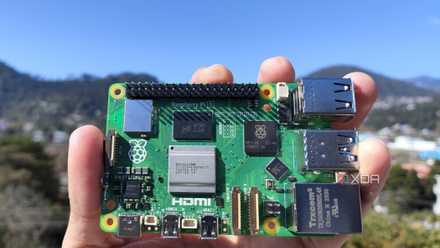
Raspberry Pi 5 review: The holy grail of DIY projects got even better (and rarer)
The Raspberry Pi 5 is one of the most powerful consumer-grade SBCs out there. Sadly, its limited stock means you'll have a hard time finding one.
Someone overclocked their Raspberry Pi 5 with liquid nitrogen
While people have been squeezing as much performance out of their Pis for years now, things really came to a head after Jeff Geerling posted a world record at 3.4GHz. Fortunately, Jeff is an honorable fellow and posted how he managed to get his Pi running so fast in the first place.
This inspired tech enthusiast SkatterBencher to give it a shot. He's by means no newbie when it comes to overclocking; just a brief glance at his YouTube videos reveals a whole library of experiments where he pushes chips to their absolute maximum. So, he felt he could apply this same knowledge to making a Raspberry Pi go faster, and the best way to do that was with liquid nitrogen.
Using a bespoke cooling method, he managed to get the Pi running around -40C (which also translates to -40F). Under these conditions, SkatterBencher managed to hit 3.6GHz performance. Unfortunately, every time he tried to inch it up to 3.7GHz territory, the board would lock up, and no amount of cooling or tinkering could fix it. It seems that, for the time being, 3.6GHz is the fastest someone can push the Pi 5 before the hardware itself gives up. We'll have to see if someone can dodge that hardware limitation, or if the race to overclock the Pi 5 ends here.
If you want to read everything that went into this project, check out the SkatterBencher blog for more info.