
If you were to type, "Windows 11 consumes too much..." into any search engine today, the autocomplete suggestions would tell you everything that you need to know about the OS. RAM, data, battery—the results will all point you towards the same longstanding problems. The truth is, for most consumer devices, Windows 11 simply isn't optimized well enough, and to this day, Microsoft continues to rely on user intervention for what should be optimal performance out of the box.
The consequences are becoming harder to ignore in a RAM-constrained economy, perhaps now more than ever. Entry-level laptops with 8GB of RAM are back on the market, and they routinely find themselves choked before you've opened a single application. Windows-based handhelds have exposed how completely unsuitable the stock shell is for resource and thermally constrained hardware. There is, however, a solution that exists to this very problem, and it's one that Linux figured out a long, long time ago.
Windows 11's shell has a resource consumption problem
A problem Microsoft keeps acknowledging, but never fixing
The Windows architecture is such that, explorer.exe serves as the primary user shell. It's a singular, unified process that handles the taskbar, the Start menu, the file browser, widget boards and the system tray all at once. If you layer the Search Indexer, OneDrive processes, Copilot components and telemetry services that constantly run on top of it, you'll have a very busy OS. But how busy exactly?
Recent reports by tech publications, such as TechPowerUp, have reported that on RAM-constrained systems, particularly PCs with 8GB of system RAM, Windows 11 versions like Home and Pro can take up as much as 6GB of memory, in a display of rather shocking memory management.
Now, to be fair, part of this is intentional. Windows uses SysMain to cache frequently used applications into available memory, operating on the philosophy that any amount of unused RAM is wasted RAM. On a system with a sizable RAM buffer, this philosophy works fine. However, on an 8GB laptop, things start to become a little problematic. There's no headroom left, and the moment you load up a memory-intensive application, the system buckles into page-file thrashing. Microsoft has acknowledged the bloat and promised to address the baseline footprint, but the problem of the shell remains the same.
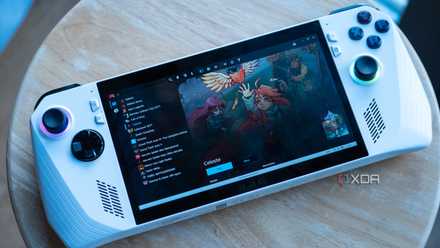
7 steps to debloat Windows 11 for handheld gaming
Tips on how to gain better gaming performance on Windows-powered handhelds by debloating Windows 11.
Linux solved this problem first, and SteamOS was the proof-of-concept
Windows needs variable desktop environments
If you look at any Linux distribution, you'll notice that the desktop environment is a modular component that can be installed, swapped, or changed without touching the underlying operating system. If you want a full-featured interface, you can run GNOME or KDE Plasma. And if your hardware can't afford the overhead, you switch to XFCE, which boots at a fraction of that memory footprint.
SteamOS is perhaps the most visible proof of this philosophy working in the consumer market in practice, and if you've followed my commentary on why handheld owners are switching to Linux, you'll know why the results speak for themselves. Valve simply took the Linux kernel, stripped the desktop layer down to a controller-native, gaming-first shell, and built a hand-crafted experience that Windows handhelds have consistently failed to match in both performance and usability. This doesn't come with any compromises either, as the desktop environment still remains available through the nested desktop mode on the Steam Deck. It is, however, decoupled from the gaming experience.
Users have been wanting a lighter version of Windows for a long time
When will Microsoft finally decide to deliver?
The demand for a lighter iteration of the Windows experience isn't new, and it isn't niche. Users have been asking for it across forums, feedback channels and social media for years, and the case for it has become stronger ever since the hardware landscape shifted. Not every laptop needs Copilot running in the background, not every handheld needs the full Windows software suite, and not every entry-level machine with 8GB of RAM should be expected to carry the same shell overhead as a workstation with four times the memory.
The implementation can be as simple or complicated. Microsoft could offer a lighter shell configuration through the Windows setup process itself, perhaps through a mode that disables non-essential services, strips telemetry to a minimum, and prioritizes the system resources for the applications expected to run on the device.
Score PC & Laptop Deals to Beat Windows 11 Bloat
For handhelds, this means a native interface built with high-performance gaming in mind. Microsoft was able to demonstrate that it was possible (at least partially) through the Xbox full screen experience on the ROG Ally devices, which definitively proved that stripping background services yields appreciable performance gains. The problem is that it stopped there. The full screen experience is a launcher layer that sits on top of the OS, and not a reimagined shell, and it treats the symptoms of the problem without addressing the architecture underneath.
When it comes to operating systems, one size does not fit all
The timing makes the need for this solution more pressing than it's ever been. The ongoing DRAM crisis has pushed memory costs up to the stratosphere, and manufacturers are shipping 8GB configurations because neither consumers nor manufacturers can afford to do otherwise. If the hardware can't scale up to meet the OS, the OS obviously needs to scale down to meet the hardware. One size has never fit all in this market, and it's well past time Microsoft stopped pretending it does.