
Earlier this month, Microsoft made one of the most infamous changes to a product name ever. What's happening with Microsoft 365 a great reminder that, many times, companies have no idea what they're doing.
And Microsoft is no stranger to making bad decisions when it comes to its products, and especially in regard to naming them. Over the years, we've seen misfire after misfire when Microsoft tries to touch something that didn't need to be touched, and it just makes everyone ask what the company was thinking. So let's take a look at some of the shining examples of what I'm going to call Microsoft shenanigans.
11 Microsoft Lync to Skype for Business
Not that bad, but what was the point, really?
One of the big rebrands in recent Microsoft history happened when Microsoft acquired Skype back in 2012. Not happy enough with replacing its consumer-focused messaging service (Windows Live Messenger) with Skype, Microsoft thought the brand was so strong that it needed to be used for the business side as well.
And so, Microsoft Lync, the messaging service used for team communication in Microsoft 365, was renamed to Skype for Business (and Lync itself was a successor to Office Communicator). Skype for Business did support messaging regular Skype users, and the brand was so big that maybe it did make some sense at the time, but it was still unnecessary and not that beneficial.

Microsoft’s new Teams app is a step in the right direction to fix messaging on Windows
Microsoft is finally making strides to fix messaging on Windows, but we're not quite there yet.
10 Xbox Music to Groove Music
It was just fine
Before Widows 10, Microsoft had been using the Xbox brand for a lot of its media apps, and it kind of made sense making Xbox the entertainment brand for the company. But when Windows 10 rolled around, Microsoft decided that wasn't good enough, for some reason.
Xbox Video was renamed to a simple Movies & TV, and Xbox Music was renamed to Groove Music. This rebranding not only got rid of a familiar brand, but also brought the most generic app logo possible to the service, making it completely bland and uninteresting, and definitely helping it fall into obscurity. Keep in mind, the logo I used above is something Microsoft introduced for Windows 11. In the Windows 10 days, it was all white. Groove Music only lasted a couple of years as an actual service until Microsoft just called it quits and started advertising Spotify instead.
9 Office to Microsoft 365
I could live with this one
I'll admit I didn't quite join the outrage that happened a few years ago when Microsoft rebranded the personal Office 365 plans to Microsoft 365, along with renaming the Office web app to Microsoft 365 as well. Microsoft has already been using the Microsoft 365 name for enterprise, and with things like Teams being added (and eventually benefits for Clipchamp as well), I didn't think Office was necessarily the best name. Plus, Microsoft kept using Office for the perpetual releases of the suite, so it wasn't all that bad.
Still, it made things more confusing. Everyone has always known these basic apps as the Office apps (and we keep referring to them as such to this day), and while keeping the Office name for the perpetual releases made sense for the more old-fashioned customers that know this name better, it created an odd distinction between Office and Microsoft 365, when the core of what people are getting is still kind of the same.

Office 2024 vs. Microsoft 365: Which one should you use?
Choosing the right Office for your workflow
8 SkyDrive becomes OneDrive
Taking the personality out of the name
OneDrive is one of the most well-known Microsoft products, and it's been long enough that the name is somewhat ingrained in our minds at this point. But I still remember when this service was called SkyDrive, and that was, in my opinion, a much better name.
Microsoft went through this phase for a while where many of its products had to use the word "one". OneNote, OneDrive, even the current web-based Outlook app was at one point referred to as One Outlook, and that wasn't that long ago. I get that it's supposed to signify unity while also sort of suggesting that it's the "one solution" you need, but it doesn't have that much personality, and SkyDrive just made a ton of sense for cloud storage.

7 reasons I don't use OneDrive on my Windows PC - and what I use instead
For me, Google Drive is just a better fit
7 Windows Phone and Windows 10 Mobile
It kind of made sense, but...
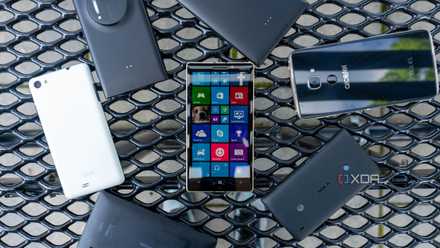
I'll be the first to say that changing from Windows Phone 8.1 to Windows 10 Mobile made some sense at the time with Microsoft's strategy shifting to focus on a unified platform. The problem was it really wasn't as unified as it should have been. Windows 10 PCs were always going to be pretty different from phones due to architectural differences, so there just wasn't enough to keep these platforms together.
Plus, I'd argue a brand name like Windows Phone 10 would have done the job just as well. And if Microsoft was so keen on unifying the Windows 10 brand at the time, why didn't Xbox get something like Windows 10 Console? There was clearly some leeway to do things differently, and Windows Phone might have done better if the branding didn't change.
I turned my Android device into a pseudo Windows phone, here's how it went
All hail the tiles.
6 Azure Active Directory to Microsoft Entra ID
I just don't get this
There are some brands that have lived on for so long and become so recognizable that it would make no sense to change them. And I'm sure almost anyone who's somewhat interested in the tech world has at least heard of Azure Active Directory. It was such a well-known name, and it rolled off the tongue just fine.
But in 2023, Microsoft thought it was a good idea to rename Azure AD to Microsoft Entra ID, taking on the name of a family of products that had just been introduced the year prior. I bet you might not even have known that Microsoft rebranded Azure AD, but it's been a year and a half — and I still don't get it. Microsoft Entra ID isn't a recognizable name at all, and if anything it kind of seems harder to say. Why mess with a good formula?
5 Remote Desktop Client becomes the Windows app
Sure, that's not confusing
Remote Desktop is a service a lot of people have used at some point, and I'm sure everyone knows what it means when you mention that name. Now, the service itself hasn't changed names, but last year, Microsoft introduced the Windows app, which has replaced the Remote Desktop client.
Why? Well, I don't know, but Microsoft's reasoning is that this app includes both Windows 365 cloud PCs and Remote Desktop capabilities, meaning you can connect to a cloud PC as well as a remote physical PC through it. Unifying both apps might make sense from a simplicity perspective, but having an app called Windows on a Windows PC, or even on a Mac, just feels weird, and it messes with your muscle memory if you need to quickly open Remote Desktop on a computer.

Everything you can do with the new Windows app on macOS, iOS, and Android
It's more than a Microsoft Remote Desktop rebrand
4 MSN and Microsoft Start
Not like anyone cared either way
MSN is a news aggregator, and not a particularly interesting one, so any attempt Microsoft makes at revitalizing it is kind of pointless in the first place. But what MSN did have was some kind of brand recognition, for better or worse. It was what powered the News and Weather apps in Windows, and the brand still had a strong legacy coming off the days of MSN Messenger.
In typical Microsoft fashion, the company tried to rename the platform to Microsoft Start in 2021 for no good reason, and to no one's surprised, it didn't do much for it. After three years, Microsoft has given up on the name as of November 2024, and reverted back to MSN with a brand-new logo that's still clearly based on the iconic butterfly. That's definitely for the better, though I doubt it makes much of a difference at this point.
3 Windows Store to Microsoft Store
Causes more confusion than anything
During the Windows 8 era, Microsoft introduced the Windows Store, where you'd find apps to install on your PC. The platform may have failed miserably for numerous reasons, but I don't think the name was one of them. It's the store where you get Windows apps, I don't think there's much to be questioned.
That doesn't really matter, though, because Microsoft disagreed, and with Windows 10, the platform was renamed to Microsoft Store. But you know what's also called the Microsoft Store? The website where you buy a Surface Pro 10, or other laptops, or an Xbox controller. This unified name doesn't make sense when these platforms serve completely different purposes, and I don't know why Microsoft felt like it needed to try and set a trend here. The Apple Store and App Store on iOS/macOS are different. The Google Store and Google Play Store are different. What was the point of trying to unify two things that have no business being together at all?

7 ways I'd like to see the Microsoft Store improved
Features available in my dream Microsoft Store
2 Microsoft 365 to Microsoft 365 Copilot
Yeah, it's the one everyone is talking about
Microsoft 365 just can't catch a break in recent years, and for the second time, Microsoft is making changes that no one asked for and that have no benefit whatsoever. Earlier this year, Microsoft announced that Microsoft 365 would now be known as Microsoft 365 Copilot, taking on the name of the AI-powered assistant that the company has been trying to shove down everyone's throats. This goes along with Microsoft integrating Copilot into the base Microsoft 365 plans and increasing the price of the service.
There are multiple things that make this rebranding an absolute disaster. For one thing, of course, the aforementioned price hike of $3 per month, the first increase the subscription has seen in over a decade. Then, the fact that Copilot is a feature no one really cares about and is now being shoved to the forefront of this suite that people have used for years for other things. And then, of course, the logo. When Office became Microsoft 365, it at least came with a decent logo that was somewhat unique to it. Now, the Microsoft 365 Copilot logo is just the Copilot icon with a tacky "M365" tag slapped on top. It's confusing and looks amateur-ish to an unbelievable degree.
Frankly, this strategy reeks of a desperate attempt to embrace something trendy (AI, in this case) and that will fall apart completely in a couple of years. And that's not new for Microsoft, as we're about to see.