
We are nearing 2025, and the choice of dedicated gaming devices is only growing. It's no longer just about gaming PCs, laptops, and consoles. PC gaming handhelds and, more recently, mini PCs have grown rapidly in popularity. In the last few years, the number of mini PCs aimed squarely at gaming has increased tremendously, and seeing the hardware that some of these models are packed with, you would be tempted to give them a second look.
While a desktop gaming PC still offers the best gaming experience possible, a mini PC provides an enticing combination of features that could make it the ideal gaming device for many people, depending on preferred games, hardware preferences, and budget. Mini PCs can easily become the best dual-purpose, gaming-and-work machine for those working from home who are looking for a highly compact, capable, and upgradable gaming device. If the reasons below feel applicable to you, they make a compelling case for choosing a mini PC.

What you need to know before buying a mini PC
When looking for a mini PC, consider its specs and upgradability as well as its physical size
5 You don't love the size of a desktop
The trade-off could be worth it for many gamers
Desktop PCs might be the undisputed champions of high-performance gaming, but they still demand generous desk space, which is often too much for single-desk setups. Keeping the PC tower on the floor isn't always an option, considering the limited length of cables and the fact that some people work with standing desks. So, what are you to do if you want a space-saving computer with all the capabilities and connectivity options available on your enormous desktop PC?
A modern mini PC jumps out as an easy answer. Provided your work doesn't require the power of the most high-end CPUs and GPUs on the market, a mini PC is more than enough for the majority of WFH professionals. It takes a fraction of the space of a desktop PC, and can provide mostly the same performance. For gaming, many mini PCs can easily handle 1080p gaming in most titles, as long as you use optimized settings.
Some of the best mini PCs are powered by AMD's impressive APUs, offering a potent blend of graphical prowess and workstation grunt. Of course, you won't be beating any framerate records or climbing Cinebench charts, but if all you need is a Windows equivalent of the Mac Mini to power your work and occasional gaming sessions, you really don't need anything more than a mini PC.
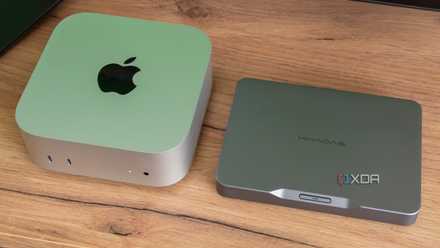
Mac Mini vs Khadas Mind: Can Apple dethrone my favorite mini PC?
The answer may surprise you
4 You're only interested in lightweight titles and emulation
Why look elsewhere when a mini PC is all you need?
Mini PCs can play many demanding titles at lower settings and resolutions, but what if you aren't even interested in those titles? I often see PC gamers complaining about the state of the gaming industry and how they are almost always disappointed with how every major release seems to turn out. Many of them have, hence, gravitated towards lightweight games, excellent indie titles, old classics, and casual games they can relax with.
Mini PCs can naturally crush such games with ease, and since most of them are Windows-based, they can play almost anything you want. Maybe you want a device that you can easily disconnect from your work setup and move to your TV for when you want to take a gaming break at the end of a long day. Maybe you simply want a retro console built for emulation to relive your favorite titles from your childhood. A mini PC can easily handle both of these requirements, making it a highly versatile machine.

Mini PCs are perfect gaming emulators
Playing retro games is a great bit of nostalgic fun and mini PCs are perfect to run emulators.
3 You don't want to spend too much
Get gaming at a fraction of the price of desktops
Mini PCs aren't just making strides in performance and portability, they are also providing users with truly accessible ways to leverage modern computing hardware at a fraction of the cost of desktops and laptops. In fact, you can grab a mini PC with an 8-core Ryzen processor, 32GB of RAM, 1TB SSD, Windows 11 Pro, Ethernet, Wi-Fi, and every other port you will find on your regular desktop PC, all for around $300.
This price advantage of mini PCs makes them perfect for people who aren't looking to invest thousands in yet another full-fledged machine, but only want something affordable while highly capable to power their computing needs. For $300, you can't even get a decent graphics card in today's market, let alone a complete computer. While it's true that a mini PC cannot offer the same experience as a powerful desktop PC or a PlayStation 5, considering the price of entry, a mini PC is probably the best bang-for-your-buck gaming device for the majority of titles on the market.
Mini PCs don't even keep you tied to the hardware you initially buy, as many of them are easily upgradable. You can expand the memory and storage down the line, enabling you to stagger your spending over a longer duration, since you retain the upgradability advantage of desktop PCs in a cheap and tiny form factor.
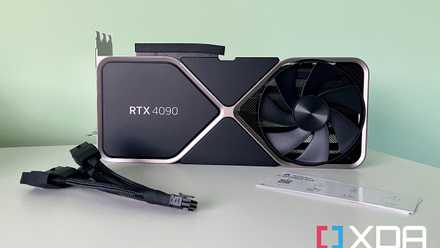
Desktop PC gaming is becoming too expensive thanks to the latest graphics cards
Between Nvidia's overpriced RTX 40 series and AMD's paltry RX 7000 series, desktop gaming is heading towards a crisis.
2 You aren't looking for gaming on the go
Don't mix business with pleasure
While mini PCs are extremely small and light compared to desktops and even laptops, considering them portable gaming or work devices that you can use away from home wouldn't be accurate. Taking your mini PC to a cafe will also require you to carry a portable monitor, keyboard, mouse, and a battery pack to power the PC. While not technically impossible, most people would simply prefer a laptop. However, instead of seeing this as a limitation of mini PCs, you can turn it to your advantage.
Instead of buying an expensive gaming laptop that can perform well at both work and gaming, you can separate the two use cases by opting for a thin-and-light, value-for-money laptop for working on the go, and buy one of the best mini PCs for gaming at your desk at home. This will allow you to get the most out of your investment rather than overspending on a bulky and often needless gaming laptop.
As long as gaming on the go isn't a strict must-have, you can leverage the affordability and impressive gaming performance of mini PCs, effectively decoupling gaming from your dedicated work laptop. This will allow you to access the best features on both devices instead of compromising on both gaming and productivity by spending more on an average gaming laptop.

Ayaneo Retro Mini PC AM01 review: A mini PC that you can use as a NAS or console
The Ayaneo Retro Mini PC AM01 is a genuinely great mini PC with a lot to love, though there are some weird software kinks at first.
1 You want to explore mini PC gaming as a challenge
Never too late to try something new
Lastly, a mini PC can be ideal if you are looking for a new challenge, namely gaming on an extremely compact computer. Maybe you are skeptical of how well such a device can handle demanding titles, cooling requirements of multicore CPUs, or fitting into your desk setup. It can be a fun challenge as well as a new avenue in gaming, and could even lead you to consider a mini PC as your main gaming device.
Alternatively, you might want to add a mini PC as a secondary gaming machine in your home for times when you want to stay away from your desktop, console, and even handheld gaming PC. A mini PC can even serve as a dedicated gaming machine for your partner who is just trying to enter the world of gaming, or an affordable gaming PC for your child. Many competitive titles can run smoothly on mini PCs at lower resolutions and in-game settings, making them more attractive for young gamers.

How I turned a mini PC into a gaming console
I recently reviewed the Ayaneo AM02 mini PC, and I turned it into a home gaming console.
Interesting times ahead for mini PCs
As the demand for mini PCs grows among professionals and even gamers, manufacturers will keep improving what these compact machines can do. We will continue to see more powerful APUs, larger base memory and storage, and more players entering the market. If you've been watching the mini PC space for some time now, you should definitely stay tuned to see what comes next.
Unlike the desktop PC industry where prices are increasingly getting out of hand, mini PCs offer a surprisingly affordable and capable option for budget gamers who have a monitor and just need something decent to play most modern games at acceptable framerates. When you're getting that for around $300-$500, it makes sense that more and more gamers will start taking mini PCs seriously. This can only be good for the industry as a whole.