
I swapped from spinning platters to solid state for my main mode of storage many moons ago, but that doesn't mean I ditched HDDs altogether. Some of the hardest-working hard drives in my setup are over a decade old. They still spin up instantly, report clean SMART data, and quietly do their jobs day after day.
I mostly use them for bulk storage of things that I don't need immediate access to all the time. ISOs of different operating systems, retro games, old screenshots and video clips. Despite that, I'm still a bit wary of the health of my drives. HDDs fail with little warning, if any, and at over a decade old, I'm under no illusion that these drives are “safe,” even if they still function perfectly fine. Instead of panic-replacing them all at once, I’ve shifted how I treat them, how I store data on them, and how I plan for their eventual failure.

5 signs your NAS HDDs are dying, and what to do next
Stay on the lookout for these telltale signs if you've got hard drives in your NAS setup
How long does an HDD typically last?
The answer is: it depends
There’s no official expiration date stamped onto a hard drive, but most consumer HDDs are designed with a much shorter expected lifespan than many people realize. Five years is often cited as a rough average, with some drives failing earlier and others running well beyond that. Once you get past the seven- or eight-year mark, drive health becomes more about luck than engineering margins.
The problem with lifespan discussions is that they’re often framed as binary: the drive either works or it doesn’t. In reality, hard drives spend a long time in a degraded middle state. Bearings wear down. Motors lose efficiency. Read retries increase. Error correction can compensate a bit for issues that didn’t exist when the drive was new.

Why your external hard drive isn’t a real backup (And what you should do instead)
Relying on an external hard drive for backups? It’s not enough
How I'm reducing the risk of failure now
Without replacing the drives
While I could just buy new drives and call it a day, these old HDDs still have life left in them. I no longer use them for storing data I can't afford to lose, but that doesn't mean they're e-waste to me.
Older HDDs now handle data that’s either duplicated elsewhere or easily replaceable. Media libraries, cached downloads, and secondary copies live there, while anything truly important is stored redundantly across multiple devices. I’ve also made a point of reducing dependence on any single disk. Anything that's semi-important is stored on both drives.

5 ways to identify the age or runtime of your hard drive
Wondering how old your hard disk is? These five steps are all you need to assess the age of your hard drive.
Why eventually all HDDs will fail
Nothing lasts forever
No amount of careful handling can defeat physics. Hard drives rely on moving parts operating at extreme precision; Platters spin thousands of times per minute, heads float nanometers above magnetic surfaces, and motors and bearings endure constant stress for years. Modern drives are really good at hiding any kind of degradation. Error correction, caching, and retries make them appear healthy during use long after their mechanical tolerances have begun to slip. But once those safety nets are exhausted, failure tends to feel really sudden and irreversible.
Environmental factors only accelerate this process. Heat cycles cause expansion and contraction. Vibration adds stress to already-tired components. Power interruptions introduce their own risks. Even if you have a helium-filled drive, the same physics applies, though degradation is usually a bit slower.
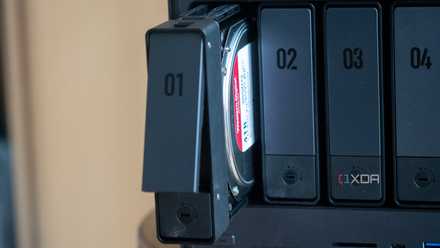
5 tips to prepare for your inevitable NAS drive failure
Your HDD or SSD will fail, but how can you prepare your NAS for this event?
Backups are the only true solution
Otherwise you will lose data
Once you accept that all HDDs will eventually fail, you naturally start to think about how you can store your important data safely. Redundancy will help with uptime and can mitigate damage, but it doesn't fully protect against corruption, accidental deletion, or multiple drive failures. Backups are the only thing that do.
If you're using aging drives in your workstation or even a NAS, backups stop being a luxury and start to become your main strategy. Offline, off-site, and versioned backups protect against pretty much everything, including hardware failure and natural disasters. With good backups in place, these things become a minor inconvenience rather than a total crisis. Drives turn back into what they should be, which are replaceable components. Anything that's mission-critical on my machine has been moved off of my failing drives and onto cold storage, and when updates need to be made it's relatively simple.

8 precautions you need to take when discarding your old hard disk
Don’t let your old hard drive spill your secrets!
They're old, but that doesn't mean they're useless
These HDDs, while old, still have a role in my workstation, but they're no longer storing any kind of mission-critical data. They live as bulk storage for things that I still need access to, just not with fast reads. As a result, I'm not scared of these drives failing anymore. If they kick the bucket tomorrow, all my important data is stored safe and sound with a bit of redundancy and offline backups.