
Microsoft turned 50 on April 4, and among the revelry, it released some spiffing new Windows wallpapers in celebration. We thought we should do a word (or so) in celebration as well; after all, it was a Windows Mobile PDA, the O2 XDA, that spawned our site over two decades ago. That's right; we might never have existed as a forum or a blog without Microsoft, but we're far from alone in that.
It's hard to underscore or overstate how much of an influence Redmond-based Microsoft has had on the entire world of computing over the last half-century. Every aspect of computing, from mobile to desktop and the cloud, has been touched by their code and, in some ways, wouldn't have existed in the same form. While there are too many inventions and creations to list down here, I wanted to outline the pivotal moments that made Microsoft, and the face of computing, how and what it looks like today.

Microsoft wants you to trade in your Windows 10 PC, here's what you can get for one
Spoiler alert: it's not much.
6 The software market
Without a single letter from Bill Gates, the software industry might look very different
Before Windows, before MS-DOS, even before Micro-soft became Microsoft or even before it had a working computer program to its name, came the Altair 8800. It was made by a company called MITS, sold as a kit, and programmed by punch cards. It looked like a Raspberry Pi project, only it was the size of an apple crate. But Paul Allen, the other co-founder of Microsoft along with Bill Gates, saw an opportunity to create a programming language for it, and an "interpreter" to take user commands and turn them into usable code.
Interpreters are programs that directly execute code generated in a high-level language. Compilers convert high-level languages into machine code for the CPU to execute.
The duo licensed the interpreter to MITS, moved to Albuquerque to partner up, and Micro-soft was born. This interpreter was no other than Microsoft BASIC, the programming language that would jump from one machine to millions. But first, something had to change with how software was licensed. The world of computing had expensive hardware, but software was shared for free. Bill Gates disputed that situation, writing an open letter to computer hobbyists in 1976 that outlined his vision for software having value and how it could be paid for.
Would the software industry exist without that letter? Of course it would, but it's widely attributed that the value of software was sparked by that letter. Who knows where the market would be today without that early push? Would everything software related be open source? We'll never know, but it might have taken years before anyone saw the value in software, as the prevailing thought back then was that it was the hardware that had value, and the software didn't have any value without the hardware to run it.

5 open-source tools that do what Microsoft won’t
Supercharge your PC with tools that Microsoft should've added natively
5 MS-DOS
One of the first operating systems that could run on different hardware configurations
If creating a platform-agnostic programming language wasn't enough, the duo's next move was even better: they created a platform-agnostic operating system, eventually called MS-DOS. But let's back up a year or so first, to 1980, and the birth of the IBM Personal Computer (PC). Designed to take on the powerful Apple Macintosh, IBM needed an operating system for its hardware and contracted Microsoft to create one.
Microsoft found a company called Seattle Computing Products (SCP) that made an OS called 86-DOS and secured a non-exclusive license to port it to the Intel 8086-based IBM PC. Thankfully, Gates was still a law major at Harvard and created an ironclad contract that allowed Microsoft to license the resulting OS, MS-DOS, to any company they wished, not just IBM. Seventy companies signed up within one year, and the start of operating systems that could run on multiple versions of computing hardware was written in silicon.
10 retro operating systems you can try out for a shot of nostalgia
Nothing ever truly dies on the internet and these retro operating systems are live and kicking and ready for you to use.
4 Windows plus Office
A killer combination of user-friendly GUI and every tool you needed
Microsoft didn't stop with MS-DOS, continuing to develop its own operating systems through the early '80s. At that time, every computer used a command-line interface, but that would soon change because of Xerox's fabled Palo Alto Research Center (PARC). Yes, the Xerox that invented the photocopier. But first, we need to divert from Microsoft for a minute. In the late '70s, Apple's Steve Jobs visited PARC and noticed two things: the first computer mouse and a graphical user interface or GUI. He wanted Apple to go all-in on these, leading to the competing Apple Macintosh.
Microsoft also wanted to use a GUI, and Windows 1.0 was released not long after the Macintosh. Microsoft Word was already an MS-DOS program, but wouldn't get a Windows version until Windows 2.0, alongside Excel. It wasn't until Windows 3.0 and the release of Microsoft Office (Word, Excel, and PowerPoint) in 1990 that the GUI would take over as the preferred way to navigate the personal computer, and Microsoft was at the forefront with over 67% of the desktop operating system market.
By the end of the 90s, the combination of Windows and Office had over 90% of the desktop operating system market, so much so that Microsoft was worried it would be seen as a monopoly by the US government. That led to a $150 million dollar investment in rival Apple so that there would be competition in the market and regulators wouldn't look too harshly at Redmond. It didn't quite work out, as the company lost several large lawsuits because of abusing its market share, but without that investment, Apple might not have survived to make the iPhone.

5 essential tips to optimize Windows 11 for office work
Windows 11 has many features that can help you optimize your device for office work. Here's what you can do.
3 Windows Mobile (and later, Windows Phone)
Where would the smartphone industry be without them?
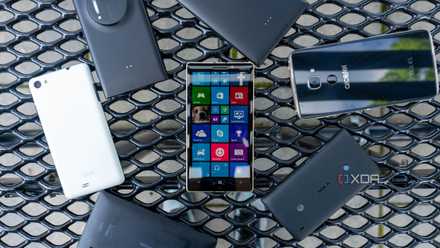
The mobile phone landscape in the early 00s was exciting, with multiple competing operating systems all vying for the crown. Except, the market wasn't quite ready for smartphones, and wouldn't be for many years. In 2002, Microsoft put Windows CE on a host of Pocket PC smartphones, putting a desktop operating system in your jeans pocket. BlackBerry released its first smartphone that year. Nokia's Symbian OS was also used by Sony Ericsson, Samsung, and a few others, and the T-Mobile Sidekick launched.
These were heady times for the mobile operating system market, and they created an atmosphere of fun phones running up to the first iPhone. It took a few more years–until the iPhone 4–for iOS to become its current form, and Windows Phone arrived that same year. The tile-based OS was a favorite of several XDA staff members, and it's a shame that the mix of missing app support and worries about antitrust actions led Microsoft to not focus on what could have been a fantastic mobile operating system. Instead, Android and iOS pushed every other smartphone OS out of the market, and that's where we are today.
2 DirectX
Game developers could build games with hardware acceleration easily
While the 90s were good for Microsoft's market share, developers were less happy with the change from MS-DOS to Windows, as the GUI-based operating system was harder to develop for. Part of that was the plethora of PC hardware manufacturers, with over a dozen differing graphics card makers that could easily be incompatible with how you coded your game.
To fix this, Microsoft developed DirectX, a standardized API for making calls to graphics cards without having to worry about optimizing for specific cards. The Hardware Abstraction Layer (HAL) from Windows 95 also came from this, allowing developers bare-metal access to GPUs and other hardware. The end result? DOOM and DOOM 2 were ported to Windows 95 to showcase the first DirectX API and the start of modern gaming.

50 classic PC games you can (and should) still play today
These are some of the best PC games history has to offer.
1 Xbox
The push into console online gaming was a vision of what was to come
In 2000, PC gaming ruled the world, particularly if you wanted to play multiplayer games with other people across the world using the internet. The gaming consoles of the time had minor online capabilities, with individual games that could be used, but the niche Sega Dreamcast was the first truly internet-connected console. It just didn't sell that well, even in its native Japan.
Enter Microsoft and the first Xbox. It had Ethernet so it could be used online, but what it came with that made online gaming easier was Xbox Live, inbuilt servers for playing your games with your friends, the internet at large, and all with voice communications that launched in 2002. It also came with a subscription fee for the online gaming servers, but that didn't put off the hordes of console owners who dug their teeth into Halo: Combat Evolved. This was the killer app for the Xbox, selling over 1.5 million consoles in the U.S. by the end of 2001. A year later, Xbox Live launched with support for several titles and a promise of 50 by the end of 2003, and the new meta for consoles being always-online started.

Phil Spencer is right about Xbox's future - here's why
You've got to think outside the box
What do the next 50 years look like for Microsoft?
Microsoft is unrecognizable today to the "two guys in a garage" that started it all in 1975, but it still sticks to its founding principle of making software that runs on (almost) everything. Nowadays, a large part of that is in data centers, but it's also in handheld gaming consoles and the old stalwarts of Windows and Office. The near future looks like it will be commanded by Copilot, but the tides change frequently in the tech world. AI agents might not be the long-term future, but whatever comes next, you can be sure that Microsoft will be pushing in that direction.