
Between overnight campouts, lines that wrap around the block, and prices that are sometimes double what Nvidia is asking, there's a clear narrative about Nvidia's latest RTX 50-series GPUs. That narrative is that they're insanely popular, even more expensive, and increasingly rare to come by, especially for a price anywhere near what Nvidia originally released the cards at. That narrative is slowly breaking down, though, and it hopefully won't be long until it's a story of the past.
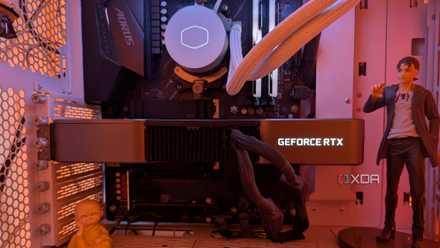
MSI hikes Nvidia GPU prices at the worst possible time
Not that they were available at a reasonable price anyway.
Don't believe what you read online
Except this article, of course
I've been checking in on the pricing of Nvidia's RTX 50-series GPUs a few times a week since the first Blackwell graphics card hit the shelves. I use Newegg, not because Newegg is particularly special, but because it's an online retailer in the U.S. that carries just about every version of an Nvidia GPU you can buy. More importantly for pricing, it's one of the few retailers available to anyone in the U.S., rather than Best Buy and Micro Center, where physical retail locations limit the number of potential buyers.
If you were to just believe what you see on Newegg, you would come away with the impression that Nvidia's RTX 50-series GPUs are still hard to come by. All the models that sold for list price are out of stock, and whatever you can find in stock is marked up significantly above list price. Even looking at my local Micro Center, there are RTX 50-series GPUs in stock, but they're selling for far over list price.
And yet, I keep seeing posts like the one you can see above. No matter where I turn, there's no shortage of images of store shelves, usually within a Micro Center, lined with RTX 50-series GPUs. There's some level of cognitive dissonance looking at these images. These GPUs are supposed to be popular, and that overwhelming demand is why they're selling for so far above list price. And yet, there are dozens upon dozens lined up on the sides of empty aisles.
Why? These cards have been sold out for months, and prices have barely moved an inch. You'd think that if there was an abundance of RTX 50-series GPUs that prices would have dropped by now. Even considering the recent tariffs from the Trump administration, it doesn't explain the higher pricing -- after all, the tariffs have just gone into effect, and these cards are here now. They weren't subject to tariffs when they arrived on U.S. shores.
But then it clicked. The barometer of pricing has shifted since the launch of RTX 50-series GPUs, so what would normally be considered unreasonable for a GPU -- like $700 for the $550 RTX 5070 -- now seems like a deal. It's an act, be it from Nvidia, board partners, or retailers. The narrative around RTX 50-series pricing still doesn't add up, though, and that's becoming increasingly obvious.
The story doesn't add up
I'm not paying a markup on something I can get anywhere
About a week ago, one lucky Redditor shared that they scored an RTX 5080 from Walmart for a great price. The card was nearly $1,300, but after finding an open-box unit, they made out with the card for less than $900. That's $100 lower than list price, which has been unheard of for any Nvidia GPU over the last three generations.
It's surprising but not special. You see these kinds of oddball deals all the time. But just a couple of days later, another user found an open-box RTX 5070 at their local Walmart for $515, which is, again, below list price. They even said that there was another RTX 50-series GPU in stock below list price. The idea of buying one of Nvidia's latest GPUs on a whim for list price is unheard of, let alone below list price. The fact that two different people in different parts of the country were able to walk into their local Walmart and find these cards is very telling.
Nvidia has intentionally sold the story that RTX 50-series GPUs are popular, going as far as to share a misleading claim that it's shipped twice as many RTX 50-series GPUs as it did RTX 40-series GPUs in the same timeframe. Combined with prices that have soared above MSRP, it's easy to leave with the impression that we're in the same GPU situation that we were in during the pandemic, where a new graphics card was like gold. But that's not what's going on.
Short of the RTX 5090, which remains an elusive halo product, you can easily find an RTX 50-series GPU in stock regardless of which retailer you look at. You can find them online, in-person, and on the secondhand market. They just aren't selling, at least at their highly inflated prices. Prices aren't tanking right now, but a few more weeks on the shelves, and I imagine we'll see cards start barreling toward list price.
An awkward time for GPU pricing
Inflated prices might be able to hold long enough
I want to tell you to hold off on buying a GPU and wait for prices to drop. That's still what I'd recommend, but I'd like to be able to tell you with certainty that price drops are weeks or months away. Although I suspect we'll see a small window of prices nearing or at list price, I don't think it'll stay that way for long. Under normal circumstances, an abundance of inventory and high prices guarantees that prices will plummet with time. GPUs aren't living under normal circumstances, though.
I'm talking about tariffs. This is an extremely complex topic with a lot of nuance, but it's a reality that's hard to ignore if you want to buy PC hardware. The tariff rates change depending on what's being imported into the U.S. Some companies are importing just the GPUs from Taiwan and assembling in the U.S., others are assembling in China or Malaysia, and even more are importing some materials from various countries with different tariff rates. Some companies, such as Intel, have moved GPU production to Vietnam. Vietnam isn't subject to Trump's tariffs any longer, but it's still easy to blame higher pricing on "tariffs" without recognizing the nuance of the topic.
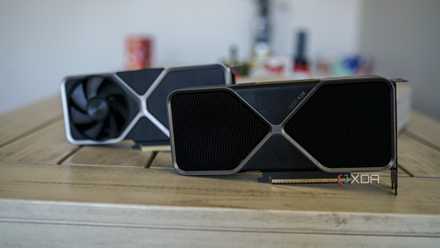
In short, I suspect GPU pricing will go back up once shipments of cards coming into the U.S. are subject to tariffs. Even if a particular card isn't subject to tariffs, such as those made in Vietnam, I imagine prices will go up across the board. I don't need to defend the position that retailers and board partners will happily charge a higher price for GPUs even when they aren't particularly popular. If other cards are priced above MSRP, even those that aren't subject to tariffs will be, too.
Regardless, the idea that GPUs are flying off the shelves and, because of that, prices are higher than they ought to be just doesn't add up anymore. It's becoming increasingly clear that the prices on RTX 50-series GPUs are too high. Hopefully that means prices will drop, but with tariffs looming, I'm not optimistic they'll hold for long.